
How Much Does a Business Website Cost in 2026?
Prices and platform details current as of November 2026.
A business website typically costs between $545 and $1,710 for a basic small business build, while custom agency platforms range from $1,000 to over $15,000 upfront. Recurring expenses include $10 to $25 per year for domains and $3 to $300 monthly for hosting. For service companies across Knoxville and East Tennessee, overall pricing varies depending on technical functionality, asset creation, and ongoing software upkeep.
How Much Does a Website Cost Across Different Build Methods?
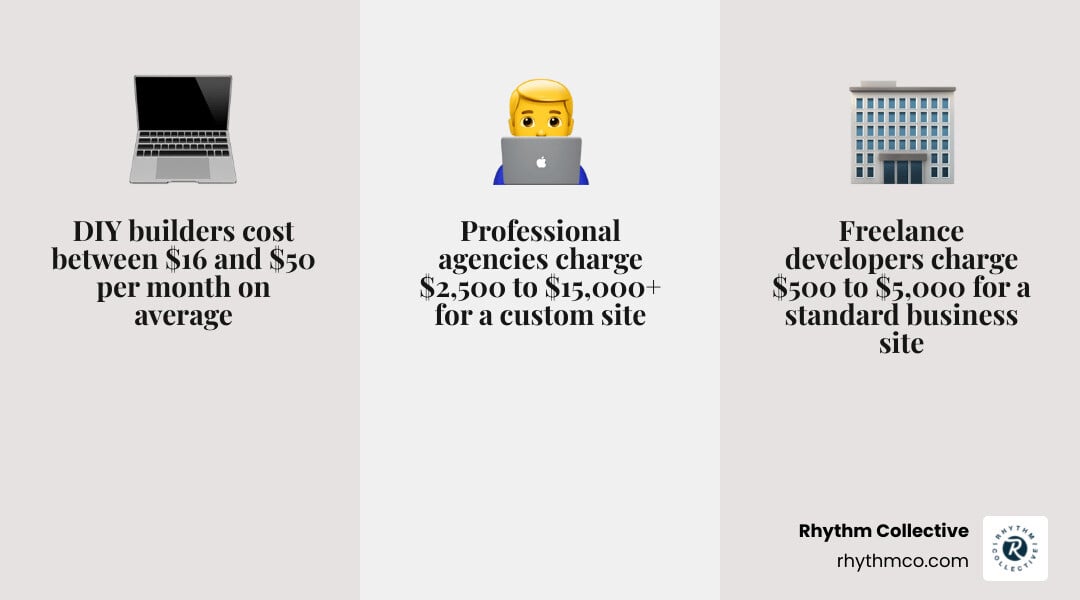
The creation method you select directly dictates the initial financial investment. The baseline expense changes depending on whether you configure software independently, contract a solo developer, or partner with a full-service agency.
According to data compiled in the Web Price Index, a small business website up to 10 pages has a typical cost of $1,010 across published provider pricing. More comprehensive projects, such as a custom site without rigid page limits, show a median rate of $2,840. Initial development scopes vary based on technical integrations and design assets.
Industry figures published in the Forbes Advisor website cost guide indicate overall project ranges can span from $10 for entry-level tools up to $100,000 or more for complex enterprise platforms. The table below summarizes these different build approaches side by side.
| Build Method | Upfront Creation Cost | Typical Monthly Upkeep | Suitable Project Scope |
|---|---|---|---|
| DIY Website Builder | $0 to $200 | $17 to $159 | 1 to 5 informational pages |
| Freelance Developer | $500 to $5,000 | $50 to $150 | Standard multi-page brochure sites |
| Professional Agency | $1,000 to $15,000+ | $70 to $300+ | Custom architecture, multi-location, and lead capture |
How Much Does a Website Cost Using a DIY Builder?
Do-it-yourself website builders operate on recurring software-as-a-service subscriptions. Paid tiers for standard platforms typically start around $17 per month when billed annually according to the Wix 2026 website cost guide. These platforms bundle visual layout editors, shared hosting infrastructure, security certificates, and customer support into a single recurring bill.
While upfront development expenses remain minimal, costs accumulate through paid template purchases, which range between $0 and $350 as noted by the HubSpot website cost guide. Additional investments include premium add-ons, specialized appointment booking widgets, and custom domain connections necessary to remove default platform advertising.
How Much Does a Website Cost When Hiring a Professional Agency?
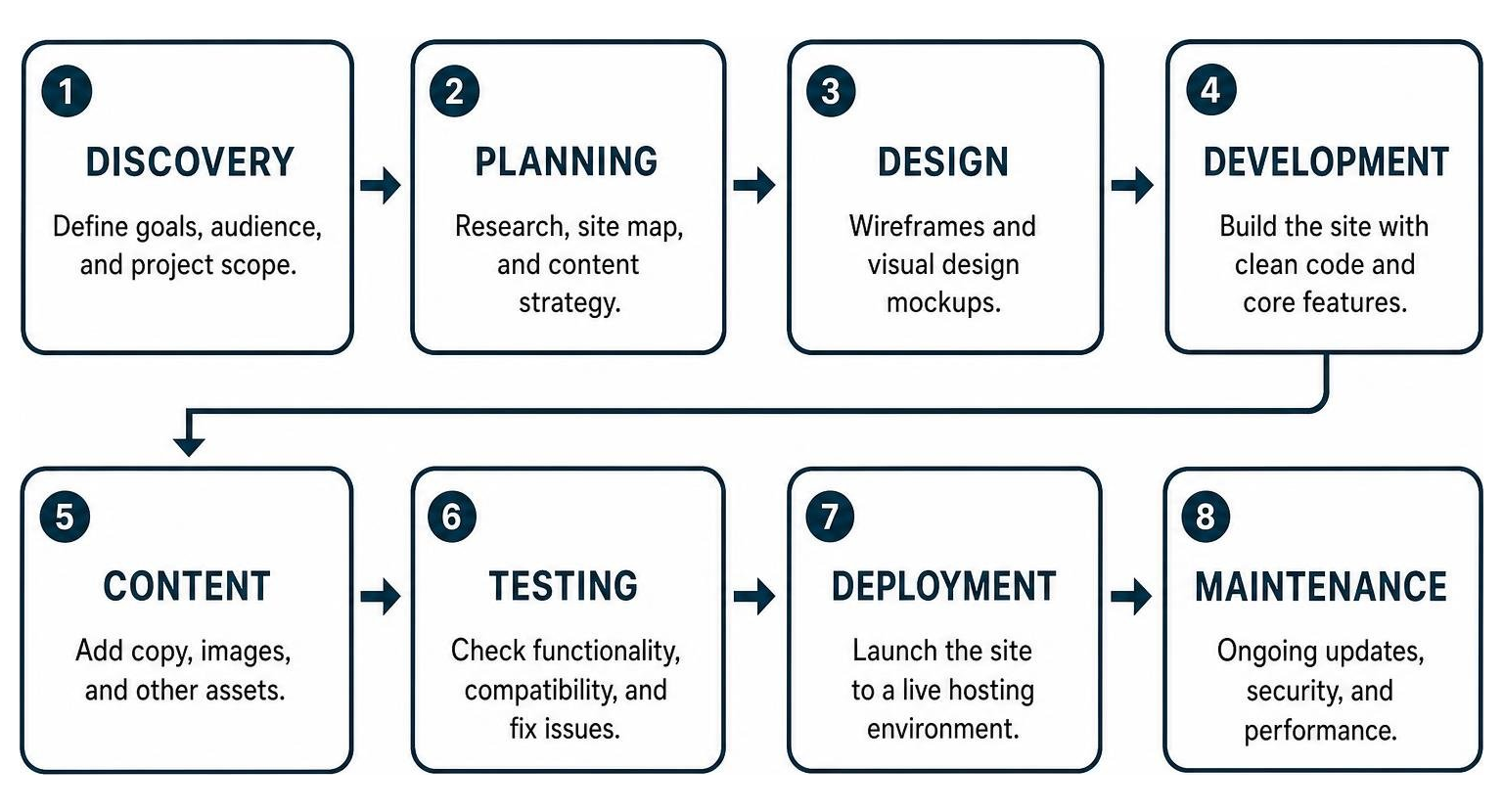
Engaging an agency involves tailored research, information architecture, custom interface design, and programmatic coding. Data published in the Forbes Advisor website cost guide indicates custom agency design and deployment frequently ranges from $1,000 to over $10,000 for standard business sites.
For service companies requiring multi-page lead generation or dedicated local service hubs, Knoxville web design projects involve structured technical wireframing, localized search engine optimization, and custom form routing. High-tier builds with complex backend data integrations can reach $100,000 or more depending on overall technical scope, as documented by Forbes Advisor. Agency options provide dedicated project management and structured quality testing before public launch.
What Core Factors Determine Business Website Pricing?
The total price of a website is primarily determined by scope, technical complexity, and structural requirements. A basic four-page brochure site requires significantly fewer developer hours than a thirty-page directory designed to capture inbound leads across distinct East Tennessee municipalities like Maryville, Oak Ridge, and Sevierville.
The primary elements that shift cost estimates include:
- Total Page Count: Extra pages beyond standard baseline packages average $71 per page according to the Web Price Index.
- Lead Capture Architecture: Custom quote calculators, multi-step intake forms, and automated routing rules require additional coding time.
- Mobile Responsiveness: Adapting interfaces to render smoothly across all device sizes is standard, as the Shopify website pricing breakdown points out that over half of global web traffic originates from mobile devices.
How Do Content Management Systems and Hosting Tiers Affect Price?
A content management system (CMS) is the software interface that allows you to add, edit, and manage digital content without writing code. Platforms fall into two main categories: open-source software and proprietary hosted systems.
Open-source systems, such as self-hosted WordPress, allow free access to core software files but require independent server hosting. Basic shared server hosting, where multiple sites share a single physical machine's resources, costs between $3 and $10 per month as documented by HubSpot. Shared environments suit entry-level informational sites with modest traffic volume.
For high-traffic operations, dedicated hosting reserves an entire server exclusively for one website, with prices ranging from $80 to over $300 per month according to Wix. Managed cloud hosting tiers offer balanced scalability for expanding service companies.
How Does Custom Functionality Change Development Expenses?
Adding specialized tools increases initial programming requirements and recurring software license fees. Integrating an interactive calendar booking system requires connecting APIs (application programming interfaces, which allow distinct software applications to communicate) to synchronize availability with field technicians' calendars in real time.
Connecting forms to customer relationship management software (CRM) for immediate lead processing or adding private client portals increases technical hours. According to the U.S. Bureau of Labor Statistics, the median hourly wage for web developers and digital designers was $45.85 in May 2024, meaning complex technical configurations significantly raise labor invoices.
What Are the Ongoing Costs of Maintaining a Website?

A website requires continuous technical attention after launch to remain secure, functional, and compatible with modern web browsers. Evaluating how much a website costs over its full lifecycle requires factoring in mandatory annual infrastructure and upkeep fees alongside upfront build numbers.
Domain Registration and SSL Certificate Fees
A custom domain name acts as your permanent digital street address. Standard top-level domains such as .com or .org cost between $10 and $25 annually through standard registrars according to GoDaddy pricing data. Adding WHOIS privacy protection, which conceals personal owner registration data from public directories, typically adds approximately $10 per year as noted by HubSpot.
An SSL certificate (Secure Sockets Layer) encrypts the data connection between a visitor's browser and your web server, protecting submitted contact details. Basic Domain Validation (DV) certificates are frequently provided at no charge through automated services like Let's Encrypt, while specialized Organization Validation (OV) certificates cost between $50 and $250 annually according to GoDaddy.
Technical Maintenance, Hosting, and Retainers
Software components, core frameworks, and security plugins require regular updates to prevent vulnerabilities and broken page layouts. Enrolling in expert website management for business growth provides structured monitoring, routine security patches, and cloud database backups. Proactive maintenance ensures forms continue delivering lead data without technical interruption.
Published benchmarks from the Web Price Index show that dedicated website care plans feature a typical cost of $99 per month, with most rates falling between $70 and $175 per month. Comprehensive maintenance retainers that include active security monitoring, periodic design tweaks, and software updates can range up to $500 monthly according to the Forbes Advisor website cost guide.
What Hidden Costs Should Service Businesses Budget For?
Unexpected line items can alter initial budget projections if they are not identified before development begins. Beyond hosting and base development fees, business owners frequently encounter several secondary operational expenses:
- Professional Copywriting: Creating clear, search-optimized service descriptions typically costs around $0.35 per word according to GoDaddy.
- Commercial Asset Licensing: Stock photography and technical video assets can range from $10 to several hundred dollars per asset depending on commercial usage rights according to Adobe Stock pricing.
- Legal and Accessibility Compliance: Meeting regulatory guidelines, such as ADA (Americans with Disabilities Act) accessibility standards, may require automated audit tools or specialized remediation scripts.
- Transactional Email Delivery: Connecting dedicated SMTP server tools to ensure client lead notifications avoid spam filters often adds $10 to $50 monthly based on Mailgun pricing tiers.
Frequently Asked Questions About Website Pricing
Can a service business run a website for free?
Free tiers provided by website builders allow you to launch basic pages, but they include clear operational limitations. Free plans generally prevent you from connecting a custom domain name, display third-party platform branding on every page, and restrict bandwidth and file storage. For commercial operations, paid hosting plans remain standard.
How much does adding ecommerce or online booking functionality cost?
Adding basic ecommerce or paid scheduling tools to an existing site builder typically raises the subscription fee to between $20 and $159 per month according to Wix. According to the Web Price Index, custom multi-page site configurations with specialized functionality average $2,840, while standalone payment gateways charge standard transaction fees of 2.9% plus $0.30 per processed credit card payment according to Stripe.
How often does a business website require a full redesign?
Most business websites undergo a complete structural and visual overhaul every two to three years as highlighted by HubSpot. This frequency accounts for evolving mobile device standards, changes in search engine indexing guidelines, and software framework updates.
Plan Your Website Investment with Rhythm Collective
Have a question about marketing your business? Talk with a growth specialist at Rhythm Collective in Knoxville.