Why Small Business Graphic Design Is Your Secret Weapon for Growth
Small business graphic design is the professional creation of visual content—logos, websites, marketing materials, and brand elements—that communicates your business identity and drives customer action. It’s how you show up in the world, make a memorable first impression, and build trust with your audience.
Here’s what small business graphic design includes:
- Core brand identity: Logo, color palette, typography, and brand guidelines
- Digital assets: Website graphics, social media templates, email designs, and digital ads
- Print materials: Business cards, brochures, flyers, signage, and product packaging
- Marketing collateral: Presentations, infographics, promotional materials, and event designs
Why it matters: Research shows that design-driven companies grow at twice the rate of their competitors, and 85% of business leaders believe visual communication carries more authority than other forms of communication. Your design isn’t just decoration—it’s a business growth tool.
But here’s the challenge: As a small business owner, you’re already wearing a dozen hats. You know your brand deserves professional design, but you’re not sure where to start, what to prioritize, or how to find the right partner without breaking the bank.
The good news? You don’t need a massive budget or an in-house creative team to get compelling, professional design. What you do need is a clear understanding of what graphic design can do for your business and how to make smart decisions about your design investments.
In this guide, we’ll walk you through everything you need to know about small business graphic design—from why it’s crucial for your growth to how to choose the right design partner. Whether you’re building your brand from scratch or refreshing an outdated look, you’ll learn how to leverage design as a strategic business asset.
Why Great Design is Your Small Business’s Superpower
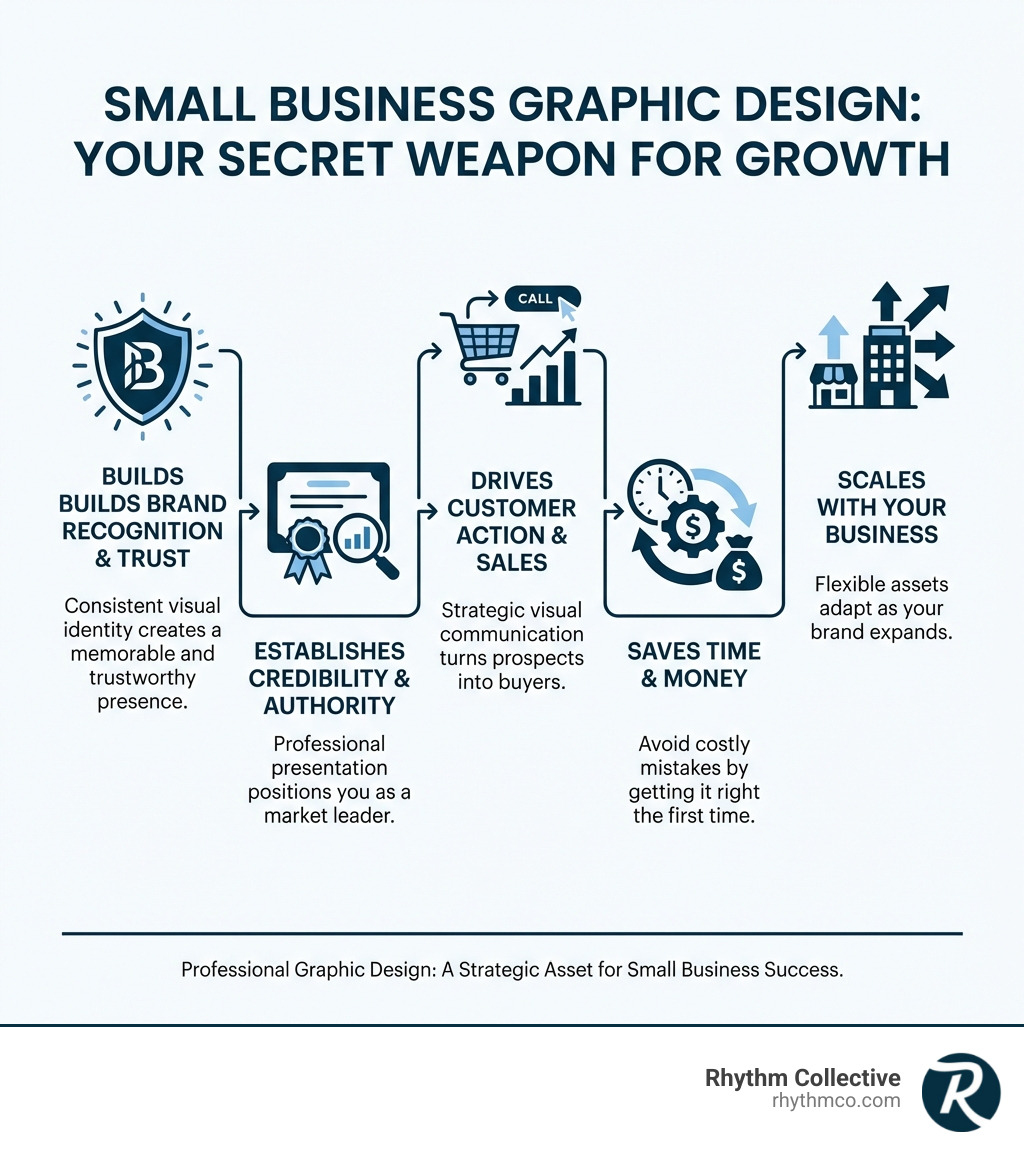
In today’s visual world, your brand identity is crucial for shaping customer perception. A strong visual presence is essential for making a powerful first impression, building brand loyalty, and establishing trust. When your business looks polished and professionally branded, customers and sales will follow.
Visual elements like logos, colors, and imagery are strategic decisions that shape customer perception and help you stand out. Professional graphics convey a serious, credible image that attracts your target audience.
According to research by McKinsey, design-driven companies grow at twice the rate of their competitors. This isn’t a coincidence; it’s a testament to the power of strategic design. What’s more, Canva’s 2024 Visual Economy report indicates that 85% of business leaders believe visual communication carries more authority than other forms. This means your visual presentation can be more impactful than words alone. Small business graphic design is a critical component for staying competitive and achieving long-term growth.
Telling Your Brand’s Story Through Visuals
Every business has a unique story. Our role as designers is to translate your brand’s message into a compelling visual language that resonates with your audience. Graphic design creates professional media, whether in print or digital, to tell that story or sell a product.
Visual elements do more than just catch the eye—they tell a story. They communicate your values and what makes you unique, often before a single word is read. For example, colors can evoke emotions, your logo can symbolize your core principles, and imagery can paint a picture of the lifestyle your brand offers. This strategic approach allows us to craft designs that are both visually striking and effective. By aligning design with your strategy, every visual element reinforces your brand’s voice and leaves a lasting impression, building brand recognition.
The Role of Consistency in Building Brand Trust
Imagine a store with mismatched signage and packaging; it feels unprofessional. The same principle applies to your visual identity. Design consistency is the foundation of brand trust and loyalty.
Consistency across all brand touchpoints—from print materials to your website and social media—is vital for your marketing strategy. A consistent visual identity presents your business as professional and reliable, fostering trust and recognition.
A consistent visual brand voice helps customers quickly recognize and connect with your business across all channels. It builds professionalism and reliability, creating psychological triggers that make customers feel confident in choosing you. This is why consistent graphic design is vital for your marketing strategy.
The Essential Small Business Graphic Design Toolkit
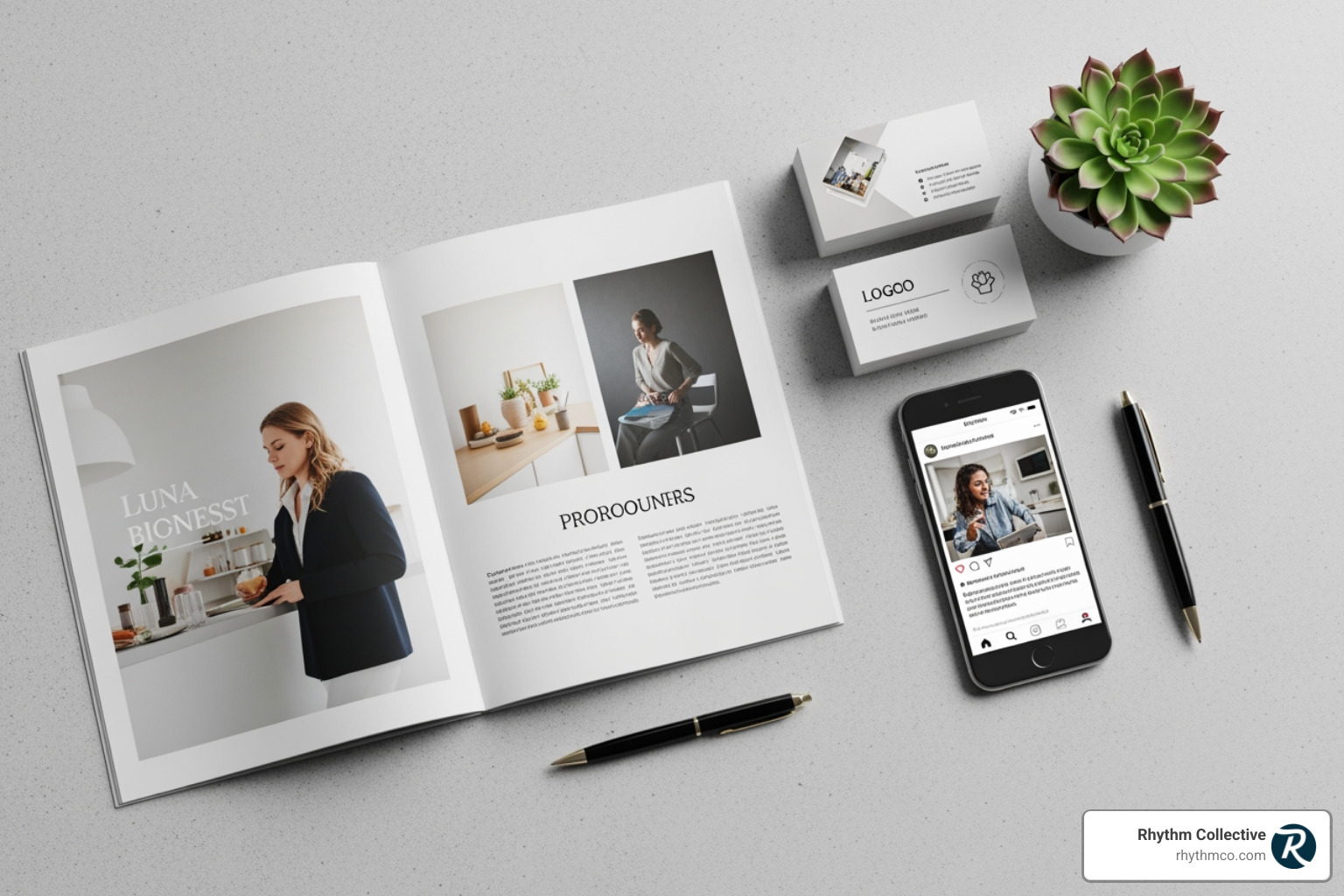
For small businesses, the right graphic design toolkit focuses on essentials that make the biggest impact. We help businesses in Knoxville, TN, and across East Tennessee build a visual presence that stands out. This toolkit combines core branding, digital assets, and print collateral to form a powerful, professional visual identity.
Essential Small Business Graphic Design Services
To establish a strong, cohesive brand, several small business graphic design services are essential. They ensure your business is well-represented across all platforms.
Here are some of the essential graphic design services small businesses need:
- Logo Design: Your logo is the first visual representation of your brand. A professional logo sets the tone for your identity and makes a powerful first impression.
- Website Graphics: Compelling website graphics—from banners to icons—are key to an engaging online presence and user experience.
- Social Media Templates: Custom templates for social media posts, stories, and profiles maintain a consistent brand image across platforms.
- Business Cards: In a digital age, a standout business card design still leaves a tangible, professional impression when networking.
- Brochures and Flyers: Traditional tools like brochures and flyers are still effective for summarizing offerings or promoting events. Professional design with clear calls to action drives customer response.
- Product Packaging: For physical products, packaging is a vital part of the customer experience and a powerful sales tool. It should be designed to be attractive, informative, and drive sales.
- Marketing Collateral: This includes presentations, infographics, banners, and signage. Professional collateral ensures all promotional materials reinforce your brand message.
Investing in these services lifts your brand’s professionalism and helps you connect with your target audience.
Key Elements of a Strong Visual Identity
Beyond individual assets, a strong visual identity is built on interconnected elements that create a cohesive and recognizable brand image.
Here are the key elements for a robust visual identity:
- Typography: The choice of fonts communicates personality and professionalism. Select typefaces that are legible, reflect your brand’s tone, and are used consistently.
- Color Palette: Colors evoke emotions. A carefully chosen color scheme creates a distinct mood and aids brand recognition, acting as a fundamental psychological trigger.
- Imagery and Photography: The style of your images—whether professional product shots, lifestyle photos, or custom illustrations—should be consistent and align with your brand’s message.
- Logo Variations: A versatile logo includes different versions optimized for various applications, such as a primary logo, a website favicon, and simplified versions for small spaces.
- Brand Style Guide: This is your brand’s bible. It outlines the correct usage of all visual elements, ensuring consistency as your business grows and marketing needs evolve.
These are the 5 essential graphic design elements to strengthen your brand. By consistently applying these elements, you create a memorable and trustworthy visual identity, allowing your small business to make a lasting impact.
Finding and Collaborating with Your Perfect Design Partner
Finding the right design partner is a big step, but with the right approach, it can be a smooth and productive partnership. Effective collaboration is key to turning your vision into a stunning reality.
Our approach at Rhythm Collective emphasizes clear communication and a deep understanding of your business goals. We believe productive designer relationships are true collaborative partnerships.
Here’s how we ensure a successful collaboration:
- Clearly Define Project Goals and Scope: Before starting, we define project goals and scope with you. A comprehensive creative brief covering deliverables, vision, budget, and timelines ensures we deliver on-point concepts.
- Be an Open Book on Your Brand: The more we know about your brand’s personality, market position, and values, the better we can design for it. Transparency helps us translate your brand’s essence into effective visuals.
- Communicate Constantly & Efficiently: Clear communication pathways are crucial. We establish protocols for check-ins and collaboration to keep everyone on the same page and you aware of project progress.
- Provide Specific and Actionable Feedback: Specific, actionable feedback is more helpful than vague comments. Explain what is or isn’t working and why, referencing the original creative brief and goals.
- Account for Stakeholder Approvals: If multiple stakeholders are involved, we determine the approval process upfront. Building review cycles into the project plan and consolidating feedback prevents delays and contradictions.
By following these tips, you empower us to take the strategic lead while ensuring the final work aligns with your brand vision.
Outsourcing vs. In-House: Making the Smart Choice
Small businesses typically choose between hiring an in-house designer or outsourcing to an agency. For most in Knoxville, TN, outsourcing is the more strategic and cost-effective solution.
In-House Design Team:
- Pros: Direct control, immediate availability, deep understanding of company culture.
- Cons: High costs (salary, benefits, overhead), limited range of skills, potential for creative burnout. A full-time designer is often out of reach for small businesses.
Outsourcing to an Agency:
- Pros: Access to a diverse team of experts, scalability, cost-effectiveness (no employee overhead), fresh perspectives, and faster turnarounds. It offers significant cost savings and flexibility compared to a full-time employee.
- Cons: Less immediate availability for minor tweaks, requires clear communication, and less direct control over the day-to-day process.
| Feature | In-House Design Team | Outsourcing to an Agency |
|---|---|---|
| Cost | High (salary, benefits, software, overhead) | Variable (project-based, retainer, subscription), generally lower employee overhead |
| Expertise | Limited to individual designer’s skills | Access to diverse team of specialists |
| Availability | Immediate for small tasks | Scheduled project work, clear communication needed |
| Scalability | Fixed capacity, hard to scale | Easily scales up or down based on project needs |
| Flexibility | Less flexible for varied projects | Highly flexible, adapts to different project types and volumes |
| Control | High direct control | Requires strong briefing and trust in partner’s expertise |
For most small businesses, outsourcing provides a clear advantage, granting access to top-tier expertise without the hefty price tag of an in-house team.
How to Choose the Right Graphic Design Partner
Choosing the right partner for your small business graphic design needs is about finding compatibility and a shared vision. Here are key considerations:
- Portfolio Review: Review their portfolio first. Look for a style that aligns with your vision and a diverse range of projects that showcase their capabilities.
- Industry Experience: Experience in your industry is beneficial. A partner who understands your market can produce more relevant designs faster.
- Client Testimonials and Reviews: Read client testimonials. They offer insights into a partner’s professionalism, communication, and ability to deliver.
- Understanding Your Vision: A great partner listens and asks probing questions to understand your brand, goals, and audience. They should be able to articulate your mission through design.
- Checking for a Cultural Fit: Ensure a good cultural fit. You should feel comfortable communicating with them and see a genuine investment in your success for a smoother collaboration.
Trusting your brand’s visual identity to an external partner can feel daunting, but the right match is incredibly rewarding. We invite you to explore our work and see how we’ve helped other businesses achieve their design goals.
Bonus: From Passion to Profit – Starting Your Own Graphic Design Business
Many talented designers dream of starting their own business. If you’re passionate about design, starting your own small business graphic design venture is an exciting path, but it requires a strategic approach beyond just design skills.

A solid business plan is your roadmap. It should detail your services, niche (e.g., logo design for Knoxville startups), target audience, pricing, and client acquisition strategy. Legal registration (as a sole proprietorship or LLC) is a critical early step to protect your assets and ensure compliance.
Building Your Portfolio and Finding Clients
Your online portfolio is your storefront. It should be a curated collection of your best work that highlights your strengths and attracts your ideal clients.
Networking is invaluable. Spread the word to your personal and professional networks, update your online profiles, and join local business groups in Knoxville, TN, or relevant online communities.
A business website is crucial for a professional online presence. Secure an easy-to-remember domain name and use a website builder to create a central hub for your portfolio, services, and contact information.
Key Steps for Your Small Business Graphic Design Venture
Once you’ve honed your skills, take these key steps to formalize your small business graphic design venture:
- Creating a Logo: Design a compelling logo for your business that embodies your brand and showcases your skills.
- Registering Your Business: Register your business name with the appropriate authorities to protect it and gain legal/financial benefits.
- Setting Up a Business Bank Account: Separate your business and personal finances with a dedicated bank account to simplify accounting and project professionalism.
- Developing a Proposal Template: Use a professional proposal template to quickly outline your services, scope, and pricing for potential clients.
- Using Contracts: Always use a contract. It protects both you and your client by defining project scope, deliverables, timelines, and payment terms. E-signature programs can streamline this.
- Invoicing Clients: Use a clear invoicing system with online tools to create professional invoices, track payments, and ensure you get paid on time.
By following these steps, you’ll establish a professional and sustainable foundation for your graphic design business.
Frequently Asked Questions about Small Business Graphic Design
What’s the first graphic design element a small business should invest in?
A professional logo design should be your first investment. As the cornerstone of your brand identity, it’s often the first visual customers see. A well-designed logo sets the tone for your brand, communicates professionalism, and makes you recognizable. Getting it right from the start provides a consistent foundation for all other marketing materials and saves resources long-term.
How much should a small business budget for graphic design?
Budgets for small business graphic design vary based on project complexity and pricing models. A full-time designer is expensive, with agency hourly rates often ranging from $100–$250. A more cost-effective option for small businesses is an agency with flexible pricing, like project-based fees or subscriptions. Focus on the value and ROI of professional design, which drives customer engagement and growth. We recommend discussing your goals with a design partner to get a custom quote.
Can I use DIY design tools for my business?
Yes, you can use DIY design tools for simple tasks like social media posts, especially on a tight budget. However, for professional branding, there’s a difference between can and should. DIY tools lack the strategic insight and creative craftsmanship of a professional designer. A professional translates your brand message into a compelling visual language, ensuring consistency and building trust. For critical elements like your logo and website, professional design is crucial to stand out. DIY tools are a good stop-gap but rarely achieve the strategic impact needed for significant business growth.
Conclusion
As we’ve explored, small business graphic design is far more than just aesthetics; it’s a strategic imperative for growth, trust, and market differentiation. From making a powerful first impression to building unwavering brand loyalty through consistent visual communication, professional design acts as a silent salesperson, telling your brand’s story and compelling customers to act. Investing in graphic design means investing in psychological triggers that shape customer perception, ensuring your business stands out and thrives.
Whether you’re defining your brand’s visual identity, creating essential marketing collateral, or navigating the complexities of outsourcing design, making informed decisions about your design investments is key. The right design partner can open up new levels of credibility and connection with your audience, translating into profitable revenue and long-term success.
As a Knoxville, TN-based agency, we at Rhythm Collective are passionate about helping businesses like yours translate their vision into compelling designs that resonate deeply with your target audience. We believe in the power of professional branding to fuel growth and build lasting relationships.
Ready to lift your brand and harness the full power of professional graphic design? Get started with professional Graphic Design services with us today, and let’s craft a visual story that drives your business forward.