
Why Understanding Your Customer’s Experience is Essential for Growth
Customer journey mapping is the process of creating a visual representation of every interaction a customer has with your brand—from initial awareness through purchase and beyond. It helps businesses understand customer behavior, identify friction points, and uncover opportunities to improve the experience at every stage.
Quick Answer: What is Customer Journey Mapping?
- Definition: A diagram showing all touchpoints where customers interact with your brand
- Purpose: To see your business from the customer’s perspective, not your internal processes
- Key Components: Customer personas, journey stages, touchpoints, emotions, and pain points
- Primary Benefit: Reveals where to improve customer experience to drive loyalty and revenue
- When to Use: When optimizing conversion, reducing churn, or launching new products
Here’s a reality most business leaders face: 88% of customers now consider their experience with a company to be as important as its products. Yet many organizations still view their customer relationships as a series of isolated transactions rather than a connected journey.
The problem? When you only focus on individual touchpoints—like your website or customer service calls—you miss the bigger picture. Research shows that a company’s performance on journeys is 35% more predictive of customer satisfaction than performance on any single interaction.
Customer journey mapping shifts your perspective from inside-out to outside-in. Instead of asking “What do we want customers to do?”, you start asking “What are customers actually experiencing, thinking, and feeling as they interact with us?”
This isn’t just about creating a nice diagram. It’s about breaking down the silos in your organization, assigning ownership to critical moments, and building a strategy that puts customers at the center of every decision. For ambitious business leaders seeking measurable revenue growth, understanding the full customer journey is no longer optional—it’s the foundation of sustainable competitive advantage.
What is a Customer Journey Map and Why is it Crucial for Business?
A customer journey map is essentially a visual story. It’s a diagram that illustrates every step a customer takes when interacting with your brand, whether online or offline. Think of it as a blueprint of your customer’s experience, from their very first encounter to their ongoing engagement and beyond. This “diagram of all the places customers come into contact with your brand” helps us to truly understand each interaction, design better experiences, and ultimately improve business outcomes.
The primary purpose of customer journey mapping is to step into your customer’s shoes and see your business from their perspective, rather than through the lens of your internal processes. This shift in viewpoint is crucial because it allows us to identify what’s working well, what’s causing frustration, and where there are opportunities to deepen relationships.
Many organizations often view customer interactions in fragmented pieces. However, a customer journey map helps to create a holistic view of the entire customer experience. This process aids in “shifting a company’s perspective from inside-out to outside-in” and breaking down internal silos that might prevent a unified customer experience. When different departments understand their role within the broader customer narrative, it fosters “one shared, organization-wide vision” for customer success.

As we mentioned, 88% of customers now consider their experience with a company to be as important as its products. This isn’t just a fleeting trend; it’s a fundamental shift in consumer expectations. Customers in Knoxville, TN, and across East Tennessee, expect brands to understand their needs and preferences. Ignoring this reality can be costly, as 71% of consumers switched brands at least once over the past year. By focusing on the entire customer journey, we can build more robust and loyal customer relationships. To dive deeper into how we help businesses connect with their audience, check out our insights on Customer Engagement.
The Strategic Importance of Understanding the Full Journey
It’s tempting to focus on optimizing individual touchpoints – maybe a slick new website design or a faster customer service hotline. While these are important, they don’t tell the whole story. Research from McKinsey & Company highlights a profound truth: “A company’s performance on journeys is 35 percent more predictive of customer satisfaction and 32 percent more predictive of customer churn than performance on individual touchpoints.” This means that the overall flow and consistency of the experience are far more impactful than any single interaction.
When we understand the full journey, we can predict customer satisfaction and churn with greater accuracy. This strategic insight allows us to proactively address potential issues and build loyalty. In today’s competitive landscape, customer experience isn’t just a buzzword; it’s becoming “the only truly durable competitive advantage.” By focusing on the entire journey, businesses can create a consistent, positive experience that keeps customers coming back.
Key Business Goals Achieved Through Mapping
Customer journey mapping isn’t just an academic exercise; it’s a powerful tool for achieving tangible business goals. By carefully charting the customer experience, we can open up a wealth of opportunities:
- Improving Customer Retention and Loyalty: By identifying pain points and moments of frustration, we can address them proactively, leading to happier customers who are more likely to stay with us.
- Increasing Conversions: Understanding where customers drop off in their journey allows us to optimize processes, refine messaging, and remove barriers, ultimately boosting conversion rates. For sales, it reveals barriers to conversion.
- Identifying New Business Opportunities: Journey mapping often uncovers unmet customer needs or areas where new products or services could add significant value. It challenges our assumptions about when a journey truly begins and ends, opening doors to innovation.
- Optimizing Marketing Spend: For marketing teams, a journey map shows which messages resonate with customers at different stages and through which channels. This allows for more targeted and effective campaigns, reducing wasted resources and enhancing efforts like Social Media Marketing.
- Enhancing Customer-Centricity: When 79% of companies that invest in customer journey maps become more customer-centric, it’s clear this process fosters a culture where customer needs are prioritized across the entire organization.
Key Components of an Effective Customer Journey Map
A well-crafted customer journey map is a dynamic document, much more than a simple timeline. It visually tells the story of your customer’s interaction with your brand, revealing critical insights along the way.
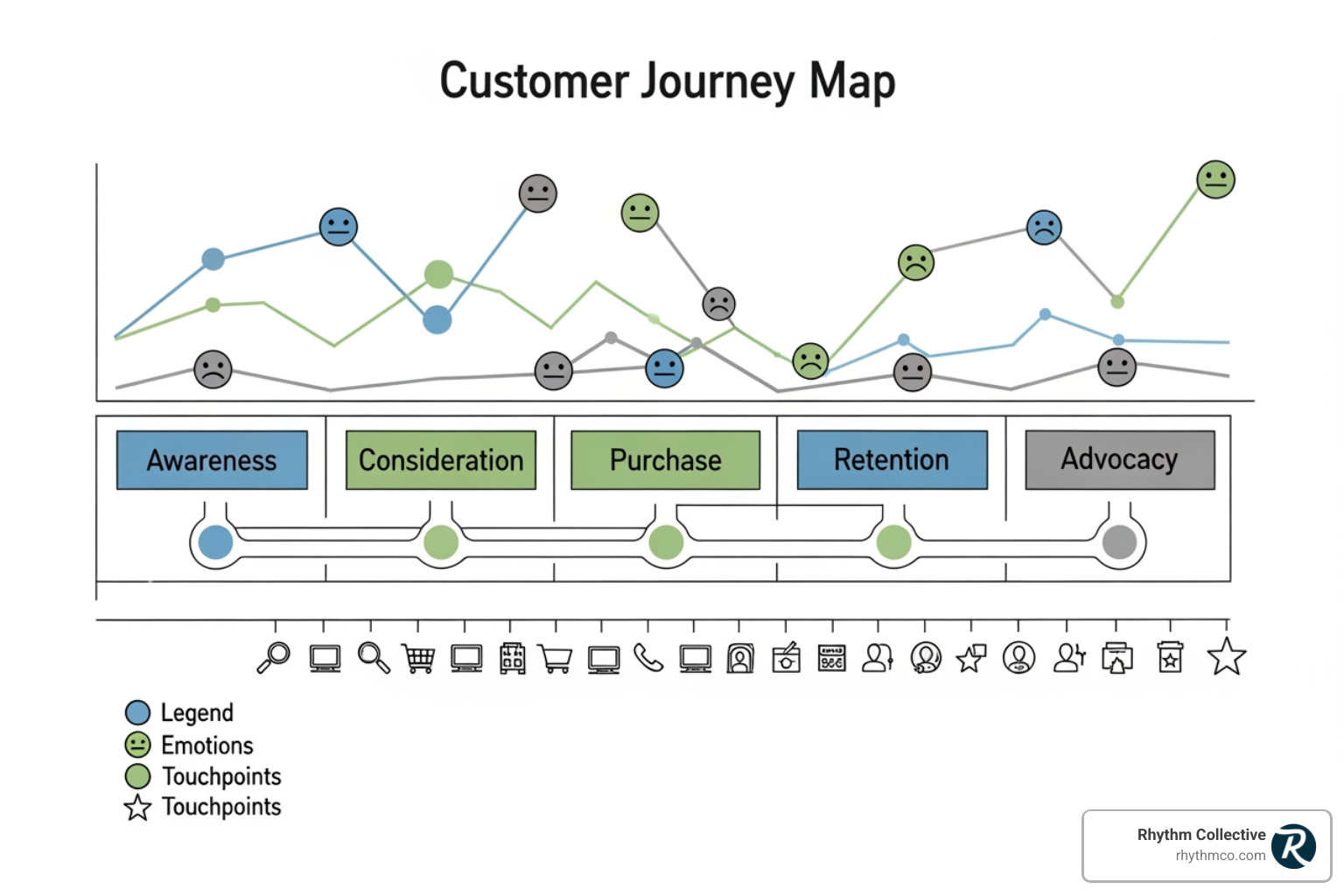
At its core, a map compiles a series of user goals and actions into a timeline. This “timeline skeleton” is then fleshed out with user thoughts and emotions, creating a narrative that speaks volumes. Visually, it might help to split the mapping area into “frontstage” (what the customer experiences) versus “backstage” (the internal systems and processes supporting that experience). This distinction helps us understand both the visible customer interaction and the invisible operational efforts that drive it.
The Role of Personas in Customer Journey Mapping
Before we can map a journey, we need to know who we’re mapping it for. That’s where customer personas come in. These are fictional, data-driven representations of our ideal customer types. Think of them as detailed character profiles for your target audience, complete with demographics, motivations, behaviors, and goals.
Personas are crucial because they “provide context and allow brands to focus a journey map on a specific target audience.” Instead of trying to map the experience for “everyone” (which is impossible), we create a map for a specific persona. For instance, a small business owner in Knoxville, TN, looking for marketing services will have a very different journey than a startup founder in East Tennessee. Each map should ideally represent “one point of view per map for a strong, clear narrative.” Thanks to advanced customer analytics, these personas can become incredibly precise, allowing for highly targeted insights.
Identifying Stages, Touchpoints, and Channels
Once we have our persona, the next step is to outline the journey itself. This involves identifying the key stages the customer moves through, the touchpoints where they interact with our brand, and the channels they use to do so.
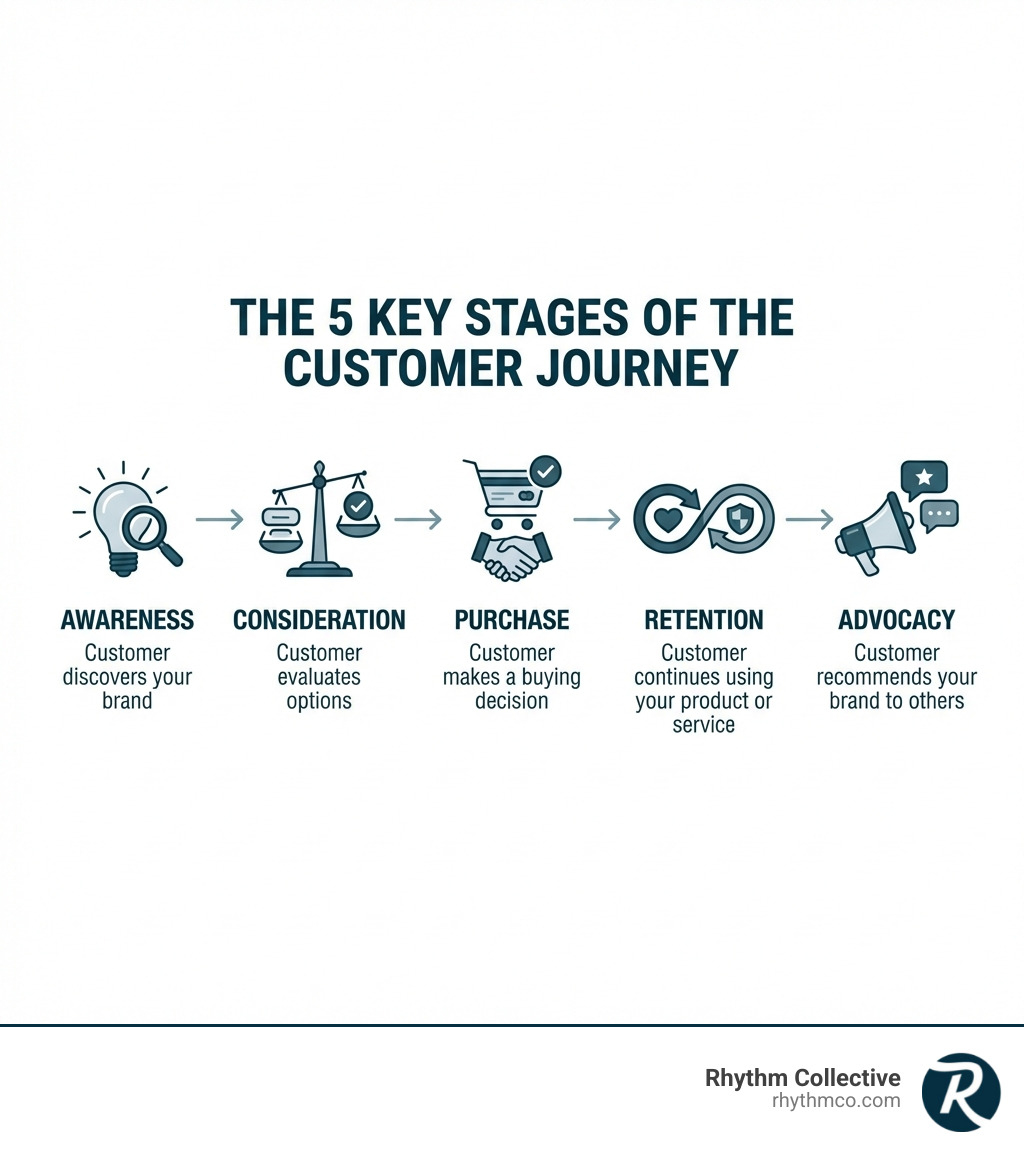
Common customer journey stages include:
- Awareness: When the customer first realizes they have a need or finds your brand.
- Consideration: When the customer researches and evaluates different solutions, including yours.
- Purchase: The moment the customer decides to buy and completes the transaction.
- Retention/Usage: The ongoing experience of using your product or service.
- Advocacy: When a satisfied customer recommends your brand to others.
At each stage, customers engage in specific “user actions” and interact with us through various “touchpoints and channels.” These can be digital, like our website, social media, or email, or physical, such as a phone call, an in-person visit to our office in Knoxville, or even postal mail. The modern customer often uses “more than three channels” to communicate with businesses, making an omnichannel approach critical for a consistent experience. Identifying all these points of interaction is vital for a comprehensive map.
Capturing Customer Emotions and Pain Points
This is where the map truly comes alive and reveals its deepest insights. It’s not enough to just list actions and touchpoints; we need to understand the customer’s inner world – their emotions and pain points.
At each stage and touchpoint, we ask: “What is the customer thinking? What are they feeling?” This helps us uncover “emotional highs and lows” throughout their journey. Research indicates that “69% of consumers say that emotions count for over half their experiences,” underscoring the importance of this element.
Pain points are those moments of “frustration, difficulty, or uncertainty” a customer experiences. These could be anything from a confusing website navigation to a slow response from customer service. Conversely, we also identify “moments of truth”—key events that significantly shape a customer’s perception of our brand, positively or negatively. By digging into these emotional landscapes, we can also uncover “latent needs,” which are unspoken or unaddressed desires that, once identified, present powerful opportunities for innovation and improvement.
A Step-by-Step Guide to Customer Journey Mapping
Creating a valuable customer journey map is a collaborative and data-driven process. It’s not something one person does in isolation; it requires input from across the organization.
Before we even start drawing, we need to “set clear objectives.” What specific business goal does this map support? Are we aiming to reduce churn, improve onboarding, or identify opportunities for a new service in East Tennessee? A map “not aligned to a business goal will not result in applicable insight.”
We also assemble a “cross-functional team” from departments like marketing, sales, product development, and customer service. This is vital because customers interact with various parts of our business, and each department offers a unique perspective on those interactions. This collaborative approach helps us gain a holistic understanding of the customer journey. For more specialized guidance on strategic planning, consider our Marketing Consulting Services.
Step 1: Gathering Qualitative and Quantitative Data
The foundation of any effective customer journey map is solid research. We avoid relying on assumptions, as “maps based on research are more fruitful.” We need both qualitative and quantitative data to build a comprehensive picture:
- Customer Interviews and Surveys: Direct feedback from customers provides invaluable insights into their experiences, motivations, and pain points. We ask them about their goals, feelings, and actions at each stage.
- Feedback Forms and Support Logs: These internal resources offer a goldmine of information about common issues and customer sentiments. Chat transcripts and support tickets reveal real-time frustrations and resolutions.
- Web Analytics and CRM Data: Quantitative data from our website, marketing campaigns, and CRM system helps us track customer behavior, identify drop-off points, and measure engagement. This data can “support or validate qualitative data” but doesn’t tell the whole story on its own.
- Social Media Listening: Monitoring social media and review sites provides unfiltered insights into public sentiment and specific customer experiences.
Step 2: Visualizing the Journey and Identifying Opportunities
With our data in hand, it’s time to bring the journey to life visually. There are various formats, from simple timelines to more complex charts, but the goal remains the same: to clearly communicate the customer’s experience.
- Choosing a Format: For journeys with fewer interaction options or a clear chronological flow, a linear timeline works well. For more complex, non-linear interactions, a chart format might be more appropriate.
- Plotting Touchpoints and Emotions: We map out each interaction point, noting the customer’s actions, thoughts, and, crucially, their emotional state (highs, lows, frustrations). This is where those pain points become visually evident.
- Highlighting Key Pain Points: These are the critical areas where the customer experience falters. We make them stand out on the map, often with visual cues, so they can be easily addressed.
- Brainstorming Solutions and Improvements: This is where the magic happens. By collaboratively analyzing the mapped journey, particularly the pain points, we “mine it for opportunities to improve the experience.” Instead of jumping to immediate solutions, we explore a range of possibilities, challenging our internal assumptions about how things “should” work.
Step 3: Validating the Map and Driving Change
A customer journey map isn’t a static artifact; it’s a living document designed to drive action. Once we’ve created a draft, the next crucial steps are validation and implementation:
- Testing the Map with Real Customers: We validate our map by cross-referencing it with real customers or by conducting internal testing. This ensures that our visual representation accurately reflects their actual experiences, not just our internal perceptions.
- Assigning Ownership for Improvements: For insights to translate into action, responsibility must be clear. We assign ownership for different parts of the journey map to specific teams or individuals, ensuring accountability for addressing identified issues.
- Creating an Action Plan: Based on the validated map and identified opportunities, we develop a concrete action plan. This might involve enhancing communication, shifting resources, or investing in new technology.
- Measuring Impact on KPIs: Finally, we establish key performance indicators (KPIs) to track the impact of our changes. This allows us to quantify the improvements in customer satisfaction, retention, and ultimately, our business growth.
Leveraging Your Map for Meaningful Business Impact
The true power of customer journey mapping lies in its ability to transform insights into tangible improvements. It moves us “from mapping to meaningful change,” ensuring that our efforts directly contribute to our strategic objectives.
By providing a clear, shared understanding of the customer experience, a journey map helps us prioritize initiatives that will have the greatest impact. It fosters a truly customer-centric culture within our organization, from our creative team in Knoxville to our digital strategy specialists throughout East Tennessee. This alignment ensures that every decision, every new product, and every service improvement is made with the customer at the forefront. Learn more about how we integrate this customer-first philosophy into our approach.
Enabling Omnichannel Marketing and Service
In today’s interconnected world, customers interact with brands across numerous channels – social media, email, website, phone, and in-person. Customer journey mapping is the cornerstone of effective omnichannel marketing and customer service.
- Consistent Messaging Across Channels: A journey map helps us ensure that our brand’s message is consistent and coherent, regardless of where the customer encounters us. This builds trust and reinforces our brand identity.
- Personalized Customer Experiences: By understanding the customer’s context at each touchpoint, we can deliver highly personalized experiences. This means tailoring content, offers, and support based on their preferences and past interactions.
- Seamless Transitions Between Touchpoints: The map highlights how customers move from one channel to another. This allows us to identify and smooth out any friction points, ensuring a seamless experience. For example, a customer starting an inquiry on our website should be able to continue it effortlessly via phone or email. This also greatly improves our Email Newsletter Marketing efforts by ensuring messages are timely and relevant to the customer’s current stage.
- Improved Customer Service: When service teams understand the entire customer journey, they are better equipped to resolve issues efficiently and empathetically, leading to higher customer satisfaction.
Optimizing and Evolving Your Map Over Time
A customer journey map is never truly “finished.” It’s a living document that needs continuous attention and refinement. Customer behaviors, market trends, and our own business offerings are constantly evolving, and our maps must evolve with them.
- Treating the Map as a Living Document: We approach our maps not as a one-time project, but as a dynamic tool that reflects the current reality of our customers.
- Regular Reviews and Updates: We schedule regular reviews of our journey maps, typically every 6-12 months, or whenever there’s a significant change in our business or the market. This ensures the map remains relevant and accurate.
- Tracking Performance Metrics: We continuously track KPIs related to customer experience, such as customer satisfaction (CSAT) scores, Net Promoter Score (NPS), and conversion rates. These metrics help us quantify the impact of our changes and identify areas still needing improvement.
- Adapting to Changing Customer Behaviors: By continuously monitoring customer feedback and analytics, we can quickly adapt our maps to reflect new customer expectations, preferences, and emerging technologies. This proactive approach ensures we stay ahead of the curve and continue to deliver exceptional experiences.
Types, Tools, and Common Pitfalls
Understanding the different variations of customer journey maps and the tools available can make the process more efficient. Equally important is being aware of common mistakes to avoid.
Different Types of Customer Journey Maps
While all maps aim to visualize the customer experience, they can serve different purposes:
- Current State Maps: These visualize the existing experience customers have with your brand. They are excellent for identifying current pain points and opportunities for immediate improvement.
- Future State Maps: These illustrate the ideal customer journey you aspire to create. They are particularly useful for strategic planning, introducing new products, or targeting new audience segments.
- Day in the Life Maps: These describe the routine activities of potential customers, often extending beyond their direct interaction with your brand. They help uncover unmet needs that your product or service could address.
- Service Blueprints: These are more detailed maps that layer in the technology, employees, processes, and services required to deliver each touchpoint on the customer journey. They are invaluable for understanding the “backstage” operations supporting the “frontstage” customer experience.
Leveraging Technology and Tools for Mapping
Fortunately, we don’t have to tackle customer journey mapping with just pen and paper. A variety of digital tools can streamline the process:
- Digital Whiteboarding Tools: Platforms like Miro offer collaborative online whiteboards where teams can brainstorm, organize sticky notes, and create detailed visual maps in real-time, even when working remotely across East Tennessee.
- Diagramming Software: Tools such as Lucidchart provide templates and intuitive interfaces for creating professional-looking flowcharts and diagrams, making it easy to standardize the map’s format and simplify sharing.
- CRM and Analytics Software: While not mapping tools themselves, CRM platforms and web analytics software are essential for gathering the raw data needed to inform our maps. They provide insights into customer interactions, behaviors, and preferences across various touchpoints.
Common Mistakes in Customer Journey Mapping
Even with the best intentions, it’s easy to stumble when creating customer journey maps. Being aware of these pitfalls can save us time and ensure our efforts are fruitful:
- Relying on Assumptions, Not Research: This is perhaps the biggest mistake. A map based on what we think customers do or feel, rather than what data and direct feedback tell us, is destined to be inaccurate and ineffective.
- Creating an Overly Complex Map: While detail is good, excessive complexity can make the map difficult to understand, share, and act upon. The goal is clarity and actionability, not an intricate work of art.
- A Company-First Perspective: Forgetting to genuinely step into the customer’s shoes and instead mapping the journey from our internal departmental view is a common trap. The map must always reflect the customer’s goals and experiences, not ours.
- Treating the Map as a One-Time Project: As discussed, customer journeys are dynamic. A map created once and then forgotten quickly becomes outdated. It needs to be a living document, regularly reviewed and updated.
- Lack of Stakeholder Buy-in: If key internal stakeholders aren’t involved in the creation process or don’t understand the map’s value, it will struggle to drive meaningful change. Engaging others with the end product and making it interactive is crucial.
Conclusion
Customer journey mapping is more than just a marketing buzzword; it’s a strategic imperative for any business aiming for sustainable growth and unwavering customer loyalty. When 88% of customers value experience as much as product, understanding every interaction your customers have with your brand is not just beneficial—it’s essential.
By embracing this customer-centric view, we gain clarity on their needs, identify critical pain points, and uncover innovative opportunities to improve every stage of their journey. From our work with businesses in Knoxville, TN, to clients across East Tennessee, we’ve seen how a well-executed customer journey map can break down internal silos, drive targeted marketing efforts, and foster a culture committed to exceptional customer experiences.
At Rhythm Collective, we believe in building data-driven strategies that deliver profitable revenue and long-term growth. Customer journey mapping is a cornerstone of this approach, enabling us to design seamless, consistent, and meaningful interactions that build lasting relationships.
Take the first step towards truly understanding your customers and changing their experience. Let’s work together to map out a path to success for your business. Explore our Creative Marketing Agency Services and find how we can help you thrive.