Why a Digital Advertising Plan is Your Roadmap to Revenue Growth
A digital advertising plan is a structured roadmap that defines how your business will use paid digital channels to achieve specific marketing and revenue goals. It outlines your target audience, chosen advertising platforms, budget allocation, key performance indicators, and optimization strategies—all working together to drive measurable results.
Key Components of a Digital Advertising Plan:
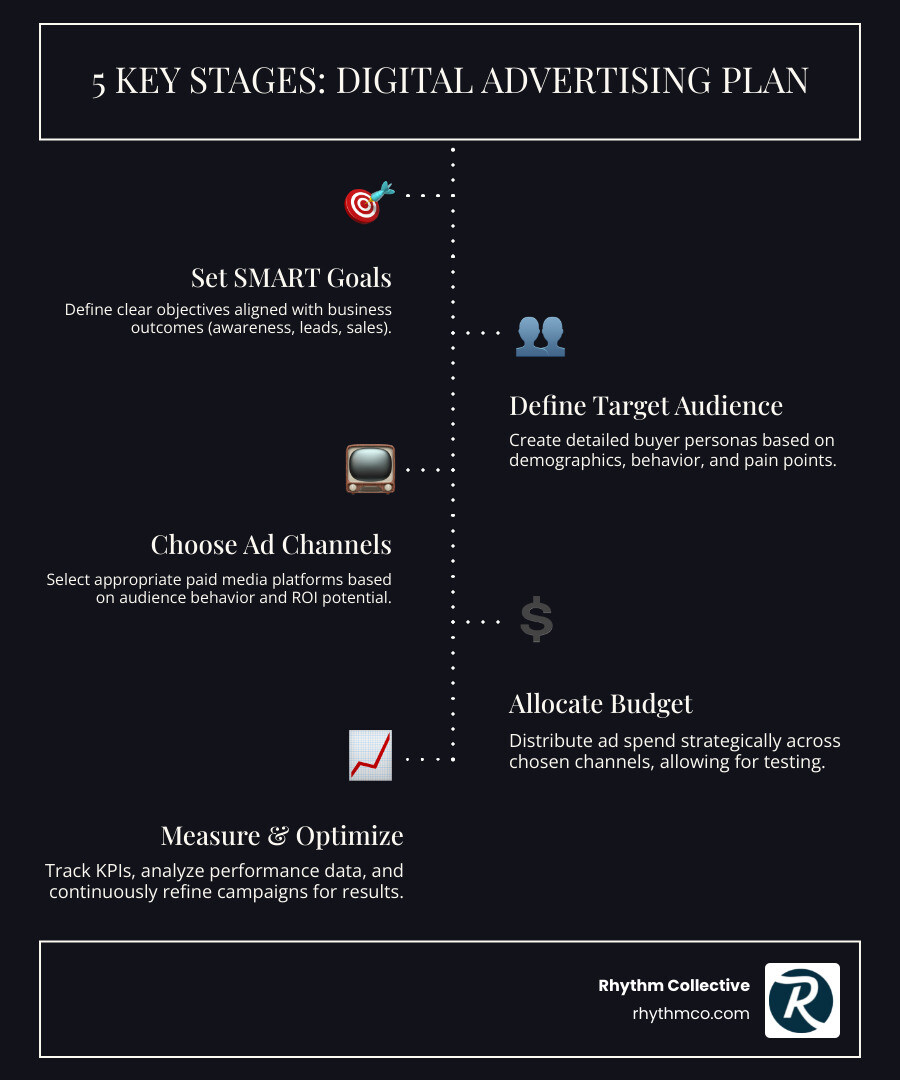
- Clear Goals and Objectives – SMART goals tied to business outcomes (awareness, leads, sales)
- Target Audience Definition – Detailed buyer personas based on demographics, behavior, and pain points
- Channel Strategy – Strategic selection of paid media platforms (search, social, display, video)
- Budget Allocation – Distribution of ad spend across channels based on potential ROI
- Content and Creative Assets – Ad copy, landing pages, and visual elements optimized for conversion
- KPIs and Measurement Framework – Metrics to track performance (CPA, CTR, ROAS, conversion rate)
- Optimization Process – Regular testing, analysis, and refinement based on data
You’ve probably seen it happen. Businesses pour money into digital ads only to wonder why the phone isn’t ringing or leads aren’t converting. The hard truth is that digital advertising is not a one-step process. Without a clear plan, marketing becomes a shot in the dark—and that can be very costly.
Here’s a sobering fact: only 17 percent of businesses clearly define their digital marketing strategies. That means 83 percent are essentially guessing, spreading budgets too thin, or chasing vanity metrics instead of revenue.
A well-crafted digital advertising plan changes everything. It provides strategic focus, optimizes your ad spend, and ensures every dollar works toward your business goals. It’s the difference between hoping for results and engineering them.
Unlike a broad digital marketing strategy (which includes organic channels, content, and SEO), a digital advertising plan focuses specifically on paid media efforts. It’s your tactical blueprint for turning ad spend into qualified leads, sales, and long-term customer value.
Step 1: Laying the Foundation for Success
Before we even think about launching an ad, we need to lay a rock-solid foundation. Think of it like building a house – you wouldn’t start framing walls before pouring the concrete, would you? The same goes for your digital advertising plan.

Setting Goals for Your Digital Advertising Plan
Every successful journey begins with a destination in mind. For your digital advertising plan, this means setting clear, measurable goals. We’re not talking about vague aspirations like “get more customers.” We’re talking about SMART goals: Specific, Measurable, Achievable, Relevant, and Time-bound.
For instance, instead of “increase brand awareness,” a SMART goal might be “increase website traffic from organic search by 40% within six months” or “generate 50 qualified leads per month.” These specific targets allow us to track progress and know if our efforts are paying off.
Your goals should align directly with your broader business objectives. Are you focused on:
- Brand awareness? Perhaps you’re a new local business in Knoxville, TN, looking to introduce yourself to the community.
- Lead generation? Maybe you’re a service-based business in East Tennessee aiming to fill your sales pipeline.
- Sales growth? An e-commerce business in the region might prioritize direct conversions.
It’s also crucial to consider where your target audience is in their customer journey:
- Awareness: Introducing potential customers to your brand.
- Consideration: Helping them evaluate your offerings against competitors.
- Decision: Influencing their final purchase.
Your digital advertising plan should strategically allocate resources to address these stages. According to HubSpot, setting clear goals is paramount for any marketing effort. For guidance on setting these objectives, you can explore their Source for SMART goals.
Identifying and Understanding Your Target Audience
Who are we trying to reach with our ads? This isn’t a rhetorical question! Understanding your target audience is perhaps the most critical step in crafting an effective digital advertising plan. If we don’t know who we’re talking to, our message will fall on deaf ears (or, more accurately, scrolling thumbs).
We dig deep into creating detailed buyer personas. These aren’t just demographic sketches; they’re semi-fictional representations of your ideal customers, built on real data and educated speculation. We consider:
- Demographics: Age, location (especially important for our local clients in Knoxville, TN, or Alcoa), income, job title.
- Psychographics: Interests, values, attitudes, lifestyle.
- Customer behavior: How they interact online, what websites they visit, what content they consume.
- Pain points: What problems are they trying to solve?
- Motivations: What drives their purchasing decisions?
We can gather this information through various methods, including surveys (like those via Google Surveys or Typeform), analyzing website data, and even exploring online communities like Reddit to understand conversations within your niche. For a structured approach to building these crucial profiles, we often recommend using these templates to build your buyer personas. If you need expert guidance in uncovering these insights, our Marketing Consulting Services can help.
Defining Your Compelling Value Proposition
Once we know who we’re talking to and what we want them to do, we need to give them a compelling reason to choose us. This is where your value proposition comes in. It’s not just a tagline; it’s a clear statement that explains why a customer should buy from you instead of a competitor.
A strong value proposition highlights your Unique Selling Proposition (USP) and competitive advantage. It clearly articulates:
- Who your target audience is.
- What unique value you offer.
- How you solve their problem better than anyone else.
- Why they should believe you.
For example, a positioning statement might look like: “For [target market], [Brand X] is the only brand that offers [unique value claim] among all [competitive set] because [reason to believe].” This resonates with your audience’s needs because it speaks directly to their problems and offers a tangible solution. We validate this through consumer, competitor, and company analysis to ensure it’s faithful, feasible, and favorable.
Step 2: Building Your Comprehensive Digital Advertising Plan
With our foundation set – goals, audience, and value proposition clearly defined – it’s time to construct the framework of our digital advertising plan. This involves selecting the right channels, allocating our budget wisely, and ensuring our content speaks volumes.
Choosing Your Digital Advertising Channels
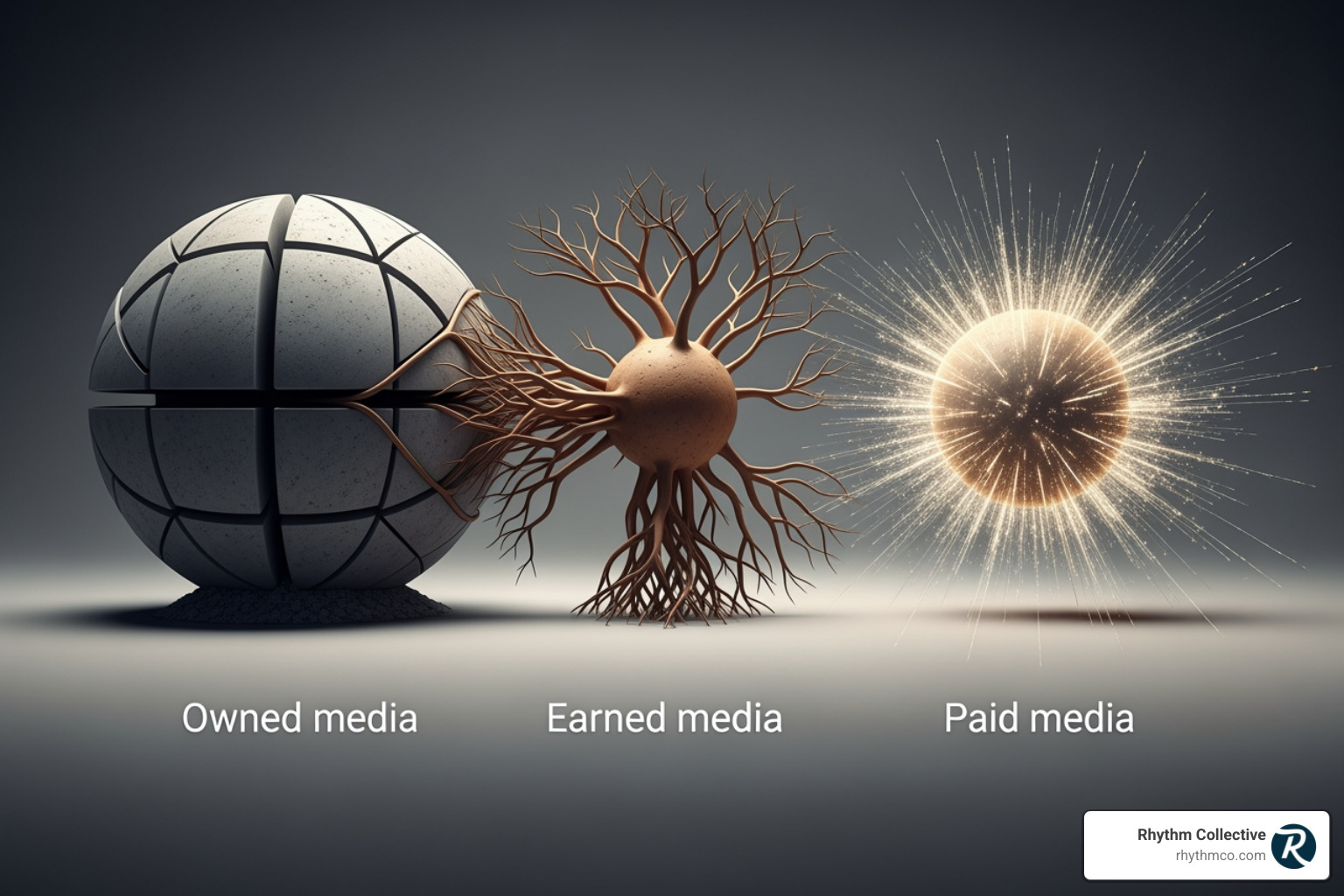
The digital landscape offers a dizzying array of channels, each with its own strengths. To make sense of it all, we often categorize them into three types of media:
- Owned Media: Digital assets your brand controls, like your website, blog, and social media profiles. While not directly “advertising,” they’re crucial landing spots for your paid efforts.
- Earned Media: Publicity gained through promotional efforts other than paid advertising, such as press mentions, customer reviews, or user-generated content.
- Paid Media: Any vehicle or channel you spend money on to catch the attention of your buyer personas. This is the core of your digital advertising plan.
Here are some of the most effective paid media channels we leverage:
- Search Engine Advertising (PPC): Platforms like Google Ads allow us to target users actively searching for products or services like yours. It’s highly effective for capturing immediate demand. Our Search Engine Marketing services focus on this. We also specialize in Search Intent Advertising to reach users at critical moments.
- Social Media Advertising: Platforms like Facebook, Instagram, and TikTok offer granular targeting capabilities, allowing us to reach specific demographics and interests. This is excellent for brand awareness, engagement, and direct response. We can help with your Social Media Marketing needs.
- Display Advertising: These are visual ads (banners, images) that appear on websites across the internet. They’re great for brand awareness and retargeting audiences who have previously interacted with your brand. Our Digital Display Targeting can place your ads strategically. We also offer specialized Geofence Advertising to target specific physical locations in areas like Knoxville, TN.
- Video Advertising: Short-form video, images, and live-streaming video were among the most commonly used and highest ROI content formats in 2024. Platforms like YouTube and social media feeds are powerful for engaging storytelling.
- Influencer Partnerships: Collaborating with individuals who have a dedicated following can be an authentic way to reach new audiences. The global market for influencer marketing has quadrupled since 2019, highlighting its growing impact.
- Account-Based Marketing (ABM): For B2B businesses with high-value clients, ABM involves highly personalized campaigns targeting specific accounts. While it’s a significant investment, it can yield substantial ROI for organizations with high-value customers.
Here’s a quick comparison of some digital ad types:
| Ad Type | Cost (Relative) | Targeting Capability | Best Use Case | Rhythm Collective Service Link |
|---|---|---|---|---|
| Search Ads (PPC) | Medium-High | High | Capturing existing demand, immediate conversions | Search Engine Marketing |
| Social Media Ads | Medium | Very High | Brand awareness, engagement, lead generation | Social Media Marketing |
| Display Ads | Low-Medium | Medium-High | Brand awareness, retargeting, broad reach | Digital Display Targeting |
| Video Ads | Medium-High | High | Storytelling, high engagement, product demos | Video Production |
| Geofence Ads | Medium | Very High (Location) | Local promotions, targeting physical locations | Geofence Advertising |
| Search Intent Ads | Medium-High | Very High | Reaching users based on specific search behavior | Search Intent Advertising |
How to Allocate Your Digital Advertising Plan Budget
Budgeting for your digital advertising plan is more art than science, but it’s grounded in data. The biggest mistake small businesses make is under-investing or spreading their budget too thin. We don’t want to be that business, do we?
Instead, we recommend a strategic approach:
- Start Small, Scale Smart: Launch a few simple campaigns to learn what works best. Then, reallocate your budget to the highest-performing channels and campaigns.
- ROI-Based Allocation: Focus on channels and tactics that deliver the best return on investment. If social media ads are generating leads at a lower cost than display ads, shift more budget there.
- Testing & Learning: Dedicate a portion of your budget to testing new channels, ad creatives, or targeting strategies. This iterative approach is key to continuous improvement.
- Goal-Based Budgeting: Align your budget with your goals. If lead generation is paramount, ensure sufficient funds are allocated to channels that excel at it.
There are various budgeting models, from percentage of revenue to goal-based. For small to medium-sized businesses, starting with a realistic budget and continuously optimizing it based on performance is a solid strategy. HubSpot offers a free Paid Media Template that can help organize your paid media spending.
The Role of Content and SEO in Your Plan
While a digital advertising plan focuses on paid media, it doesn’t operate in a vacuum. Content and SEO play critical supporting roles, enhancing the effectiveness and ROI of your ad spend.
- Ad Copy & Landing Pages: Your ads are the bait, but your landing pages are where the magic happens. High-quality, relevant landing pages are crucial for converting ad clicks into leads or sales. We ensure your ad copy is compelling and your landing pages are optimized for user experience and conversion. Our Graphic Design team can create stunning visuals that grab attention and our Web Design experts can build high-converting landing pages.
- Video Content: Video is a powerful tool for engagement. Marketers are increasing their investment in visual storytelling formats, with TikTok, YouTube, and Instagram seeing increased attention. Using Video Production for your ads or landing page content can significantly boost retention and conversions.
- SEO for Landing Page Visibility: Even for paid campaigns, strong SEO practices on your landing pages can improve their quality score in ad platforms, potentially lowering your cost per click. Plus, a well-optimized website built with our Web Design services provides a solid foundation for all digital efforts. For local businesses in Knoxville, TN, or Maryville, our Local Search Visibility services ensure your online presence supports both paid and organic efforts.
- Supporting Paid Campaigns with Organic Traffic: Content marketing is central to attracting, educating, and converting audiences. High-quality content supports SEO, social media, email campaigns, and lead nurturing, building trust and authority. This organic presence complements your paid ads, creating a holistic digital footprint. After all, 55% of businesses state that content creation is at the top of their marketing priority list.
Step 3: Execution, Measurement, and Optimization
We’ve built our strategy, chosen our channels, and allocated our budget. Now comes the exciting part: launching our digital advertising plan and watching it perform! But the work doesn’t stop there. The true power of digital advertising lies in its measurability and our ability to continuously optimize.
Establishing Key Performance Indicators (KPIs)
To know if our digital advertising plan is working, we need to track the right metrics. It’s easy to get lost in a sea of data, so we focus on Key Performance Indicators (KPIs) – the vital signs of our campaigns. KPIs are not just any metrics; they are the specific, quantifiable measures that directly reflect our progress toward our goals.
For instance, if our goal is lead generation, we’d track:
- Cost Per Acquisition (CPA): How much does it cost us to acquire one lead or customer through our ads?
- Click-Through Rate (CTR): The percentage of people who see our ad and click on it. A higher CTR often indicates a more relevant ad.
- Conversion Rate: The percentage of people who click our ad and complete the desired action (e.g., fill out a form, make a purchase).
- Return on Ad Spend (ROAS): The revenue generated for every dollar spent on advertising. This is crucial for profitability.
- Impressions & Reach: While not always direct drivers of sales, these tell us how many people saw our ads and how widely our message spread.
It’s worth noting that 70% of marketers report facing moderate to significant challenges when trying to measure campaign ROI. This highlights the importance of setting up accurate tracking from the start, which is a cornerstone of our approach.
Auditing and Analyzing Performance
Launching campaigns is just the beginning. The real magic happens in the continuous cycle of auditing, analyzing, and adapting. We treat every campaign as a learning opportunity.
- Auditing Existing Assets: Before launching new campaigns, we audit your existing digital assets (website, landing pages, previous ad creatives) to identify strengths, weaknesses, and areas for improvement. This helps us avoid repeating past mistakes and build on successes.
- Data Analytics: We leverage robust analytics platforms like Google Analytics and HubSpot’s Marketing Analytics Software to track everything. This allows us to see not just what is happening, but why. We look at user behavior, traffic sources, conversion paths, and drop-off points. Managing data can be overwhelming, but HubSpot’s Marketing Analytics & Dashboard Software makes it easier to keep track.
- Gaining Insights: Raw data is just numbers. Our expertise lies in changing that data into actionable insights. For example, if we see a low conversion rate on a landing page, we’ll investigate elements like the call-to-action, form length, or page content.
- A/B Testing: We constantly run A/B tests on various elements of our campaigns – ad headlines, visuals, calls-to-action, landing page layouts – to see what resonates best with your audience. This data-driven approach ensures we’re always optimizing for better results.
- Website Management: Ensuring your website and landing pages are performing optimally is key. Our Expert Website Management for Business Growth services help maintain and improve your online presence, directly supporting your advertising efforts.
Staying Agile and Adapting to Change
The digital environment is a rapidly changing one. What worked last month might not work today. Building long-term, rigid strategies is often ineffective for small and medium-sized businesses because the landscape shifts too quickly. This is why we advocate for an agile, iterative approach to your digital advertising plan.
- Market Changes: Consumer behavior evolves, new platforms emerge, and algorithms update. We monitor these shifts closely and adjust our strategies accordingly.
- Continuous Optimization: Our process involves a constant cycle of measuring, learning, and making changes. This ensures your digital advertising plan remains effective and maximizes ROI. As HubSpot notes, 20 percent of marketers pivoted their established marketing plans last year due to market dynamics, underscoring the need for adaptability.
- Iterative Approach: We launch, we learn, we refine. Small, manageable strategies allow for quick adjustments, ensuring we don’t overcommit to something that isn’t working.
- The Role of AI in Optimization: Artificial intelligence is changing digital advertising. AI analyzes vast amounts of customer data to forecast behavior, personalize experiences, and optimize campaigns in real time. This allows for more precise targeting, dynamic ad creatives, and automated bid management, making our campaigns smarter and more efficient.
Frequently Asked Questions about Digital Advertising Plans
How much should a small business budget for digital advertising?
This is one of the most common questions we hear! There’s no one-size-fits-all answer, but here’s our advice:
- Percentage of Revenue Model: Many businesses allocate a percentage of their projected revenue (often 5-10% for marketing overall, with a portion going to digital ads).
- Goal-Based Budgeting: A more effective approach is to budget backward from your goals. If you need 50 leads at a target CPA of $20, you’ll need $1,000 for that campaign.
- Starting Small & Testing: For small businesses, we recommend starting with a manageable budget for a few campaigns. Launch a few simple campaigns using tools like Google Ads or social media ads to learn how best to attract visitors and allocate budget.
- Industry Benchmarks: While benchmarks exist, they can vary widely. Focus on what works for your business and your market in Knoxville, TN, or East Tennessee.
Success in digital marketing for small businesses often outweighs sheer budget size through creativity, data-driven decision-making, and consistent execution.
How long does it take to see results from a digital advertising plan?
Patience is a virtue, but sometimes we need results quickly! The timeline for seeing results from your digital advertising plan depends on several factors:
- Immediate Results from Digital Ads: Paid advertising (PPC, social media ads) can deliver near-immediate visibility and traffic. You can start seeing clicks and conversions within days or weeks of launching a campaign.
- Long-Term Growth from Integrated Strategies: For sustainable growth, we integrate your paid efforts with organic strategies like SEO and content marketing. SEO, for example, builds long-term organic visibility that compounds over time, but it can take several months to show significant impact.
- Channel-Dependent Timelines: Different channels yield results at different paces. A short-term promotional ad on social media might generate sales quickly, while a strategic Google Ads campaign for complex services might have a longer sales cycle.
- Importance of Patience and Data: We emphasize continuous testing and optimization. While some results are fast, true ROI and optimized performance come from consistent effort and data analysis over time.
What’s the difference between a digital marketing strategy and a digital advertising plan?
This is a crucial distinction that often gets blurred!
- Digital Marketing Strategy (The Big Picture): Think of this as your overarching vision for how your business will use all digital channels (both paid and organic) to achieve its marketing and business goals. It includes things like content marketing, SEO, social media management, email marketing, and digital advertising. It’s the “what” and “why” behind your entire online presence.
- Digital Advertising Plan (The Focused Tactic): This is a specific component within your broader digital marketing strategy. It focuses solely on your paid media efforts. It’s the “how” and “where” for your ad spend – outlining campaigns, platforms, budgets, and KPIs for paid advertisements.
A digital marketing strategy is your complete playbook for engaging with customers online, while a digital advertising plan is a detailed chapter specifically on how you’ll use paid promotions to reach those customers. One is a subset of the other, but both are essential for comprehensive success.
Conclusion: Turn Your Plan into Profitable Growth
Crafting a robust digital advertising plan is not just about spending money online; it’s about making a strategic investment in your business’s future. From setting clear, SMART goals and deeply understanding your audience to strategically choosing channels, allocating budgets, and relentlessly optimizing, every step is designed to maximize your return.
We’ve explored how a well-defined plan differentiates you from the 83% of businesses that lack a clear strategy, turning guesswork into engineered results. We’ve highlighted the importance of foundational elements, the strategic selection of paid media channels, and the critical role of continuous measurement and agile adaptation.
At Rhythm Collective, we believe in delivering profitable revenue and long-term growth, not just vanity metrics. We’ve generated over $140 million for clients by focusing on these principles. If you’re ready to transform your digital advertising from a cost center into a powerful engine for growth, we’re here to help.
Take the next step towards amplifying your brand and achieving your business objectives. Connect with us to discuss how we can build a winning digital advertising plan custom to your unique needs in Knoxville, TN, and East Tennessee. Explore our Creative Marketing Agency Services and let’s turn your goals into glory.