Why Understanding Digital Marketing and Social Marketing Matters for Business Growth
Digital marketing and social marketing are often used interchangeably, but they’re not the same thing. Understanding the difference can save you thousands in wasted budget and months of misaligned strategy.
Quick Answer: Key Differences
| Aspect | Digital Marketing | Social Media Marketing |
|---|---|---|
| Scope | Broad umbrella encompassing all online marketing | Subset focused on social platforms only |
| Channels | SEO, email, PPC, content, mobile, social media, websites | Facebook, Instagram, LinkedIn, TikTok, Twitter, etc. |
| Primary Goal | Full-funnel: awareness to conversion and sales | Brand awareness, engagement, community building |
| Content Type | Long-form blogs, landing pages, emails, ads | Short-form posts, videos, stories, user content |
| Measurement | Website traffic, conversion rates, CPA, revenue | Engagement rate, followers, shares, comments |
Here’s the reality: social media marketing is just one piece of digital marketing. Think of digital marketing as the entire toolkit for promoting your business online—from search engines to email to paid ads to your website. Social media? That’s one specific tool in that kit.
The confusion stems from how visible social media is. Billions of people use platforms like Facebook, Instagram, and TikTok daily. According to recent data, there were 5.31 billion social media identities worldwide as of April 2025. That visibility makes social media feel like it’s everything. But focusing only on social media while ignoring SEO, email marketing, or your website is like trying to build a house with just a hammer.
For business leaders seeking measurable revenue growth, this distinction is critical. Digital marketing drives the full customer journey—from first findy through search engines to final conversion on your website. Social marketing builds relationships and awareness within that journey. You need both, but you need to understand what each one does.
This guide breaks down exactly how digital marketing and social marketing differ, where they overlap, and how to use both strategically to drive profitable, long-term growth for your business.
The Umbrella: Understanding the Broad Scope of Digital Marketing
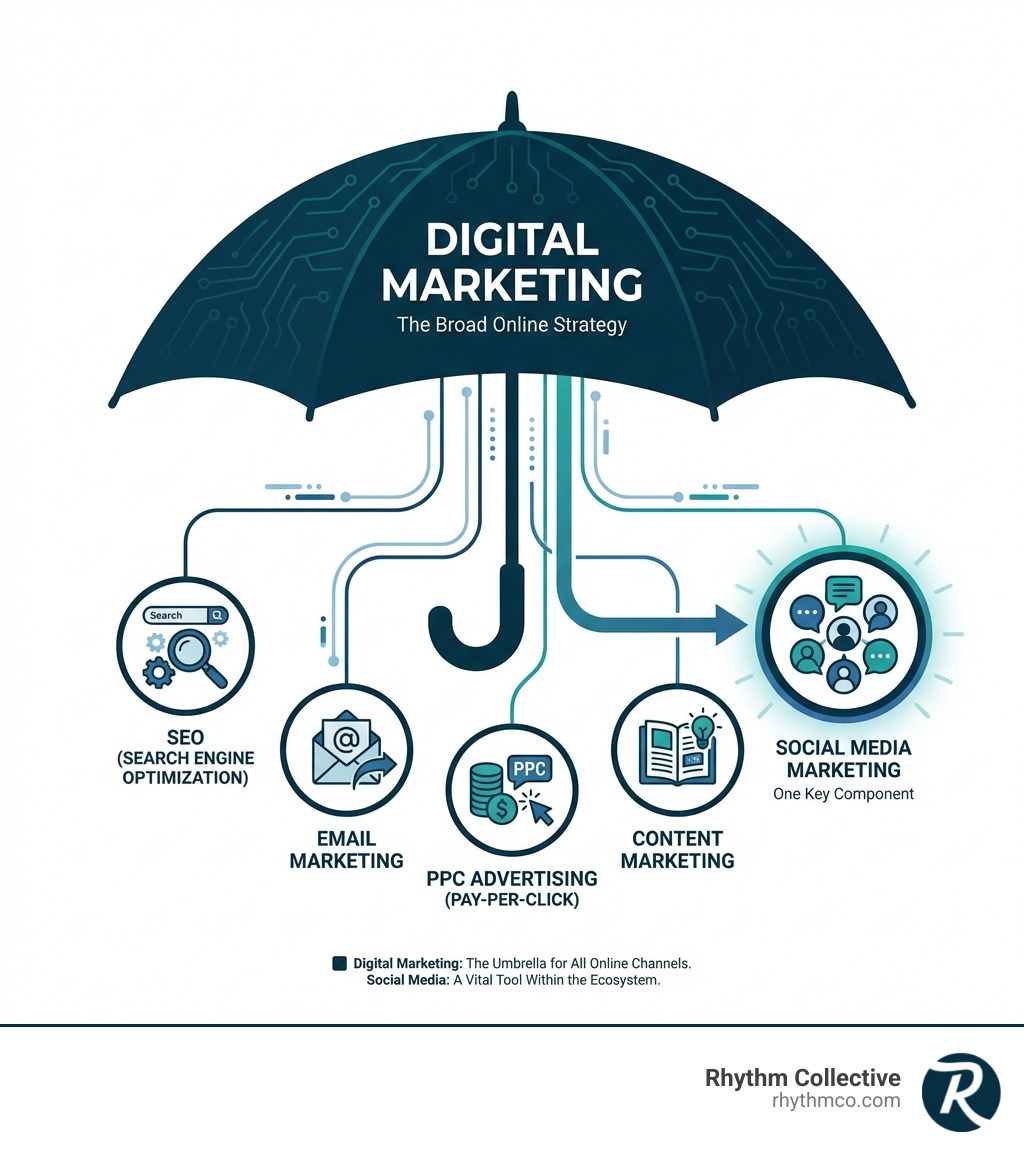
When we talk about digital marketing, we’re referring to all marketing efforts that take place on the internet. It’s the broad, overarching strategy that businesses employ to connect with current and prospective customers online. Think of it as the entire online ecosystem where your brand can exist and interact. This includes everything from the website you visit to the emails you receive, the ads that pop up on search engines, and yes, even the social media posts you scroll through.
At its core, digital marketing builds meaningful relationships with target audiences using a diverse set of digital channels and tools. It’s not just about getting attention; it’s about guiding a potential customer through their entire journey, from first learning about your brand to making a purchase and becoming a loyal advocate. This comprehensive approach is vital for business and brand awareness, helping us reach a larger audience and target prospects most likely to buy.
The importance of digital marketing cannot be overstated. The global market for digital advertising and marketing was estimated at US$350 Billion in 2020 and is projected to reach a staggering US$786.2 Billion by 2026. This growth is fueled by our increasing reliance on the internet: more than 75% of consumers took a new interest in online activities in 2020, with 21% purchasing a product online for the first time. The internet and marketing truly go hand in hand, and for us at Rhythm Collective, it’s how we help businesses in Knoxville, TN, and across East Tennessee deliver profitable revenue and long-term growth.
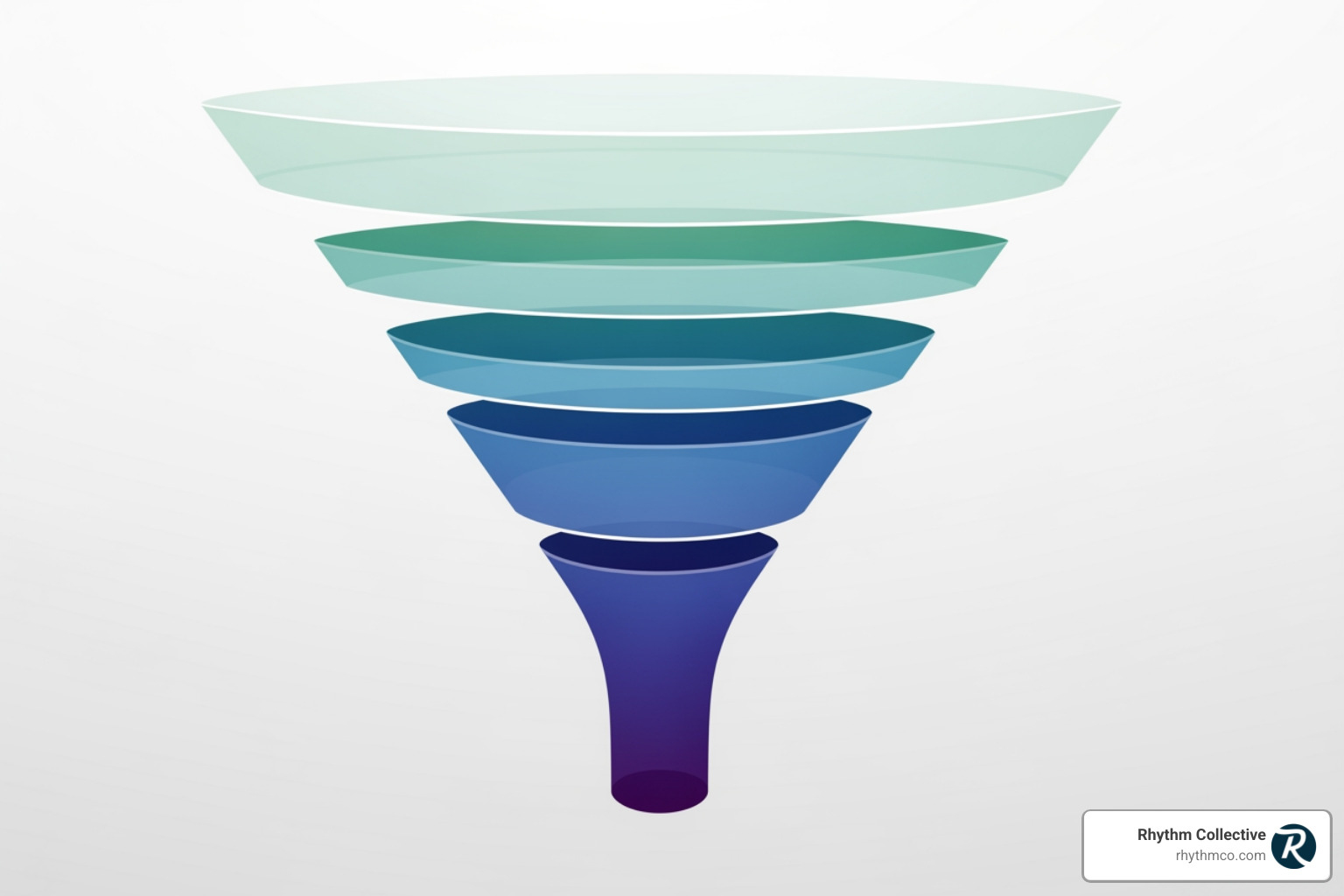
Core Components of Digital Marketing
Since digital marketing is such a broad field, it encompasses numerous specialized components, each playing a crucial role in a comprehensive strategy:
- Search Engine Optimization (SEO): Improving your website’s visibility in search engine results to attract organic traffic. It involves on-page, off-page, and technical optimizations. Our Search Engine Marketing services are foundational for this.
- Pay-Per-Click (PPC) Advertising: Paying for ad clicks to drive targeted traffic to your website from platforms like Google Ads.
- Content Marketing: Creating and sharing valuable content (blogs, videos, e-books) to attract an audience, build trust, and establish authority.
- Email Marketing: Directly communicating with your audience to nurture leads, promote content, and drive sales. It boasts one of the highest ROIs in digital marketing.
- Website Design and Development: Your website is the core of your digital presence. It must be user-friendly, visually appealing, and optimized for conversions.
- Mobile Marketing: Optimizing all digital assets—websites, ads, and content—for mobile devices, where users spend the majority of their digital time.
- Other Key Channels: This includes Marketing Automation (using software for repetitive tasks), Online PR (earning digital media coverage), Inbound Marketing (attracting customers with valuable content), and Affiliate/Native Advertising (performance-based or content-led ads).
Primary Goals of Digital Marketing
The objectives of digital marketing are broad, aiming to influence the entire customer journey:
- Lead Generation and Sales Conversion: Turning website visitors into leads and converting those leads into paying customers using tactics like compelling calls-to-action and retargeting ads.
- Increase Website Traffic: Driving more qualified visitors to your website through organic search, paid ads, and other referral channels.
- Build Authority and Credibility: Establishing your brand as an industry leader through high-quality content and a robust online presence.
- Achieve Measurable ROI: Tracking performance metrics like traffic, clicks, and conversions to measure ROI and optimize strategies based on data.
- Engage the Full Funnel: Nurturing potential customers through every stage of their journey, from initial awareness to the final purchase decision.
The Megaphone: Defining Social Media Marketing’s Role
If digital marketing is the entire orchestra, then social media marketing is a powerful section within it, playing a very specific and impactful role. It’s a crucial component of digital marketing, but they are not the same.
Social media marketing is the use of social media platforms—like Facebook, Instagram, LinkedIn, TikTok, and Twitter—to build a company’s brand, increase sales, and drive website traffic. Its unique power comes from its unparalleled capacity in three core marketing areas: connection, interaction, and customer data. With 5.17 billion social media users worldwide in 2024, and the typical user active on 6.7 different networks per month, these platforms offer an incredible opportunity to meet your audience where they already are.
We use social media marketing primarily to engage customers and build relationships. It’s about fostering community, driving conversations, and creating an authentic brand presence in a highly interactive space. For businesses in Knoxville and East Tennessee, this means connecting with local customers, understanding their needs, and responding in real-time. The impact is clear: 76% of social media users bought something seen earlier on social media.

Core Components of Social Media Marketing
To effectively wield this megaphone, we focus on several key areas:
- Content Creation: Crafting platform-specific content like posts, videos, and stories. Short-form video (Reels, TikToks) is especially effective for engagement.
- Platform Management: Actively managing profiles, responding to comments and messages, and optimizing your presence on a few key platforms.
- Social Listening: Monitoring conversations about your brand, industry, and competitors to gain insights into audience sentiment and trends.
- Influencer Marketing: Partnering with credible individuals in your niche to promote your brand, often leveraging micro-influencers for higher trust and engagement.
- Paid Social Advertising: Using targeted ads on platforms like Instagram and TikTok to overcome limited organic reach and connect with specific audiences.
Primary Goals of Social Media Marketing
The objectives for social media marketing are distinct yet complementary to broader digital goals:
- Brand Awareness and Reputation: Getting your brand seen and building a positive image by sharing valuable content and establishing a distinct brand voice.
- Audience Engagement and Community: Fostering a loyal community through direct interaction, prompt responses, and encouraging user-generated content (UGC).
- Customer Service and Support: Using social platforms as a public forum to provide customer support and manage brand reputation by responding to feedback.
- Driving Conversations and Buzz: Sparking discussions, gathering feedback, and creating buzz that influences purchasing decisions through social proof.
- Driving Website Traffic: Directing users from social media to your website or landing pages, turning social interactions into tangible results with our Customer Engagement strategies.
Digital Marketing and Social Marketing: A Side-by-Side Comparison
To truly appreciate the nuances of digital marketing and social marketing, let’s look at how they stack up against each other across several key areas. While the introductory table provided a quick overview, we’ll dive deeper into the strategic and tactical differences.
| Aspect | Digital Marketing (Broad Scope) | Social Media Marketing (Specific Channel) |
|---|---|---|
| Scope | Encompasses all online marketing channels and strategies (SEO, PPC, email, content, social, website, mobile, etc.). | Focuses exclusively on social media platforms and their unique functionalities. |
| Primary Goal | Drives the entire customer journey: awareness, consideration, conversion, loyalty, and advocacy. Aims for measurable ROI, lead generation, and sales. | Primarily builds brand awareness, fosters community, drives engagement, and provides customer service. Indirectly contributes to sales. |
| Channels | Websites, search engines (Google, Bing), email platforms, display ad networks, mobile apps, video platforms (YouTube), and social media platforms. | Facebook, Instagram, LinkedIn, TikTok, X (Twitter), Pinterest, Snapchat, etc. |
| Key Metrics | Website traffic, conversion rates, cost-per-acquisition (CPA), return on investment (ROI), lead-to-customer ratio, website engagement (time on page, bounce rate). | Engagement rate (likes, comments, shares), follower growth, reach, impressions, click-through rate (CTR), mentions, sentiment, social share of voice. |
| Content Focus | Diverse formats: long-form blog posts, e-books, whitepapers, landing pages, email newsletters, comprehensive video series, interactive tools, case studies. | Highly visual and interactive: short-form videos, images, stories, polls, live streams, user-generated content, quick updates, memes. |
| Interaction Style | Often scheduled, automated (email sequences), or initiated by user search intent (SEO). Engagement is typically on owned properties (website, blog comments). | Real-time, dynamic, and conversational. Encourages direct dialogue, community participation, and immediate feedback on platforms. |
| Relationship to POEM | Uses all three: Paid (PPC, display ads), Owned (website, blog, email list), and Earned (SEO rankings, mentions in online articles). | Primarily a blend of Owned (your profile, posts) and Paid (social ads). Excellent for generating Earned Media (shares, mentions, UGC). |
| Typical Timeline for Results | Varies: PPC/Paid Social (immediate), Email (days), SEO (3-6 months for traffic, 6-12 months for top rankings), Content Marketing (compounding returns over time). | Immediate engagement and awareness, but building a loyal community and significant impact on sales often takes 1-3 months of consistent effort. |
Key Differences in Strategy and Tactics
The strategic approaches for digital marketing and social marketing diverge based on scope. Digital marketing integrates the POEM framework (Paid, Owned, Earned Media) across all channels. For example, a paid ad (Paid) drives traffic to a blog post (Owned), which users then share (Earned). Tactics are broad, from technical SEO to automated email campaigns.
In contrast, social media marketing focuses on generating “Earned” media (shares, mentions) from “Owned” (your profile) and “Paid” (social ads) assets within its ecosystem. Tactics are more agile and conversational, requiring real-time interaction like responding to comments or jumping on trends, rather than just scheduled posts.
Audience Targeting and Content Strategy
Digital marketing uses broad, data-driven targeting methods like keyword targeting (for SEO/PPC), retargeting website visitors, and segmenting audiences by demographics, firmographics (for B2B), and online behaviors. The content is often long-form and informational, such as comprehensive blog posts, e-books, and case studies designed to establish expertise and convert leads.
Social media marketing leverages rich platform data for highly specific targeting based on user interests, life events, and interactions. The content strategy is primarily visual, interactive, and short-form. It focuses on short-form videos (TikToks, Reels), user-generated content (UGC), polls, and live streams to capture attention and foster community.
Measuring Success and ROI
While both are measurable, their key metrics differ. Digital marketing focuses on business outcomes and conversion funnel metrics:
- Website Analytics: Traffic sources, user behavior, bounce rates.
- Conversion Rates: Percentage of visitors who complete a goal (e.g., purchase).
- Cost-Per-Acquisition (CPA): The cost to acquire one customer.
- Return on Investment (ROI): The direct revenue generated from marketing efforts.
Social media marketing success is measured by metrics reflecting audience interaction and brand visibility:
- Engagement Rate: Likes, comments, shares, and saves.
- Follower Growth: The rate of increase in your audience size.
- Reach and Impressions: How many unique users saw your content and how many times it was displayed.
- Return on Ad Spend (ROAS): For paid campaigns, this measures revenue per ad dollar.
Creating Synergy: How to Integrate Both for Maximum Impact
While digital marketing and social marketing have their distinct roles, their true power is releaseed when they work together in a unified, synergistic strategy. Think of them as two sides of the same coin, each enhancing the other’s effectiveness. Digital marketing provides the infrastructure and diverse channels, while social marketing injects the human element, community, and real-time interaction.
We believe a cohesive and integrated strategy is essential for businesses in Knoxville, TN, and East Tennessee to deliver profitable revenue and long-term growth. When deployed together, paid, owned, and earned media can deliver impressive results, creating a seamless customer journey from findy to conversion.
A Unified Strategy for Digital Marketing and Social Marketing
Here’s how we integrate social media marketing into a broader digital marketing strategy:
- Amplify Content: Share snippets, infographics, or short videos from your long-form blog posts on social media to drive traffic back to your website.
- Drive Website Traffic: Use clear calls-to-action in social posts to direct users to your website, landing pages, or product pages.
- Retarget with Social Ads: Show targeted ads on social media to users who visited your website but didn’t convert, keeping your brand top-of-mind.
- Leverage Social Proof: Display customer reviews and user-generated content from social media on your website and landing pages to build trust and boost conversions.
- Maintain Consistent Branding: Ensure your messaging, visuals, and tone are consistent across all channels for a unified brand experience.
When to Prioritize Digital Marketing and Social Marketing
The right focus depends on your goals, audience, and budget:
- Business Goals: Prioritize digital marketing (SEO, PPC) for direct sales and lead generation. Focus on social media marketing for brand awareness, community building, and customer engagement.
- Budget: With a limited budget, organic social media and SEO offer high ROI. A larger budget allows for robust paid campaigns across Google and social platforms.
- Target Audience: Use digital marketing (SEO/PPC) if your audience is actively searching for solutions. Use social media if they are browsing and connecting with others. B2B audiences may favor LinkedIn, while B2C thrives on Instagram or TikTok.
- Product Lifecycle: For new products, social media can quickly generate buzz. For established products with long sales cycles, digital marketing tactics like content and email nurturing are key.
At Rhythm Collective, our Digital Marketing Agency in Knoxville team helps you build a custom strategy that aligns with your unique needs.
Emerging Trends and the Future
The digital landscape is always evolving. Key trends to watch include:
- Artificial Intelligence (AI) in Marketing: AI is becoming an essential assistant for marketers, helping with content creation, data analysis, and research to improve efficiency.
- Dominance of Video Content: Short-form video (e.g., TikToks, Reels) remains the top media format for investment, offering engaging and easily consumable content.
- Social Commerce: The line between social media and e-commerce is blurring, with users increasingly purchasing products directly within social apps.
- Data Privacy Changes: The phase-out of third-party cookies and new regulations emphasize the need for first-party data and permission-based marketing.
- Immersive Experiences (AR/VR): Augmented and Virtual Reality offer new, interactive ways for brands to engage audiences, with the metaverse representing a future frontier.
To keep pace, continuous learning is vital. We encourage businesses to Learn digital marketing fundamentals to stay informed.
Frequently Asked Questions about Digital and Social Marketing
Which is more important for a new business?
For a new business, both are crucial, but the priority depends on your goals. Start with social media marketing for rapid brand awareness and community building, especially on a tight budget. However, a foundational digital marketing strategy including a functional website and SEO is essential for long-term growth and direct sales. The best approach is integrated: use social media to drive traffic to your website where conversions happen.
How do I measure the ROI of my social media efforts?
Measuring social media ROI involves tracking metrics tied to business goals. Key indicators include website traffic from social channels, conversion rates from social referrals, leads generated, and Return on Ad Spend (ROAS) for paid campaigns. Using tools like Google Analytics with UTM parameters helps connect social activity directly to revenue, giving you a clear picture of its financial impact.
Can I do digital marketing without using social media?
Yes, you can. Digital marketing is a broad field that includes powerful channels like SEO, PPC advertising, email marketing, and content marketing. Many B2B companies find great success focusing on these areas. However, for most businesses (especially B2C), ignoring social media means missing a massive opportunity for brand awareness, customer engagement, and community building. While possible, a strategy without social media is often less effective than an integrated one.
Conclusion: Building Your Cohesive Digital Strategy
The journey through digital marketing and social marketing reveals that while often confused, they are distinct yet deeply interconnected. Digital marketing is the expansive universe of all online promotional efforts, a comprehensive toolkit designed to guide customers from initial awareness to conversion and loyalty. Social marketing, on the other hand, is a vibrant galaxy within that universe, specializing in building relationships, fostering community, and driving real-time engagement on specific platforms.
Understanding this distinction is not just academic; it’s a strategic imperative for any business aiming for sustainable growth. It saves you from wasted budget and misaligned efforts, ensuring every marketing dollar works harder. At Rhythm Collective, we know that true success—delivering profitable revenue and long-term growth—comes from a cohesive strategy that leverages the strengths of both. Whether you’re in Knoxville, TN, or anywhere in East Tennessee, an integrated approach ensures your brand is visible, engaging, and effectively converting prospects into loyal customers across the entire digital landscape.
A cohesive strategy is key to success, and our Creative Marketing Agency Services can help you build it.