

Why Creative Digital Strategy Matters More Than Ever
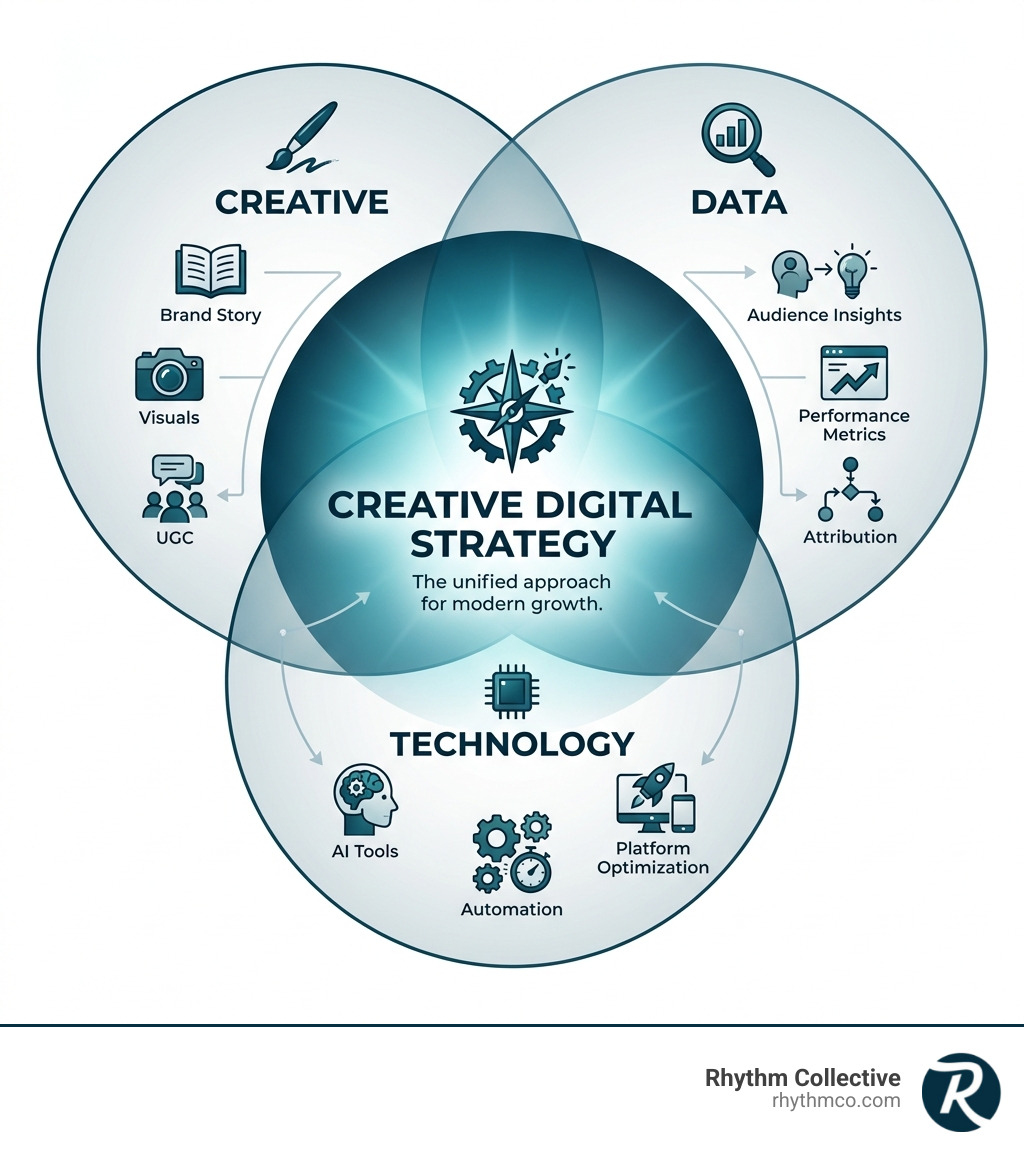
Creative digital strategy is the blueprint combining compelling, audience-centered content with data-driven tactics to build brand awareness, drive engagement, and achieve measurable business growth. It’s not just about where your ads appear—it’s about what you say, how you say it, and why it resonates.
A strong strategy includes clear goals, deep audience understanding, a unique core message, platform-optimized creative assets, strategic channel selection, and a commitment to measurement and optimization.
The digital marketing world is changing. Privacy regulations like GDPR and Apple’s iOS 14.5 update have limited precise audience targeting. According to HubSpot, 88% of marketers say data privacy changes impacted their strategy in 2024. This shift means you can’t rely on targeting alone anymore.
When microtargeting isn’t an option, your creative becomes your targeting tool. Engaging visuals and authentic messaging are essential to cut through the noise, build trust, and drive conversions.
The brands winning today aren’t just running ads; they’re telling stories, creating experiences, and building communities. They leverage user-generated content—which 60% of consumers trust more than branded content—and use AI to scale creative production with a human touch. They’re embracing a creative-first approach.
This guide will show you how to build a creative digital strategy that delivers profitable, long-term growth.
The Shift to Creative-First: Why Your Strategy Needs an Upgrade
Relying solely on traditional ad-targeting is becoming outdated. A fundamental shift, driven by privacy regulations and consumer expectations, is forcing brands to adopt a creative-first mindset. Consumers today experience “ad fatigue” and are quick to scroll past anything inauthentic. A strong creative digital strategy captures attention, builds genuine connections, and drives action when targeting data is less precise.
The Impact of Privacy on Ad Targeting
Major privacy regulations like GDPR and Apple’s iOS 14.5 App Tracking Transparency (ATT) update have fundamentally altered how marketers use consumer data. These initiatives give users more control, reducing the granular data once used for hyper-targeted ads. The move toward a “cookie-less” future makes it harder to track users across websites.
This means we must focus less on who our audience is and more on what they see and how it makes them feel. The shift is toward contextual advertising, where an ad’s relevance comes from the surrounding content, not just user behavior. To learn more about navigating these challenges, explore our Digital Display Targeting services.
Why Creativity is Your New Targeting Tool
When precision targeting is limited, creativity becomes your most powerful asset. A compelling message can resonate with a broad but relevant audience even without pinpoint targeting.
A creative-first approach focuses on:
- Brand Recall and Emotional Connection: Memorable creative assets lodge your brand in the consumer’s mind and evoke emotions generic ads can’t.
- Building Trust: Authenticity is key. With 86% of consumers saying authenticity is important when choosing brands, content should feel helpful or entertaining, not just like an ad.
- Differentiating from Competitors: Unique and imaginative creative helps you stand out from the digital noise.
- Value-Driven Content: Provide value through education, inspiration, or entertainment that aligns with your brand.
By prioritizing creativity, we accept a more human-centric way of marketing that earns attention and builds relationships, rather than just buying impressions.
Deconstructing a Winning Creative Digital Strategy
Now that we understand why creativity is paramount, let’s dive into how to build a winning creative digital strategy. This section breaks down the essential pillars that ensure your creative efforts are purposeful, targeted, and aligned with your business objectives.
Step 1: Define Your Purpose and Audience
Before creating any content, we must understand your business’s purpose and its people. This foundational step is crucial.
- Business Goals and Vision Statement: What are you trying to achieve? Your digital strategy must directly support your overarching business goals, with a clear vision statement as a guide.
- Core Values: Your brand’s values should infuse every piece of content to ensure authenticity.
- Target Audience Personas: Who are we talking to? Detailed buyer personas help us tailor messages that genuinely connect. Use a tool like the Audience profiling template by AMA CultureHive to get started.
- Market Research and Competitive Analysis: We analyze your market position, what competitors are doing well, and where opportunities exist for your brand to differentiate itself creatively.
For businesses in Knoxville, TN, and East Tennessee, this means understanding local market nuances. Our Marketing Consulting Services can help define these critical elements.
Step 2: Craft Your Core Message and Narrative
Once we know who we’re talking to, we determine what to say. This is the heart of your creative digital strategy.
- Brand Voice: Your brand’s personality—witty, authoritative, empathetic—must be consistent across all touchpoints to build recognition and trust.
- Unique Value Proposition (UVP): What makes you different and better? Your UVP should be clear, concise, and compelling.
- Storytelling: We weave narratives that connect with your audience on an emotional level, rather than just listing features. Learn more about The Power of Storytelling Through Videography.
- Key Messaging Pillars: These are the core themes that ensure all creative content reinforces your brand’s identity and value.
- Call-to-Action (CTA): Every piece of creative needs a clear CTA, telling your audience what to do next, whether it’s “Learn More,” “Shop Now,” or “Sign Up.”
Step 3: Choose Your Channels and Formats
A brilliant message is only effective if it reaches your audience where they are. This step involves strategically selecting the right digital channels and content formats. We don’t need to be everywhere; we need to be effective where it matters for your audience in Knoxville, TN, and East Tennessee.
Table: Popular Social Media Platforms for Creative Digital Strategy
| Platform | Audience Demographics (General) | Primary Content Type | Strategic Purpose |
|---|---|---|---|
| Younger demographic, visual-first | Images, short videos (Reels), Stories | Brand awareness, visual storytelling, community building | |
| TikTok | Gen Z, younger millennials | Short-form, highly engaging videos | Viral content, trend participation, authentic connection |
| Professionals, B2B | Articles, professional updates, thought leadership | Networking, B2B lead generation, employer branding | |
| Broad user base, varying age groups | Images, videos, text, Groups | Brand loyalty, broad reach, community engagement |
Beyond social media, we consider:
- Owned Media: Your website, blog, and email newsletters are channels you fully control for in-depth content.
- Earned Media: PR mentions, social shares, and reviews are highly trusted because they are organically generated.
- Paid Media: SEM, paid social, and display ads allow for targeted reach to amplify messages.
- SEO (Search Engine Optimization): Optimizing your site to rank in search results ensures your brand is findable.
- Email Marketing: A direct line to your audience for nurturing leads and driving conversions, boasting an ROI of $36 for every $1 spent.
Our Social Media Marketing services can help you craft engaging campaigns for these platforms.
Execution and Innovation: Bringing Your Strategy to Life
This is where your creative digital strategy transitions from a plan to tangible results. It’s about leveraging modern tools and tactics to create compelling assets that resonate and drive action.
Leveraging AI and User-Generated Content (UGC)
Innovation is key, and two powerful forces are reshaping creative execution: Artificial Intelligence (AI) and User-Generated Content (UGC).
The Role of AI in Creative Production and Personalization: AI is a practical tool revolutionizing creative work.
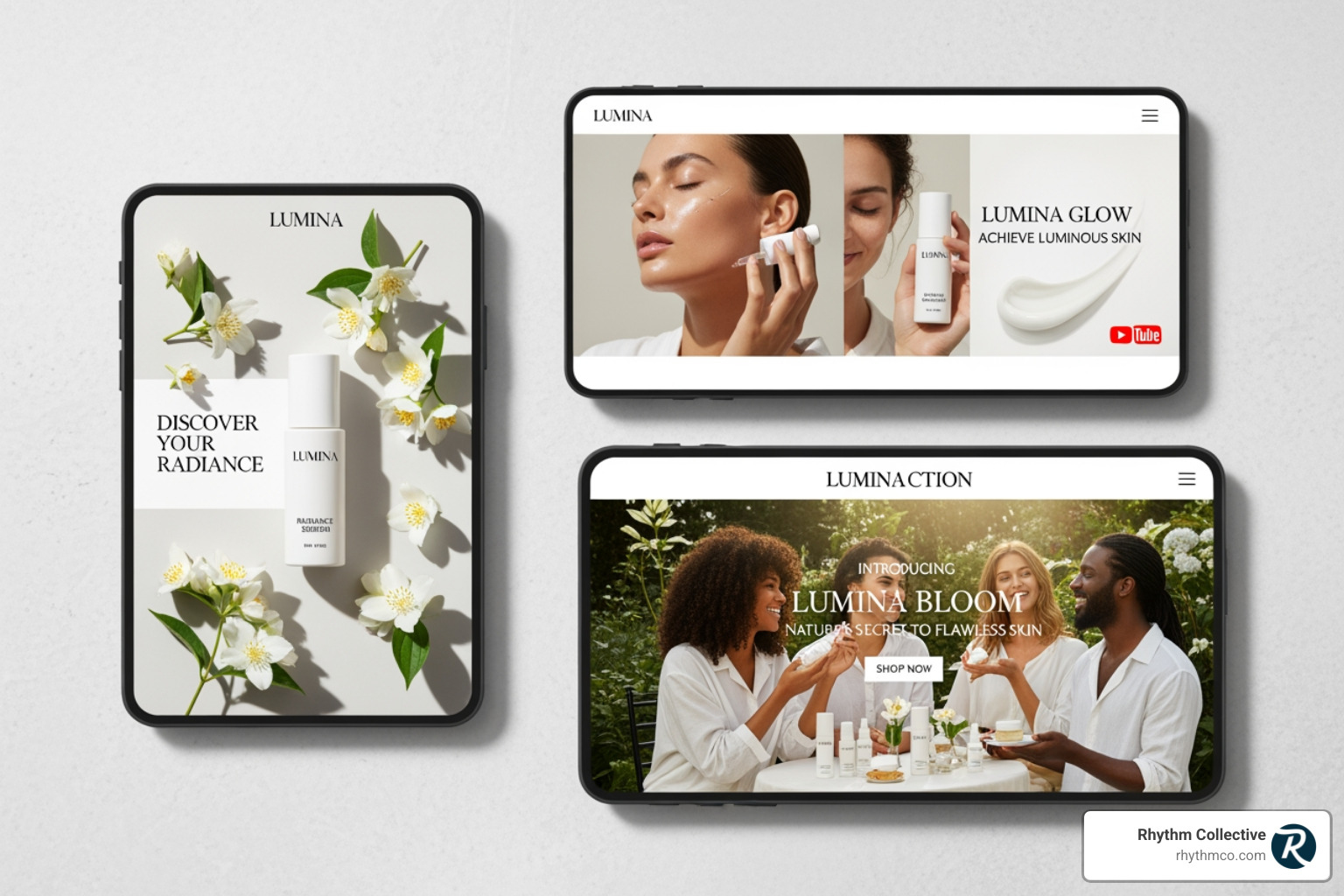
- Creative Production: AI tools can generate copy, design graphics, and create lifestyle images, significantly speeding up asset creation at scale. In 2025, 44% of marketers are already using AI for creative generation.
- Personalization: AI analyzes user data to tailor ad content dynamically, making ads far more relevant. It can also refine email segmentation to ensure messages resonate.
- Campaign Performance: AI streamlines campaign analysis, provides real-time insights, and automates tasks, leading to faster iterations and a higher return on investment.
Leveraging User-Generated Content (UGC): UGC is gold for authenticity and trust.
- Building Trust: Consumers trust UGC more than ads. 60% of consumers find UGC more trustworthy than branded content, and 86% say authenticity is important. Seeing real people use your products builds immense credibility.
- UGC Campaigns: Encourage UGC through contests (like Apple’s #ShotoniPhone), hashtags, or by featuring customer content. This creates community and makes customers feel valued.
- Influencer Collaborations: Partnering with micro-influencers (10k-100k followers) can be highly effective, as they often have niche, engaged audiences and are perceived as more authentic.
Integrating AI and UGC allows us to scale creative output while maintaining authenticity. For dynamic visual content, our Video Production services can help bring your stories to life.
Best Practices for Creating and Optimizing Assets
Creating effective assets is an ongoing process of optimization.
- Mobile-First Design: With most digital media consumed on smartphones, every asset must be designed for mobile screens with clear visuals and fast loading times.
- A/B Testing and Iteration: Continuously test headlines, images, and CTAs to see what resonates. A/B testing provides data to refine campaigns and maximize every dollar.
- Platform-Specific Optimization: Adapt creatives for each platform’s unique environment and audience expectations. A TikTok video differs from a LinkedIn post.
- Visual Consistency: Maintain a consistent brand identity (logo, colors, typography) across all channels to reinforce brand recall. Our article on Why Consistent Graphic Design is Vital for Your Marketing Strategy explains more.
- Accessibility: Ensure assets are accessible with alt-text for images and captions for videos.
- Video Content is King: Video dominates engagement. Advertisers who included video in Performance Max campaigns saw a 12% increase in conversions. It’s a powerful tool for capturing attention.
Measuring Success and Navigating Challenges
A brilliant creative digital strategy isn’t complete without a robust plan for measuring its impact and navigating challenges.

How to Measure the ROI of Your Creative Digital Strategy
Measuring creative ROI is achievable with the right metrics. We focus on connecting creative output to tangible business outcomes.
- Attribution Models: We use models (first-click, multi-touch) to understand which touchpoints and creative assets contributed to a conversion.
- Conversion Tracking: We track actual conversions—sales, sign-ups, or leads—to link creative performance directly to your bottom line.
- Engagement Metrics: Metrics like shares, comments, and watch time indicate how well creative is resonating and often correlate with future conversions.
- Brand Lift Studies: These studies measure changes in brand recall, ad recall, and purchase intent to gauge awareness campaigns.
- Customer Lifetime Value (CLV): Tracking CLV helps us understand the long-term financial impact of our creative efforts.
To set clear goals, tools like an Objective and Key Results (OKRs) template by Asana can be helpful.
Ethical Considerations and Privacy Challenges
As we leverage data and AI, we must operate ethically. For us in Knoxville, TN, and East Tennessee, building community trust is paramount.
- Data Transparency and User Consent: We are upfront about data collection and usage, obtaining clear consent to build trust.
- Avoiding Bias in Personalization: We are mindful of potential AI bias to ensure our personalization strategies are fair and inclusive.
- Data Security: Protecting customer information with robust security measures is non-negotiable.
- Maintaining Brand Integrity: We ensure all creative output, whether human or AI-assisted, aligns with your brand’s identity and ethical guidelines.
These considerations are about building a sustainable, trustworthy brand. Our Marketing Management services incorporate these ethical frameworks into every strategy.
Frequently Asked Questions about Creative Digital Strategy
What’s the difference between a digital strategy and a creative strategy?
A digital strategy is the “where” and “when.” It’s the plan for using digital channels (social media, SEO, email) to achieve business goals. It covers platform selection, targeting, budgets, and timing.
A creative strategy is the “what” and “how.” It’s the blueprint for your message and content. It defines the brand voice, visual style, storytelling approach, and the emotional connection you want to create.
A successful creative digital strategy integrates both. The digital strategy provides the framework, and the creative strategy fills it with impactful content that connects with the right audience at the right time.
How can I develop a creative strategy with a limited budget?
A powerful creative digital strategy doesn’t require a huge budget. Here’s how to be effective with limited resources:
Focus on High-Impact, Low-Cost Tactics:
- Leverage User-Generated Content (UGC): Encourage customers to share their experiences. It’s authentic, trusted by 60% of consumers more than branded content, and costs nothing to acquire.
- Build an Organic Social Presence: Invest time in creating consistent, valuable content that builds community on the platforms your audience uses most.
- Use Email Marketing: Building an email list is cost-effective and delivers a high ROI.
Repurpose Content Relentlessly: Create one “hero” piece of content (like a long-form video or blog post) and slice it into multiple smaller assets for different channels, such as short clips, social media graphics, or email tips. This maximizes your investment.
Prioritize Quality Over Quantity: Focus on creating fewer, higher-quality assets for the channels that matter most. One great video can outperform dozens of mediocre images.
Accept Simplicity: Authentic, raw content can often outperform expensive productions, especially on platforms like TikTok.
By being strategic and resourceful, you can create an effective strategy that delivers results on a tight budget.
How do you fight guesswork and fear when executing a strategy?
Guesswork and fear are common, but they can be overcome with a structured approach.
Fight Guesswork with Data and Testing:
- A/B Test Creative: Instead of assuming what works, test variations of your ads, images, and copy. Let the data tell you what performs best.
- Analyze Continuously: Use tools like Google Analytics 4 to monitor performance in real-time and make data-driven decisions.
- Iterate and Optimize: Adopt a “test and learn” culture. Every campaign provides valuable data that refines future strategies.
Overcome Fear with Small Wins and Support:
- Start Small: Mitigate the fear of failure by launching small pilot campaigns. These “proof points” build confidence and buy-in for larger initiatives.
- Foster Open Dialogue: We act as a supportive partner for our clients in Knoxville and East Tennessee, guiding them through new strategies and ensuring concerns are addressed.
- Educate and Empower: We explain the “why” behind our strategies, making complex concepts understandable so clients feel empowered, not overwhelmed.
By embracing data and fostering a culture of experimentation, we turn potential obstacles into opportunities for growth within your creative digital strategy.
Conclusion
In the , privacy-conscious digital world, a powerful creative digital strategy is your roadmap to building a resilient brand that thrives. It’s no longer enough to simply exist online; you must captivate, connect, and convert. This guide has shown that success lies in blending data-driven insights with human-centered creativity to forge genuine connections and drive sustainable growth. By focusing on your purpose, deeply understanding your audience, crafting compelling narratives, and executing with innovation—including leveraging AI and authentic user-generated content—you can turn your marketing efforts into measurable success. For organizations looking to partner with an expert team to build and execute a strategy that delivers real revenue, Rhythm Collective provides comprehensive creative and marketing agency services.