
Why Website Traffic Increase Matters for Your Business Growth
Website traffic increase is the measurable growth in the number of visitors coming to your site.
Ask any business owner what they want most, and they’ll probably tell you more customers. What comes right after that? More traffic to their website.
The connection is simple: more visitors create more opportunities to capture leads, build relationships, and close sales. Yet 61% of marketers say their biggest challenge is generating traffic and leads.
Website traffic represents the total number of people visiting your site. It’s not just a vanity metric, it’s the lifeblood of online business growth. More traffic means more potential customers, more brand visibility, and more data to inform your marketing decisions.
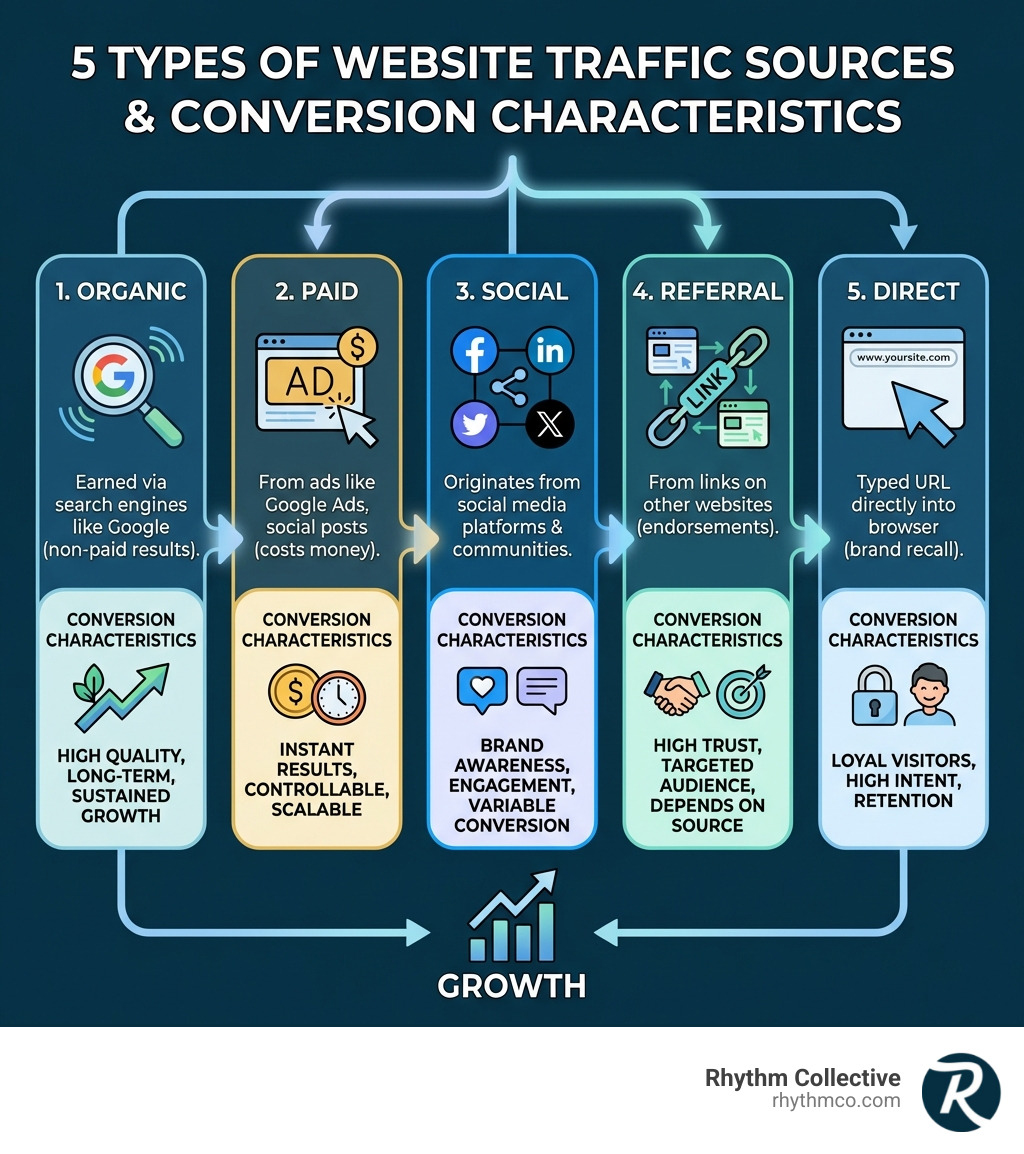
But not all traffic is equal. Understanding the different types matters:
- Organic traffic comes from search engines like Google
- Paid traffic comes from advertisements
- Social traffic originates from social media platforms
- Referral traffic comes from links on other websites
- Direct traffic happens when people type your URL directly
Each source requires different strategies and delivers different results. Businesses with strong SEO and content strategies see consistent, compounding growth over time.
The key is building a comprehensive approach that leverages multiple traffic sources while focusing on what works best for your specific business goals.
Laying the Foundation: Content & On-Page SEO
A meaningful website traffic increase starts with a solid foundation: exceptional content and robust on-page SEO. Without these, even the most aggressive promotional efforts can fall flat.
Leverage Content Marketing to Drive Authentic Engagement
Content is the cornerstone of any successful website. It draws people in, keeps them engaged, and encourages them to return.
One of the most effective ways to build that content is through a business blog. A well-structured blog establishes your business as an industry leader, generates leads, and provides a platform to connect directly with your audience.
When planning your content, consider evergreen topics. This type of content remains relevant over a long period, continuously driving traffic and accumulating valuable backlinks without constant updates. Trending or seasonal content can offer short-term boosts, but evergreen content provides sustainable, long-term value.
Authentic content creation means being true to your brand’s voice and values. It involves transparency and consistency. Your audience can spot inauthenticity, so we create content that resonates with their needs and interests.
User experience (UX) also plays a vital role in driving repeat website traffic. A website that is easy to steer, loads quickly, and is visually appealing encourages visitors to stay longer and explore more pages. This positive experience translates into higher engagement and a greater likelihood of return visits.
Don’t underestimate the power of video content in driving website traffic. Video is a highly engaging medium that can convey complex information quickly and effectively. You can repurpose blog posts into videos, create product demos, or share behind-the-scenes glimpses. As experts in video production, we know that The Power Of Storytelling Through Videography can capture attention and drive significant traffic.
Finally, consistent brand messaging is crucial for attracting and retaining website visitors. Your brand’s voice, visuals, and values should be unified across all platforms. This consistency builds trustworthiness and credibility, making your audience feel more connected to your brand. At Rhythm Collective, we understand Why Consistent Graphic Design Is Vital For Your Marketing Strategy and how it contributes to a cohesive and attractive online presence.
The Role of Technical SEO in Website Traffic Increase

Brilliant content needs to be findable. That is where Search Engine Optimization (SEO) comes in. SEO optimizes your website to rank higher in search results, making it easier for potential customers to find you. The first page of Google captures the vast majority of search traffic clicks, so appearing high up in those results is non-negotiable for a significant website traffic increase.
A fundamental step is keyword research. We need to understand what terms your target audience is typing into search engines. Tools like Google Keyword Planner and Answer the Public can help uncover relevant keywords, including long-tail keywords (longer, more specific phrases). While long-tail keywords may have lower search volume, they often indicate higher user intent and lead to better conversion rates. Once identified, these keywords should be strategically placed in your title tags, headings (H1, H2, H3), body text, and image alt text.
Headline optimization is another powerful lever. A compelling headline is your content’s first impression; it needs to be enticing enough to make users click.
Your URL structure should be clean, short, and descriptive, ideally including relevant keywords. This helps both users and search engines understand what the page is about.
Website speed is paramount. Users, and search engines, dislike slow websites. A fast-loading site improves user experience and is a critical ranking factor. Similarly, mobile responsiveness is no longer optional; with more traffic occurring on mobile devices, your site must look and function well on all screen sizes.
Schema markup is a type of code we can add to your website to help search engines better understand your content. This can lead to “rich snippets” in search results, which are visually more appealing and can improve your click-through rates. Tools like Google Rich Result Test can help validate your schema.
Internal linking is the practice of linking to other relevant pages within your own website. This helps search engines understand the structure of your site, distributes “link equity” across your pages, and keeps visitors engaged by guiding them to more relevant content.
Finally, we must address broken links. These links to non-existent pages create a poor user experience and hurt your SEO. Regularly auditing and fixing broken links is essential. Tools like Ahrefs’ Broken Link Checker or Screaming Frog can identify these issues. For comprehensive optimization and maintenance, our Expert Website Management for Business Growth services ensure these technical aspects are handled seamlessly.
Tracking and Analysis: Measure What Matters
To achieve a sustainable website traffic increase, you need to know what is working and what is not. Tracking and analysis are indispensable.
Google Analytics is our go-to tool for understanding your website’s performance. It provides invaluable insights into your visitors: who they are, where they come from, and what they do on your site. Google Analytics 4 (GA4) uses event-driven data for a more granular view of user interactions.
Google Search Console complements Analytics by showing us how your site performs in Google Search results. We can see which search queries bring users to your site, monitor indexing status, and identify any technical issues Google encounters.
By tracking your traffic sources, we can differentiate between organic, social, referral, and direct traffic. This helps us understand which channels are most effective and where to allocate our efforts for a better website traffic increase.
Analyzing user behavior metrics like bounce rate, average session duration, and pages per session tells us how engaged visitors are with your content. If visitors are leaving quickly or not exploring multiple pages, it signals a need for content or UX improvements. Identifying your top-performing content helps us replicate success and optimize underperforming pages.
For ongoing monitoring and strategic adjustments, we use a suite of free analysis tools, including Google Analytics, Google Search Console, and Google Trends (to spot emerging keyword opportunities). For more in-depth insights and strategic guidance, our Marketing Consulting Services can help you interpret this data and formulate a winning strategy.
Expanding Your Reach: Off-Page & Promotional Strategies
Once your website’s foundation is strong, it is time to cast a wider net. Off-page SEO and strategic promotional activities are crucial for expanding your reach and accelerating your website traffic increase.
Build Authority with Backlinks and Digital PR

Backlinks are votes of confidence from other websites. When a reputable site links to yours, it signals to search engines that your content is valuable and authoritative, which is why backlinks remain a big part of SEO.
It is about quality over quantity. A few backlinks from high-authority, relevant sources are more valuable than many from low-quality sites. Quality backlinks boost your domain authority, improving search rankings and driving a natural website traffic increase.
So, how do we acquire these coveted links?
- Guest blogging: Writing valuable content for other reputable websites in your industry, including a link back to your site.
- Digital PR: Promoting your most valuable content, original research, or unique insights to relevant media outlets and journalists. This can lead to mentions and links in news articles, industry publications, and popular blogs.
- Original research: Creating unique data or studies that other industry players will want to cite and link to.
Public relations (PR) strategies extend beyond just backlinks. Press releases, media appearances, or being featured in relevant articles can increase brand awareness and direct traffic to your site.
Engaging with online communities is another subtle yet powerful way to drive traffic. Platforms like Discord and Slack, or relevant forums and social media groups, allow you to build a community around your brand. By providing value and expertise, you can indirectly guide interested members back to your website.
Influencer outreach involves building relationships with individuals who have a significant following in your niche. Their endorsement or mention of your content can expose your website to a highly engaged audience, leading to a substantial website traffic increase.
For businesses in Knoxville and throughout East Tennessee, enhancing Local Search Visibility is equally important. This includes optimizing your Google Business Profile with accurate information, high-quality images, and encouraging customer reviews, which significantly impact local SEO ranking signals.
Using Social Media and Email to Boost Website Visits
Social media and email marketing are direct lines to your audience, offering powerful avenues for a targeted website traffic increase.
Social media platforms are dynamic environments, and effective use means tailoring your content to each platform. For example, YouTube Shorts limits videos to 60 seconds, while X (formerly Twitter) restricts posts to short text-based updates. A consistent posting schedule is key, but so is understanding where your audience spends their time. Whether it is LinkedIn for B2B, Facebook for broader B2C, Instagram for visual content, or TikTok for engaging short videos, we ensure your message is optimized for the platform and audience.
Content promotion on social media is crucial. Do not just publish content on your blog and hope people find it; actively share it. You can repurpose existing content into various formats to maximize its reach. For instance, a detailed blog post can become an engaging X thread, a series of visually rich LinkedIn carousel posts, or short, punchy videos for Instagram Reels or YouTube Shorts. Remember to include clear calls to action (CTAs) that drive users back to your website. Our Social Media Marketing services focus on strategic content distribution that converts followers into visitors.
Email marketing remains one of the most powerful tools for driving repeat website traffic. Your email list is an owned asset, not subject to algorithm changes, offering a direct line of communication with an engaged audience. We leverage email campaigns to promote new content, features, and offers. Newsletters are excellent for keeping your audience informed and reminding them to visit your site. Drip campaigns can re-engage visitors with a series of automated emails designed to guide them back to specific pages.
When crafting emails, consistency in style and frequency is important. Always include clear call-to-action buttons that direct users back to your site. And critically, never spam your audience; it is not only illegal in some countries but also guarantees they will unsubscribe. Our Email Drip Campaign Automation can help you build and nurture your email list effectively.
Accelerating Growth: Paid & Advanced Methods for a Website Traffic Increase
While organic strategies build long-term sustainability, sometimes you need to accelerate your website traffic increase. This is where paid promotions and innovative tactics come into play, offering immediate visibility and a competitive edge.
Understanding Paid, Owned, and Earned Promotions
To fully grasp the landscape of digital promotion, it is helpful to categorize your efforts into three distinct types:
-
Paid Media: This refers to any promotional activity you pay for. It is about buying attention. Examples include Pay-Per-Click (PPC) ads, display ads, sponsored content, and social media ads. Paid media offers immediate visibility and precise targeting, allowing you to reach specific demographics or users with high commercial intent. Our Search Engine Marketing strategies are designed to maximize the effectiveness of your paid campaigns.
-
Owned Media: These are the channels you control entirely. Your website, blog, email list, and social media profiles (though algorithms dictate reach) fall into this category. The content you create and the direct communication channels you build are all part of your owned media. This is where you build brand equity and nurture relationships over time.
-
Earned Media: This is exposure gained through promotional efforts other than paid advertising. It includes backlinks from other websites, mentions in articles, social media shares, and positive reviews. Earned media is a powerful validator, lending credibility and authority to your brand.
For a rapid website traffic increase, paid advertising, particularly PPC (Pay-Per-Click), is highly effective. Google Ads allows you to target high-intent keywords, displaying your ads to people actively searching for your products or services. This focuses on bottom-of-funnel keywords, leading to qualified traffic. Similarly, social media ads on platforms like Facebook, Instagram, or LinkedIn can reach audiences at earlier stages of their customer journey, building awareness and driving clicks.
Innovative Tactics for a Competitive Edge
Beyond the core strategies, several innovative tactics can give you an advantage in achieving a website traffic increase:
Content curation involves gathering and presenting relevant content from various sources around a specific topic. By becoming a trusted curator, you establish your blog as a go-to resource, fostering community and driving traffic as people seek out your curated insights.
Licensing content from other publications can provide instant credibility and fill content gaps on your site. If you want to quickly establish authority or diversify your content offering without creating everything from scratch, this can be a useful strategy.
Leveraging sales and product teams for content strategy can provide invaluable insights. These teams are on the front lines, understanding customer pain points and product benefits firsthand. Their perspectives can help create more relevant and engaging content that speaks directly to your target audience.
Creating free tools (for example, calculators, templates, quizzes) can be a strong traffic driver. People appreciate free, useful resources, and these tools often rank well in search results, earning backlinks and acting as natural lead magnets for your products or services.
Geo-targeted traffic is especially relevant for businesses in specific regions like Knoxville or East Tennessee. By optimizing for local keywords and ensuring your Google Business Profile is fully optimized, you can attract highly relevant local traffic looking for your services or products in their area. Our Digital Display Targeting can also help reach specific audiences based on their geographic location.
To empower your team with insights, several free tools to analyze website traffic and SEO metrics are readily available:
- Google Analytics: Comprehensive website performance tracking.
- Google Search Console: Monitor search performance and identify issues.
- Google Trends: Explore search interest in topics and keywords.
- Answer the Public: Visualize questions and related searches around a keyword.
These tools provide the data needed to continually refine your strategies and ensure your efforts lead to a consistent website traffic increase.
Troubleshooting & Strategy: What to Do When Traffic is Low
It can be disheartening when your website is not attracting the visitors you expect. But a “traffic jam” is not the end of the road; it is a signal to diagnose and adjust.
Diagnosing a No-Traffic Website
If your website is not getting traffic, it is like having a beautiful storefront on a deserted street. We need to figure out why. Here are some common reasons for low traffic and how we approach diagnosing them:
- The Site Has Not Been Updated in Quite Some Time: People do not want to visit a website that lacks substance and relevant content. If your content is stale, visitors will not return, and search engines may deprioritize it.
- The Site is Not Mobile-Friendly: With more people browsing on smartphones, a non-responsive site is a major turn-off. If your website is not compatible with mobile phones, potential visitors will quickly leave.
- There Are No Keywords: How do internet users find websites? By searching for keywords. If your site is not optimized for relevant keywords, search engines will not know when to show it.
- Ignoring the Trends: While evergreen content is crucial, completely ignoring industry trends can make your site feel outdated. Staying abreast of what is popular in your industry helps maintain relevance.
- You Have Broken Links: Broken links create a frustrating user experience and signal to search engines that your site is not well-maintained. Users will likely hit the back button and go elsewhere if they encounter too many.
To effectively diagnose these issues, we perform a thorough site audit. This involves checking for technical issues (like site speed and crawlability), analyzing your existing content for keyword gaps and relevance, and identifying broken links. Tools like Ahrefs’ Site Audit and Screaming Frog can help uncover these problems. We also conduct competitor analysis using tools like BuzzSumo, Semrush, or Ahrefs to see what successful sites in your niche are doing well and identify opportunities. Our Website Management Services That Supercharge Your Online Presence proactively address these issues, ensuring your site is always performing optimally.
Building a Sustainable Strategy for Website Traffic Increase
A successful website traffic increase is not a one-time fix; it is a continuous process built on a sustainable strategy.
A robust content strategy is at the heart of this. It starts with clearly defined goals and a deep understanding of your target audience. From there, you can develop an editorial calendar that outlines what content to create, when to publish it, and how it aligns with your business objectives. This ensures consistency and relevance.
Setting realistic timelines is key. SEO is generally a long-term game; you might start to see increases for low-competition keywords within weeks, but for highly competitive terms, it can take many months. Paid advertising, on the other hand, offers more immediate results. Social media can be quick if content gains traction, but consistent growth takes time. The most important factor across all strategies is consistency.
When is it advisable to outsource blog content creation? If your internal team lacks the time, expertise, or resources to consistently produce high-quality, SEO-optimized content, outsourcing can be a smart move. It ensures a steady stream of fresh, engaging content, maintaining your publishing schedule and quality standards.
For foundational SEO knowledge, Google’s own SEO starter guide is an excellent resource. Integrating these best practices into your ongoing operations is crucial. Our Marketing Management services can help you orchestrate these diverse strategies into a cohesive plan, driving consistent growth for your website.
Frequently Asked Questions about Increasing Website Traffic
What are the most effective free methods to drive traffic to a website?
Many powerful strategies for a website traffic increase will not cost you money, just time and effort. Some of the most effective free methods include:
- On-page SEO: Optimizing your content and technical elements for search engines.
- Keyword-optimized content: Creating high-quality, relevant content around keywords your audience searches for.
- Blogging: Regularly publishing valuable articles that establish your authority and attract organic search traffic.
- Social media promotion: Sharing your content across relevant social platforms to engage your audience and drive clicks.
- Building an email list: Cultivating a direct communication channel to send newsletters and promote new content.
- Securing backlinks through outreach: Earning links from other reputable websites through guest blogging, digital PR, or creating link-worthy content.
How long does it typically take to see an increase in website traffic?
The timeline for seeing a website traffic increase varies significantly depending on the strategies employed:
- Organic SEO: This is a long-term investment. You might start seeing results for less competitive keywords within a few weeks, but for more competitive terms and significant growth, it typically takes several months or more.
- Paid Advertising: Offers immediate traffic as soon as your campaigns go live.
- Social Media: Can be quick if your content reaches a wide audience, but consistent, sustained growth through social media builds over time with regular engagement and posting.
- Email Marketing: Can provide quick boosts when you send out campaigns to an existing list.
Consistency, patience, and continuous optimization are key across all methods.
How can website traffic be monetized?
Once you have achieved a significant website traffic increase, there are several ways to turn those visitors into revenue:
- Direct Sales (E-commerce): If you sell products or services directly on your website, increased traffic leads directly to more potential purchases.
- Lead Generation for Services: For service-based businesses, traffic can be converted into leads through contact forms, quote requests, or consultation bookings.
- Affiliate Marketing: Promoting other companies’ products or services and earning a commission on sales made through your unique affiliate links.
- Display Advertising: Running ads on your website (for example, through common ad networks) and earning revenue based on impressions or clicks.
- Selling Digital Products: Offering e-books, courses, templates, or software that your audience can purchase directly from your site.
Conclusion: Turn Your Traffic Jam into a Freeway of Opportunity
Achieving a substantial website traffic increase is a multifaceted endeavor, but it is an achievable one with a strategic and holistic approach. We have explored the importance of foundational content and technical SEO, the power of expanding your reach through backlinks, social media, and email, and the acceleration that paid and innovative methods can provide.
Consistent effort, a focus on quality, and a commitment to understanding your audience are paramount. It is a long-term effort, but the rewards, more customers, greater brand visibility, and sustained growth, are well worth it.
At Rhythm Collective, we do not just aim for leads; we transform these strategies into profitable revenue and long-term growth for our clients. With our expertise in web design, video, graphic design, SEO, and digital strategy, we have helped businesses generate over $140 million.
Ready to clear your website’s traffic jam and pave the way for growth? Contact our digital marketing agency in Knoxville to unlock your website’s full potential today!