
What Is Digital Advertising?
Prices and platform details current as of November 2026 via Google Ads Help.
Digital advertising is paid promotional messaging delivered through internet channels, including search engines, social media feeds, websites, mobile applications, and streaming networks. Unlike traditional print media, broadcast television, or static roadside billboards, digital ad campaigns allow you to reach specific audiences, adjust budgets in real time, and monitor measurable consumer actions such as link clicks, page visits, incoming phone calls, and quote submissions.
For a regional service business in East Tennessee, including the Knoxville, Chattanooga, and Tri-Cities areas, digital promotions connect your offerings directly with local property owners. Search engine ads capture residents experiencing urgent repair needs, while display banners and streaming video spots build familiarity across surrounding neighborhoods. This guide outlines how automated ad distribution works, examines the primary online formats, explains pricing calculations, and details performance tracking.
How Does Digital Advertising Work?
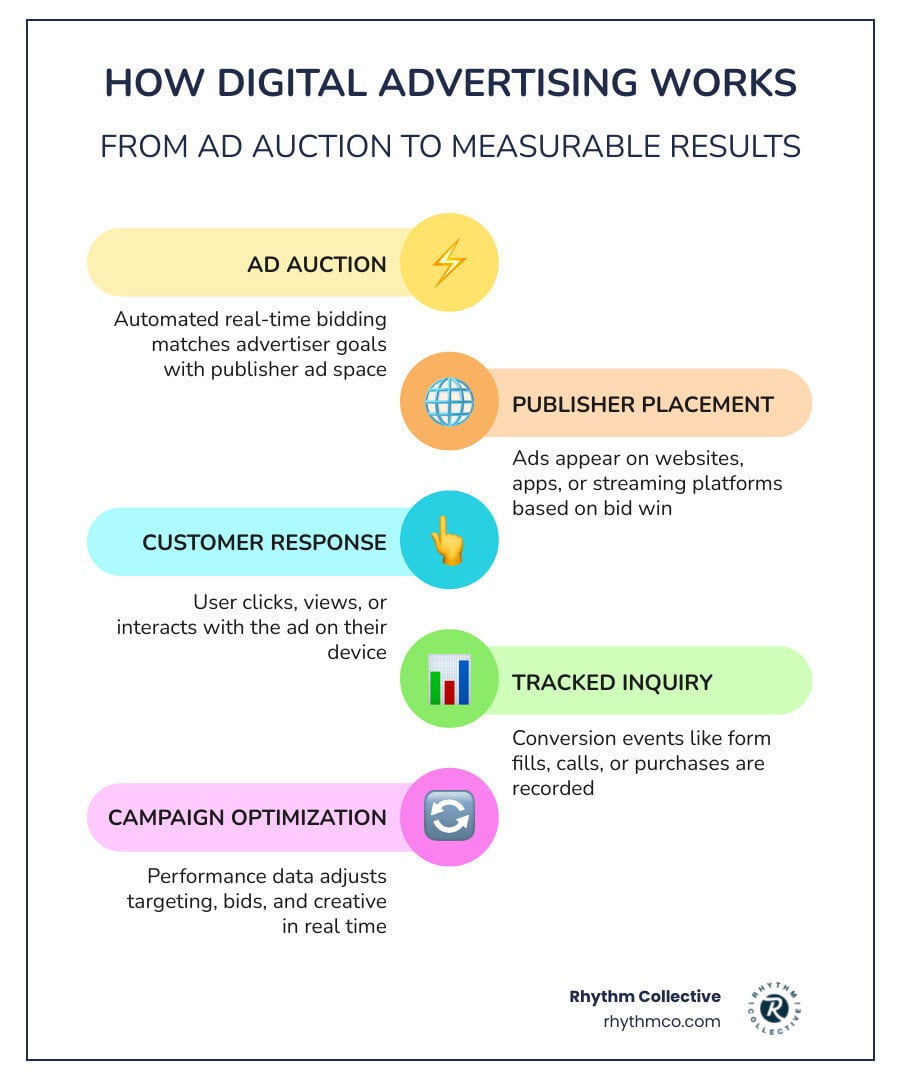
Digital advertising functions through automated networks connecting businesses that buy visibility with digital publishers who produce content. Publishers include web news portals, mobile app creators, video streaming services, and social platforms with active user attention. Advertisers purchase access to available screen placements across these properties to display targeted promotional materials to specific customer segments.
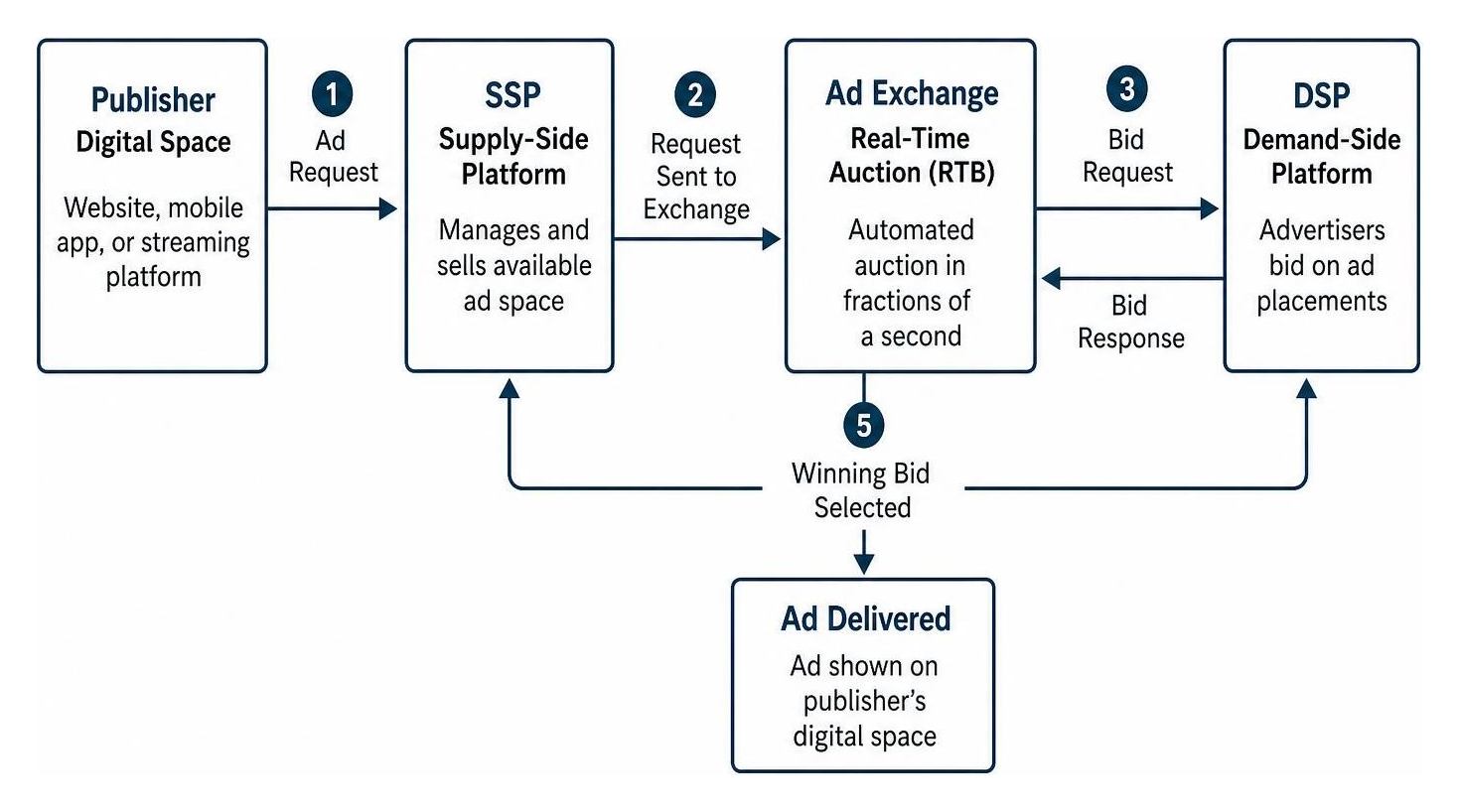
Modern media delivery operates through programmatic systems, which automate ad inventory purchases using data algorithms rather than manual insertion contracts. A Demand-Side Platform (DSP) enables advertisers to configure audience targeting parameters, manage bids, and purchase display, video, or mobile inventory across independent websites from a central interface. Conversely, a Supply-Side Platform (SSP) allows digital publishers to organize, price, and sell their unsold display inventory automatically to maximize revenue.
Transactions take place on digital ad exchanges through real-time bidding (RTB) auctions. When a user opens a web page, the browser sends an automated ad request. Multiple platforms submit competitive bids in milliseconds, and the winning ad renders before the page finishes loading. For an overview of foundational network structures, consult this overview of online advertising models. Building an organized operational roadmap begins with crafting a digital advertising plan.
What Are the Main Types of Digital Advertising?
Digital ad formats fall into inbound and outbound marketing categories. Inbound channels capture commercial intent from users actively searching for answers or professional services. Outbound channels introduce products or services to targeted demographics as they read articles, browse social media feeds, or watch entertainment programming.
| Ad Channel | Primary Objective | Common Pricing Model | Audience Intent Level |
|---|---|---|---|
| Search Engine Ads | Direct Lead Capture | Cost Per Click (CPC) | High Intent (Active Problem) |
| Display Ads | Broad Brand Visibility | Cost Per Mille (CPM) | Low Intent (Passive Browsing) |
| Social Media Ads | Audience Engagement | CPC / CPM | Medium Intent (Interest-Based) |
| Streaming Media | Brand Recall & Reach | CPM / CPV | Passive Consumption |
| Geofencing & Retargeting | Re-engagement | CPC / CPM | High Intent (Prior Interaction) |
Search Engine Digital Advertising
Search engine advertising places sponsored text listings at the top and bottom of search result pages on Google and Microsoft Bing. These listings appear when a user enters commercial search queries for local repair services. Because the consumer is seeking a solution, search traffic exhibits direct conversion intent.
Ad positions are determined by automated auctions calculating the advertiser's maximum bid and an ad relevance score. Local trade contractors and home service firms also use pay-per-lead search placements detailed in this Google Local Services Ads guide. Service businesses operating across Knoxville, Chattanooga, and the Tri-Cities use Knoxville PPC management to control budget expenditures and capture qualified local inquiries.
Display and Programmatic Digital Advertising
Display advertising distributes graphic banners, responsive images, and interactive media units across publisher websites, mobile applications, and specialty web portals. The Google Display Network connects advertisers to partner websites, allowing visual marketing messages to appear beside relevant lifestyle, weather, news, or trade articles.
Display campaigns build local market familiarity across defined postal codes and counties in East Tennessee. Delivery systems monitor viewability metrics to confirm ads render in active viewing areas of user screens rather than hidden below the page fold. Standard programmatic networks also use automated traffic verification tools to identify and filter out invalid bot traffic.
Social Media Advertising
Social media ad platforms let businesses place sponsored image, carousel, and video advertisements directly inside user feeds, stories, and video discovery sections. Networks like Facebook and Instagram provide segmentation tools based on geographic location, age brackets, homeownership status, and documented user interests.
Professional social networks offer business-to-business filtering options such as job titles, industry sectors, and company size, following established professional digital advertising standards. Regional enterprises can examine targeted Facebook advertising campaigns to see how structured social placements maintain local awareness among residential property owners.
Video and Streaming Media Advertising
Video advertising delivers visual and audio commercials across digital video portals like YouTube and internet-connected television environments. Over-the-top (OTT) media and connected TV and streaming TV transmit commercial spots through streaming television apps directly into living rooms and mobile devices.
Non-skippable connected television placements require viewers to watch the message before regular programming resumes. This format delivers complete video views across specific regional zones. Digital audio advertising operates similarly, reaching listeners on music streaming platforms and episodic podcast channels during daily commutes.
Location-Based Geofencing and Retargeting
Location-based geofencing uses mobile satellite GPS coordinates and wireless IP address boundaries to establish precise digital perimeters around physical commercial buildings and event venues. Businesses exploring location-based filters can review geofence advertising costs to understand hardware parameters and audience minimums.
Site retargeting uses secure browser tracking pixels to serve follow-up display banners to people who previously visited your website without submitting an inquiry form. Dynamic remarketing presents specific service reminders to reconnect with prospective buyers during their research phase.
How Are Digital Ads Purchased and Priced?
Digital advertising networks use performance-based and impression-based pricing models. In performance structures, you incur costs only when a user interacts with your creative unit, such as clicking a link or making a direct phone call. In impression structures, you purchase ad views measured in blocks of 1,000 impressions via LinkedIn Marketing Terms across publisher networks.
| Pricing Model | Definition | Calculation Method | Primary Use Case |
|---|---|---|---|
| Cost Per Click (CPC) | Price paid for each direct user click | Total Spend / Total Clicks | Search Campaigns & Traffic Generation |
| Cost Per Mille (CPM) | Price charged per 1,000 ad impressions | (Total Spend / Total Impressions) × 1,000 impressions | Display Banners & Brand Awareness |
| Cost Per Acquisition (CPA) | Cost to generate a confirmed customer | Total Spend / Total Conversions | Direct Lead Generation Campaigns |
| Cost Per Lead (CPL) | Cost per completed contact form | Total Spend / Total Leads | Local Service Inquiry Forms |
| Cost Per View (CPV) | Price per qualified video interaction | Total Spend / Total Video Views | Streaming Video & YouTube Media |
Budget allocation depends on campaign objectives. Service providers seeking immediate phone inquiries often emphasize search models, while businesses introducing a new product line distribute funds toward display impressions.
How Do Businesses Target Audiences and Track Performance?
Targeting accuracy depends on data classifications within digital marketing systems. First-party data consists of contact information collected directly from your own business operations, such as customer email lists, phone records, and historical service invoices. Second-party data represents another organization's first-party records shared through an established business partnership. Third-party data relies on external information aggregated across diverse web properties, which faces reduced availability as internet browsers restrict cross-site tracking.
Evaluating campaign effectiveness requires monitoring standard objective metrics:
- Click-Through Rate (CTR): The percentage of total ad impressions that generate a click, calculated as total clicks divided by total impressions.
- Conversion Rate: The percentage of website visitors who take a specific target action, calculated as total conversions divided by total site visits.
- Cost Per Lead (CPL): The average advertising expense incurred to acquire one customer inquiry, calculated as total ad spend divided by total form submissions or phone calls.
- Return On Ad Spend (ROAS): Gross revenue attributed directly to marketing campaigns divided by total ad spend.
State consumer privacy rules, including the Tennessee Information Protection Act via TN.gov, establish strict consumer data handling standards. Desktop ad-blocking software also prevents third-party tracking scripts from firing, making first-party data collection and direct search intent channels common methods for tracking performance attribution.
Frequently Asked Questions About Digital Advertising
What is the difference between digital advertising and digital marketing?
Digital marketing is an umbrella category encompassing all online communication channels, including organic search engine optimization, unpaid social media publishing, website development, and email newsletters. Digital advertising is the specific paid segment where businesses purchase screen placements to deliver promotional messages to targeted audiences.
How much do digital ads cost for a local service business?
Digital ad costs vary based on target geography, market competition, keyword demand, and chosen auction bidding limits. Pricing structures accommodate diverse monthly budgets, allowing business owners to scale their total advertising investment in alignment with organizational capacity and seasonal demand cycles.
How do privacy laws and browser ad blockers affect digital ads?
Consumer privacy legislation and browser ad blockers restrict cross-domain cookie tracking across independent websites. Modern advertising campaigns adapt to these technical limits by relying on verified first-party customer databases, contextual keyword placements, and direct search intent channels.
How long does it take for digital advertising campaigns to generate inquiries?
Search ads can produce inquiries after campaign approval because listings appear as soon as local users enter target search terms. Display, social, and streaming video placements rely on accumulating audience impressions over recurring billing cycles to build reach and brand recognition across regional markets.
Talk With a Growth Specialist
Have a question about marketing your business? Talk with a growth specialist at Rhythm Collective in Knoxville to review targeted advertising services for your regional service area.