

Why a Digital Brand Strategy is Your Blueprint for Market Leadership
A digital brand strategy is your comprehensive plan for building a strong, recognizable presence online that drives customer loyalty and revenue growth. It combines brand identity, messaging, visual design, and digital channels into a unified approach that connects with your target audience and differentiates you from competitors.
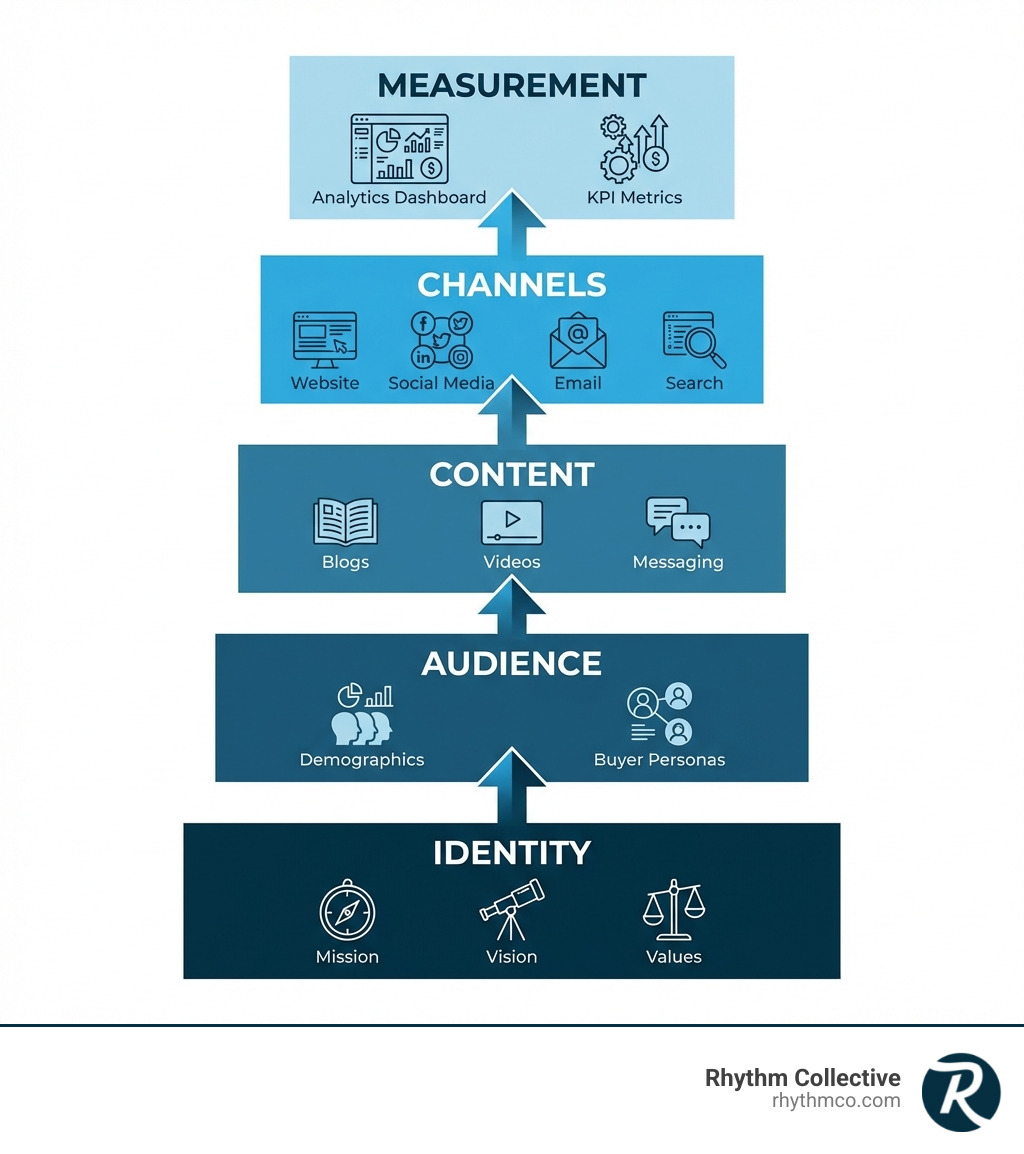
Key Components of a Digital Brand Strategy:
- Identity - Your mission, vision, values, and unique positioning
- Audience - Deep understanding of who you serve and what they need
- Content - The stories, messages, and value you deliver
- Channels - Where you show up online (website, social, search, email)
- Measurement - How you track performance and optimize results
Here's the reality: everybody is a brand. Whether you're a marketing leader, a business owner, or an entrepreneur, you have a personality, values, and something to say. The same goes for companies.
But here's where it gets tricky. With 4.57 billion active internet users representing 59% of the planet's population, the digital landscape is crowded. Your potential customers are bombarded with messages every single day.
Most businesses pour time and money into digital marketing only to wonder why the phone isn't ringing or leads aren't flowing. They have a logo, maybe some social media accounts, and a website. But without a strategic foundation, what follows is guesswork—and that's a fast way to burn through your marketing budget without tangible results.
The difference between businesses that thrive online and those that struggle isn't luck. It's strategy.
This guide will walk you through exactly how to build a digital brand strategy that creates an unforgettable online presence, drives measurable growth, and positions you as a market leader. You'll learn the core components of effective digital branding, a proven 7-step framework for implementation, and how to sustain long-term success.
Understanding Digital Brand Strategy: The 'What' and 'Why'
In today's interconnected world, your digital presence is often the first, and sometimes only, impression potential customers have of your business. How your brand is perceived online, how it stands out amidst fierce market competition, and how it ultimately contributes to business growth all hinge on a well-crafted digital brand strategy. As experts in the field, we at Rhythm Collective understand that establishing a cohesive brand experience across various online platforms is paramount to promoting your identity and presence effectively. What is digital branding and how to do it correctly is a question we answer by integrating identity, visibility, and credibility into every aspect of your online footprint.
What is a Digital Brand Strategy?
A digital brand strategy is more than just having a website or a social media profile; it's a carefully planned approach to communicating your brand's identity to consumers online with the overarching goal of increasing customer loyalty and sales. It takes your brand's unique personality and strategically positions it to perform competitively within your market.
So, how does digital branding differ from traditional branding and digital marketing?
- Digital Branding vs. Traditional Branding: Traditional branding typically relies on offline channels like billboards, print ads, and physical storefronts. Digital branding, on the other hand, focuses on establishing and maintaining your brand's identity and presence exclusively in the digital field. It leverages websites, social media, email, and online advertising to create a cohesive experience. The advantages of digital branding include real-time data for rapid adjustments, potentially global reach, and interactive engagement with your audience.
- Digital Branding vs. Digital Marketing: This distinction is crucial. Digital branding is how your company presents itself to its market—its online image, voice, tone, language, and how customers perceive it. It's about building your reputation and identity. Digital marketing, conversely, refers to the promotion of your brand through various online channels, such as SEO, paid ads, and lead generation campaigns. Think of it this way: a strong digital brand strategy is the foundation and blueprint, while digital marketing comprises the tools and tactics used to build upon that foundation. A solid digital branding plan should always precede digital marketing efforts to ensure cohesiveness and maximize impact.
Why It’s Crucial in Today’s Market
The sheer scale of the internet user base underscores the importance of a robust digital brand strategy. As of 2020, there were 4.57 billion active internet users, representing 59% of the global population. In our local Knoxville and East Tennessee markets, the majority of Americans are active online, with 81% owning a smartphone and nearly 75% owning a desktop or laptop. This means your potential customers are constantly interacting with digital content, and your brand needs to be there, clearly defined and consistently represented.
A strong digital brand strategy is vital because it:
- Increases Visibility: It ensures your brand is easily found by your target audience in a crowded online space.
- Establishes Credibility: A professional, consistent online presence builds trust and authority.
- Fosters Customer Loyalty: By delivering consistent value and experience, you create lasting relationships.
- Provides Competitive Advantage: It helps you stand out from the competition, making your brand the preferred choice.

The Power of Brand Consistency and Trust
In business, trust is gold. In fact, 81% of consumers say that trust is the leading factor in their purchasing decisions. How do you build that trust in the digital field? Through unwavering brand consistency.
When your brand consistently delivers its message, values, and visual identity across all digital touchpoints, it builds familiarity and reliability. This consistency translates directly into significant benefits:
- Increased Brand Recognition: Your audience quickly learns to identify your brand, even with just a glance at your logo or a snippet of your messaging. Color alone can increase brand recognition by 80%, and consumers make subconscious judgments within 90 seconds of first interacting with a brand, largely influenced by design factors.
- Improved Customer Advocacy: With brand consistency, consumers are 33% more likely to stay loyal and 27% more likely to advocate for your brand. This means they'll recommend you to friends, family, and colleagues, becoming invaluable brand ambassadors.
- Stronger Brand Loyalty: Consistent experiences foster a deeper connection, making customers more likely to choose your brand repeatedly over competitors.
Inconsistent communication, however, leaves customers confused and less likely to engage. Imagine your brand's voice changing from friendly and approachable on social media to overly formal on your website. This disjointed experience erodes trust and makes your brand forgettable. That's why a cohesive, well-executed digital brand strategy is so powerful—it creates a reliable, trustworthy experience that keeps customers coming back.
Core Components of an Unforgettable Digital Brand
An unforgettable digital brand isn't just about what you sell; it's about who you are, what you stand for, and how you make your audience feel. It encompasses your brand personality, the unique brand voice you use, your visual elements, and a deep understanding of your target market. At Rhythm Collective, we specialize in helping businesses in Knoxville and East Tennessee craft these elements, understanding that The Power of Custom Graphic Design in Building Brand Recognition is immense.
Defining Your Brand’s Foundation: Mission, Vision, and Values
Before you even think about pixels and posts, you need to define the soul of your brand. This foundational work ensures that every digital interaction aligns with your core identity.
- Brand Purpose: This is the fundamental why behind your business. Why do you do what you do?
- Mission Statement: Your mission outlines your primary objectives and how you aim to achieve your brand purpose. What do you set out to accomplish?
- Vision Statement: This describes where you envision your company unfolding in the future, your ultimate aspirations. What does success look like in the long term?
- Core Values: These are the specific principles that guide your brand's behavior, decisions, and interactions, both internally and externally. What principles does your brand encompass?
Communicating these values online is about authenticity. Your digital content, customer service interactions, and even your employee advocacy should reflect these core tenets. When customers see that your brand lives its values, it builds a powerful connection.
Crafting Your Visual and Verbal Identity
Once your foundation is solid, it's time to bring your brand to life through compelling visuals and a distinctive voice.

- Logo Design: Your logo is often the face of your brand. It should be simple, memorable, and convey your brand's personality at a glance. A good logo is timeless and memorable, forming an immediate sense of your brand’s persona.
- Color Palette: Colors aren't just pretty; they evoke emotions and significantly impact brand recognition. Colors influence different emotions, increasing brand recognition by 80%. Choose a primary, secondary, and accent color that best reflects your brand’s nature and resonates with your target audience.
- Typography: The fonts you choose convey specific feelings and professionalism. Your font choice dictates how your audience "reads" your brand's voice.
- Tone of Voice and Brand Messaging: This is how you communicate. Tone is the emotion behind your content, while style is the way you communicate your message through word choice and sentence structure. A consistent brand voice across all touchpoints—from website copy to social media captions and email newsletters—reinforces your brand personality. This is why Why Consistent Graphic Design is Vital for Your Marketing Strategy is so important.
Identifying and Understanding Your Target Audience
You can't connect with everyone, and trying to will only dilute your message. A successful digital brand strategy is built on a deep understanding of who you're trying to reach.
- Market Research: Conduct thorough research to identify your audience's demographics (age, gender, income, location in Knoxville or East Tennessee), behaviors, and pain points.
- Buyer Personas: Create detailed profiles of your ideal customers. These personas should go beyond basic demographics to include psychographics (lifestyles, interests, opinions, values), motivations, and decision-making habits. Understanding who your audience is, what they value, and how they interact with digital content is crucial for crafting messages that resonate.
- Customer Pain Points: What problems does your audience face that your brand can solve? Your content and messaging should directly address these.
- Customer Journey Mapping: Understand how your target audience interacts with your brand across different digital touchpoints, from initial awareness to purchase and advocacy. This helps tailor your content and experience.
Crafting a Powerful Brand Position Statement
Your brand position statement is your north star, distinguishing your brand from competitors and clearly communicating your unique value. It's a concise declaration of what your brand does, for whom, and how it's different and better than the alternatives.
- Unique Value Proposition (UVP): What makes you stand apart from the competition? What specific benefits do you offer that others don't? Your UVP should highlight what sets you apart and why people should engage with you.
- Differentiating from Competitors: To craft a compelling position statement, you need to know what your competitors are doing. What gaps can you fill? What unique angle can you own?
- Market Positioning: This is about how you want your brand to be perceived in the minds of your target customers relative to your competitors.
Here are characteristics of a strong position statement:
- Authentic: It genuinely reflects who your brand is.
- Concentrated: It's concise and to the point.
- Personable: It speaks to your audience on an emotional level.
- Actionable: It guides your brand's activities and decisions.
- Memorable: It's easy to recall and understand.
- Understandable: It's clear and unambiguous.
A 7-Step Guide to Building Your Digital Brand Strategy
Building an effective digital brand strategy requires a structured approach. It’s an actionable framework that guides your decisions, from setting ambitious goals to measuring success. Think of it as your roadmap to online market leadership in Knoxville and East Tennessee. We’ll cover everything from goal setting and competitive analysis to content planning, channel selection, and measurement, ensuring you Develop your digital strategy with confidence.
Step 1: Set Clear Goals and KPIs
Without clear goals, your efforts will be aimless. Your digital brand strategy needs to be tied to specific business objectives. We recommend using the SMART goal framework: Specific, Measurable, Achievable, Relevant, and Time-Bound.
- Business Objectives: What do you want to achieve? (e.g., increase market share, expand into a new service area in East Tennessee, improve customer retention).
- SMART Goals: Translate your objectives into concrete goals. For example:
- Increase qualified leads from organic search by 30% in six months.
- Reduce cost per lead by 15% over the next quarter.
- Grow email subscribers by 20% before year-end.
- Key Performance Indicators (KPIs): These are the metrics you'll track to measure progress toward your goals. For instance, if your goal is brand awareness, KPIs might include website traffic, social media engagement, and brand mentions. For sales growth, it could be conversion rates and average order value.
Step 2: Conduct Audience and Competitor Research
You can't win if you don't know who you're playing against and who you're playing for.
- Audience Analysis: Revisit your buyer personas. Use tools like Google Analytics to understand how your current customers interact with your website. What are their demographics? What problems do they often face that you can solve?
- Competitor Research: Identify your direct, indirect, and tertiary competitors in Knoxville and East Tennessee. Use tools like SpyFu to find keywords and ad strategies your competitors are using. Analyze their strengths and weaknesses:
- What is their brand persona and tone?
- How do they use social media?
- What does their visual identity look like?
- What kind of content are they publishing?
- What are their calls-to-action (CTAs)?
- Market Opportunities: Use insights from tools like Google Trends to stay on top of the latest trends and identify unmet needs or emerging opportunities in your market. This analysis helps you leverage market opportunities and refine your competitive positioning.
Step 3: Develop Your Content and Messaging Strategy
Content is the heart of your digital brand. It's how you communicate your value, tell your story, and engage your audience.
- Content Pillars: Based on your audience research, identify 3-5 core topics or themes that are relevant to your target customers and align with your brand's expertise.
- Value Proposition & Storytelling: Every piece of content should deliver value and reinforce your brand story. It's about being helpful, engaging, and timely, answering real questions your audience is asking.
- Content Marketing: This involves creating and sharing valuable, relevant, and consistent content to attract and retain a clearly defined audience. Content marketing positions your brand as a knowledgeable and helpful resource.
- Content Formats: Diversify your content to reach different segments of your audience and keep them engaged. Consider:
- Blogs and articles
- Videos (explainer videos, testimonials, behind-the-scenes)
- Podcasts (interviews, industry insights)
- Infographics and visual guides
- Social media posts
- Webinars and virtual events
- Ebooks and whitepapers For dynamic content that truly captivates, remember The Power of Storytelling Through Videography.
Step 4: Design a Cohesive User Experience (UX)
Your website is often the central hub of your digital brand. Its design and user experience are critical for making a positive impression and converting visitors into customers.
- Website Design: Your website needs to be visually appealing, intuitive, and reflect your brand's aesthetic. Boost Your Online Presence with Expert Website Design by ensuring it's easy to steer, with clear calls-to-action.
- Website Navigation: Visitors should be able to find what they're looking for quickly and easily. Simple, clear tab names (like "courses" over "learning modules") improve the user experience.
- Mobile Responsiveness: With 81% of Americans owning a smartphone, your website must be mobile-friendly. It should adapt seamlessly to different screen sizes and capabilities.
- Page Speed: Fast loading times are non-negotiable. Slow websites frustrate users and negatively impact search rankings.
- Call-to-Action (CTA) Placement: Clear, compelling CTAs guide users toward desired actions, like making a purchase or signing up for a newsletter. At Rhythm Collective, we pride ourselves on knowing How Rhythm Collective Turns Website Designs into Powerful Business Tools that truly serve your business objectives.
Step 5: Choose Your Key Digital Channels
Not every channel is right for every brand. Based on your audience research, select the platforms where your target customers spend their time and where your brand can best achieve its goals.
- Owned Media: These are channels you control, like your website, blog, email list, and social media profiles. They are the cornerstone of your digital presence.
- Earned Media: This is exposure gained through word-of-mouth, shares, mentions, and other people's channels. Think viral social media threads, guest blog posts, or customer testimonials.
- Paid Media: These are channels where you pay for visibility, such as Google Ads, social media ads, and sponsored content.
- Social Media Platforms: Choose platforms that align with your audience and content strategy. For example, a visually-driven brand might thrive on Instagram, while a B2B service might focus on LinkedIn. We are experts in Social Media Marketing and can help you steer these choices.
- Email Marketing: This remains a cornerstone for direct communication with interested customers, building relationships and driving traffic. The average ROI for email marketing in the U.S. is $36 for every $1 spent.
Step 6: Activate Your Brand with SEO and SEM
Even the most beautiful brand and compelling content won't matter if no one can find it. Search Engine Optimization (SEO) and Search Engine Marketing (SEM) are crucial for enhancing your brand's digital visibility.
- SEO (Search Engine Optimization): This involves optimizing your website and content to rank higher in organic search engine results, making it easier for potential customers to find you online. 53% of web traffic comes from organic search. Key elements include:
- Keyword Strategy: Researching and using relevant keywords that your target audience searches for.
- On-page SEO: Optimizing website content, meta descriptions, headings, and internal linking.
- Technical SEO: Ensuring your site is fast, mobile-friendly, and crawlable by search engines.
- SEM (Search Engine Marketing): This involves paid advertising strategies, like Google Ads, to increase your visibility in search engine results. SEM can quickly drive targeted traffic to your site and complement your organic efforts. At Rhythm Collective, our expertise in Search Engine Marketing ensures your brand gets seen by the right people at the right time.
Step 7: Measure, Analyze, and Refine
The digital world offers a treasure trove of data. Leveraging it is key to continuous improvement. Insight-driven businesses grow 30% more annually than businesses not tracking analytics.
- Brand Audits: Regularly perform brand audits to assess your performance against your KPIs. Are you matching, exceeding, or falling short of your goals?
- Google Analytics: Use tools like Google Analytics to track website traffic, user behavior, and conversion rates.
- Social Media Insights: Most platforms offer built-in analytics to gauge engagement, reach, and audience demographics.
- Customer Feedback: Actively solicit and listen to customer feedback through surveys, reviews, and direct interactions. Tools like SurveyMonkey or TypeForm can be invaluable.
- Iterative Improvement: The digital landscape is always evolving. Use your data to identify what's working, what's not, and make adjustments in real-time. This iterative approach allows for continuous optimization of your digital brand strategy.
Sustaining and Growing Your Digital Presence
Building a digital brand strategy is not a one-time project; it's an ongoing commitment to long-term growth and brand maintenance. It's about continually building relationships, adapting to new trends, and finding new ways to monetize your influence.
Building and Maintaining Audience Trust
Trust, as we've established, is paramount. Here’s how you keep it:
- Transparency: Be open and honest in your communications.
- High-Quality Service: Consistently deliver on your promises, providing excellent products or services.
- Social Proof: Leverage customer testimonials, reviews, and case studies to demonstrate your value. User-generated content can be incredibly powerful.
- Excellent Customer Service: Respond promptly and professionally to inquiries and issues. A negative customer service experience spreads quickly and can tarnish your brand reputation.
- Strong Security Protocols: Protect your customers' data and privacy. Implement strong security protocols to protect stored data from breaches and unauthorized access, especially crucial in our digital age where cybersecurity threats are common.
Building and Monetizing a Personal Brand
For individuals—entrepreneurs, freelancers, or professionals—building a personal brand is equally vital. When recruiters and clients often turn to Google before making decisions, your online presence is crucial. Developing a personal brand establishes credibility, increases visibility, and helps you stand out.
- Thought Leadership: Establish yourself as an expert in your field. This involves sharing your expertise, engaging in industry discussions, writing guest articles, or speaking at events. Understanding what thought leadership is and how to become a thought leader can significantly boost your credibility.
- Credibility & Visibility: A well-crafted personal brand ensures positive first impressions and accurately reflects your skills and value.
- Monetization Strategies: A strong personal brand can lead to various monetization opportunities, such as consulting services, online courses, speaking engagements, or paid partnerships.
Common Mistakes to Avoid in Your Digital Brand Strategy
Even with the best intentions, pitfalls exist. Be mindful of these common mistakes:
- Inconsistent Messaging: If your brand voice or visuals change across platforms, it creates confusion and erodes trust. Ensure your brand remains steady across every touchpoint.
- Neglecting Audience Feedback: Ignoring what your customers are saying means missing opportunities to improve and build stronger relationships. Actively listen and respond.
- Ignoring Data: Without accurate tracking and measurement, you're flying blind. Campaigns can't be optimized for long-term growth if performance isn't measured.
- Poor User Experience (UX): A slow, difficult-to-steer, or non-mobile-responsive website will drive visitors away, regardless of your content quality.
- Lack of SEO Focus: Without optimizing for search engines, even the best content may go unfinded. Remember the importance of organic visibility.
- Forgetting Mobile Users: Given the high percentage of smartphone users in our area, failing to optimize for mobile is a critical oversight.
Conclusion
Crafting an unforgettable online presence through a robust digital brand strategy is no longer optional—it's essential for market leadership. We've explored the definition, critical importance, and core components, then walked through a practical 7-step guide to building and sustaining your digital brand.
From defining your brand's mission and understanding your audience to designing cohesive user experiences and leveraging SEO/SEM, every step contributes to a dynamic strategy that drives results. By consistently building trust, adapting to feedback, and avoiding common pitfalls, your brand can not only survive but thrive in the competitive digital landscape of Knoxville and East Tennessee.
At Rhythm Collective, we don't just generate leads; we deliver profitable revenue and long-term growth, having generated over $140 million for our clients. We understand the rhythm of digital success. Ready to lift your brand and ensure it resonates deeply with your audience?
Contact us to build your unforgettable digital brand strategy and let's make your brand sing.