
Customer retention strategies for home service businesses
Customer retention strategies help you turn completed jobs into repeat bookings. For a home service business, these include maintenance plans, service reminders, post-job follow-ups, and seasonal outreach. Tracking repeat bookings and lapsed customers shows which efforts bring people back. These methods apply to businesses in Knoxville and East Tennessee.
Why Are Customer Retention Strategies Essential for Service Businesses?
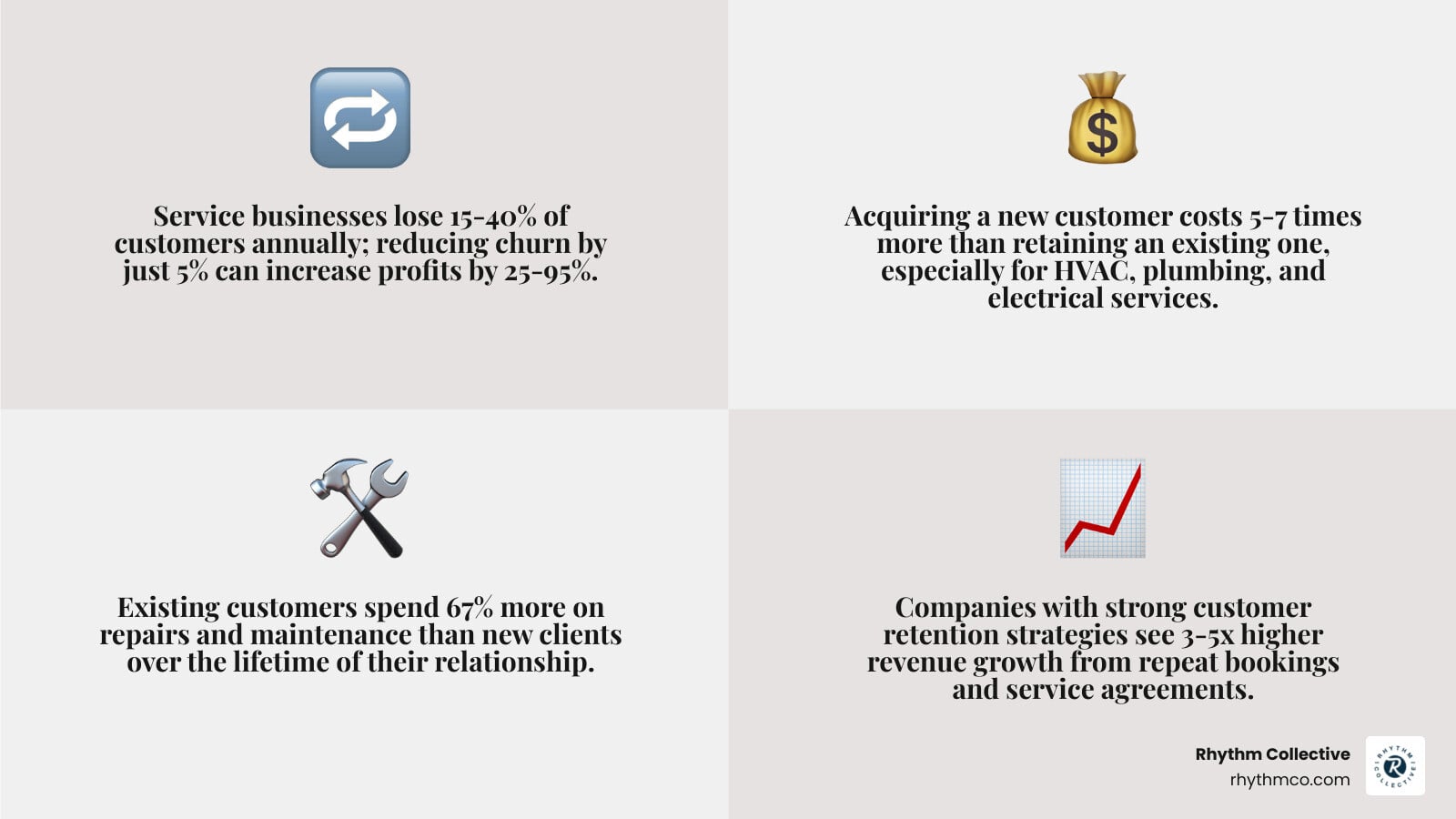
Customer retention strategies focus on keeping existing clients engaged so they return for future repairs, maintenance, and system replacements. For service trades like HVAC, plumbing, electrical, and roofing, ongoing work forms the core of stable operations. Research cited by IBM indicates that companies often need to acquire three new customers to make up for the business value lost from a single churned account.
Acquiring a new customer requires spending money on local advertising, dispatch coordination, and sales calls. In contrast, existing customers already know your technicians, equipment standards, and pricing. Connecting these retention efforts with profit-driven marketing strategies helps service companies protect cash flow during slower booking periods. As outlined by the Rhode Island Small Business Development Center, repeat clients require less education, which reduces administrative labor and customer service overhead.
How Retention Impacts Business Value and Stability
A steady base of recurring clients provides predictable revenue and protects against seasonal slowdowns. When a business relies solely on emergency repairs, revenue swings wildly between weather extremes. Repeat service agreements create a baseline of monthly or annual cash flow that covers fixed shop overhead.
Long-term customer relationships also generate word-of-mouth recommendations throughout local neighborhoods. Satisfied homeowners refer neighbors, family members, and local community groups when sudden breakdowns occur. When it comes time to value a service enterprise for sale or expansion, documented maintenance agreements and high retention rates directly increase overall company valuation.
Key Metrics to Calculate and Track
Measuring retention requires tracking customer behaviors over specific time periods, such as quarters or full years. Service managers typically review the following core performance indicators:
- Customer Retention Rate (CRR): The percentage of existing customers a company keeps over a given timeframe.
- Customer Churn Rate (CCR): The percentage of customers who stop booking services during a set period.
- Customer Lifetime Value (CLV): The total revenue generated by an individual customer throughout their relationship with your business.
- Repeat Customer Rate (RCR): The proportion of total customers who have booked two or more service calls.
- Net Promoter Score (NPS): A survey metric tracking customer willingness to recommend your services on a 0 to 10 scale.
| Retention Metric | Standard Calculation Method | Typical Measurement Frequency |
|---|---|---|
| Customer Retention Rate | ((End Customers - New Customers) / Start Customers) × 100 | Annually or Quarterly |
| Customer Churn Rate | (Lost Customers / Start Customers) × 100 | Annually or Quarterly |
| Customer Lifetime Value | (Average Purchase Value × Annual Purchase Frequency) × Customer Lifespan | Annually |
| Repeat Customer Rate | (Customers with 2+ Purchases / Total Unique Customers) × 100 | Monthly or Quarterly |
| Net Promoter Score | Percentage of Promoters (9-10) minus Percentage of Detractors (0-6) | Post-Service Job Close |
Which Customer Retention Strategies Work for Maintenance and Service Plans?
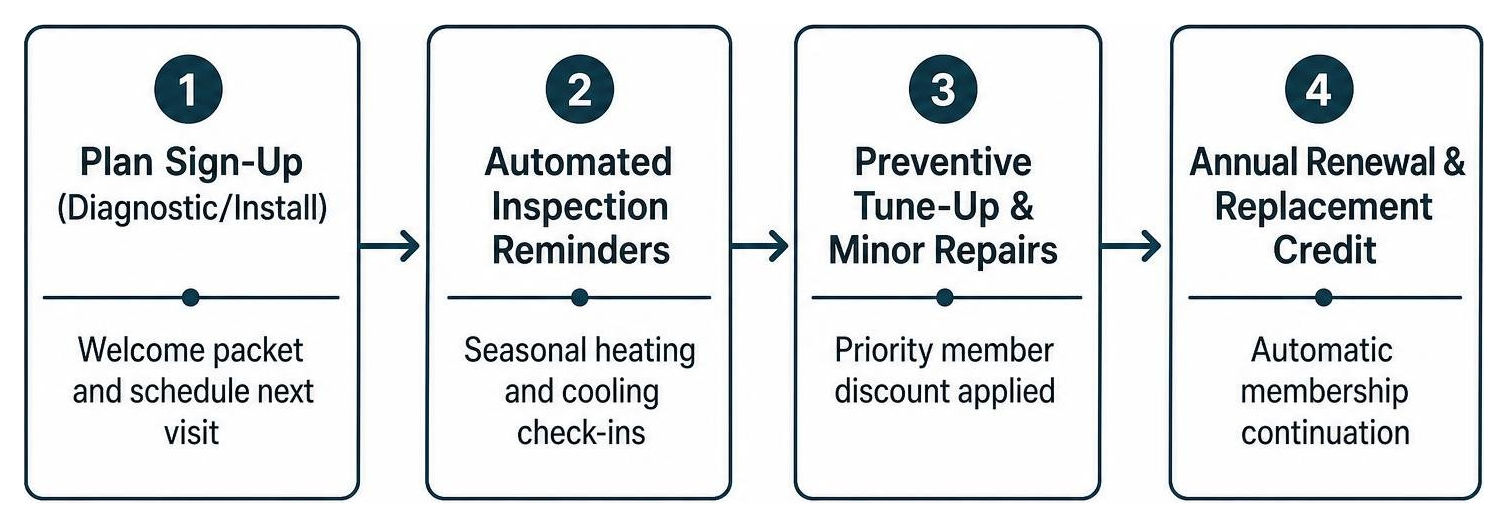
Maintenance agreements turn one-off repair calls into structured, multi-year service relationships. According to Qualtrics, systematic retention programs help businesses address customer needs proactively before service failures occur. For home service trades, formal maintenance clubs give homeowners peace of mind while securing recurring inspection revenue.
Core Components of Annual Service Agreements
A standard residential service agreement includes defined operational perks that provide immediate and long-term value to property owners. Common features include:
- Guaranteed priority dispatch within 24 to 48 hours during peak weather events.
- Discounted diagnostic and dispatch fees for unscheduled emergency calls.
- Pre-scheduled bi-annual safety inspections for heating, cooling, plumbing, or electrical panels.
- Documentation of manufacturer maintenance requirements to protect equipment warranty coverage.
- Member discounts on unexpected repairs and parts replacements, with specific percentages set by each company.
Implementing Tiered Memberships for Homeowners
Service businesses often provide multiple membership tiers to accommodate different home sizes and budgets. A basic tier might cover a single annual safety inspection and basic filter changes. Higher tiers can bundle whole-home plumbing inspections, electrical panel testing, water heater flushes, and accrual credits toward future equipment replacements.
Offering monthly automated credit card billing reduces friction compared to collecting a single annual lump sum. Clear agreement terms ensure that customers recognize their ongoing savings, which keeps cancellation rates low throughout the life of the equipment.
How Can Automated Communications Support Customer Retention Strategies?
Modern customer relationship management (CRM) software tracks equipment records, past invoice amounts, and technician notes. Linking your CRM data to automated email drip campaigns for service businesses allows you to send timely reminders without adding manual office tasks. Automated text messaging and email updates keep homeowners informed about upcoming maintenance intervals, technician arrival windows, and seasonal service options.
Timing Follow-Up Messages Around East Tennessee Weather Shifts
East Tennessee experiences hot, humid summers and sharp winter temperature drops across the Tennessee Valley and Appalachian foothills. Timing your marketing communications around these seasonal shifts helps homeowners avoid unexpected system breakdowns.
In Knoxville, Oak Ridge, and Maryville, spring humidity rises quickly, making March and April ideal for scheduling air conditioning tune-ups and condensate drain clearing. In higher-elevation markets such as Sevierville, Gatlinburg, Townsend, and Crossville, early autumn cold snaps make September and October critical months for heating inspections, heat pump testing, and chimney sweeps. In Tri-Cities communities like Johnson City, Kingsport, and Bristol, winter freeze warnings call for plumbing insulation checks and pipe freeze protection reminders.
Collecting and Applying Customer Feedback
Capturing feedback immediately following a service call helps identify operational issues before they damage customer retention. Automated SMS surveys sent within two hours of job completion generate high response rates while the experience is fresh.
Tracking low satisfaction scores allows service managers to call dissatisfied homeowners right away to correct errors or dispatch a lead technician. Removing technical friction from your online forms and intake workflows helps prevent customer frustration, as detailed in this guide on fixing website conversion rates and form friction. Addressing small service complaints immediately preserves long-term loyalty and prevents negative online reviews.
How Do Service Teams Win Back Inactive Accounts?
Over time, customer files become inactive when homeowners forget to schedule routine check-ups or put off non-emergency repairs. Re-engaging lapsed accounts costs significantly less than generating new cold leads through paid advertising. Understanding the stages of homeowner decision-making by mapping the customer journey for home services helps you craft relevant messages for past clients.
Identifying Churned Accounts and Inactivity Triggers
A customer account is typically flagged as dormant when no service calls or agreement renewals occur within 12 to 18 months. CRM systems filter these accounts by tracking specific inactivity triggers:
- Lapse of an annual service agreement without a renewal confirmation.
- Equipment age milestones, such as water heaters or heat pumps reaching 10 years of service.
- Past quotes for system upgrades or secondary repairs that were never scheduled.
- Properties with overdue safety checks or seasonal inspection dates.
Reactivation Offers and Diagnostic Incentives
Reactivating inactive accounts requires a clear, low-friction reason for the homeowner to reconnect with your business. Effective outreach methods include:
- Mailing a seasonal postcard offering a discounted diagnostic inspection during off-peak shoulder months.
- Sending an SMS reminder noting that the home's water heater or HVAC system is past its manufacturer-recommended service interval.
- Offering to apply previous diagnostic fees directly toward an overdue system repair or replacement.
- Providing a limited-time credit toward renewing an expired annual maintenance membership.
Frequently Asked Questions About Retention for Service Businesses
What is an average customer retention rate for home service businesses?
Retention rates for residential service companies vary by trade and local market density. Companies with structured, auto-renewing maintenance agreements tend to report higher retention, while businesses that operate primarily on emergency repair calls often experience more churn. Industry surveys and trade association reports provide benchmarks for specific trades and regions.
How often do local service businesses contact past customers?
Contact frequency varies by business model and customer preference. Common approaches include bi-annual seasonal maintenance reminders, post-service satisfaction checks, and occasional educational tips regarding home safety or weather preparation. Some businesses contact customers four to six times per year, while others use a lower or higher cadence depending on their service agreements and customer feedback.
What is the most cost-effective retention method for small service teams?
Automated text and email reminders tied directly to a dispatch CRM are a low-cost retention tool for small crews. Sending automated notifications for past-due inspections, filter replacements, and seasonal check-ups requires minimal manual labor once configured. These automated touchpoints can generate repeat service bookings from clients who have not yet scheduled routine maintenance.
Talk with a Growth Specialist
Have a question about marketing your business? Talk with a growth specialist at Rhythm Collective in Knoxville.