

What Is Call Tracking and How Does It Work?
#
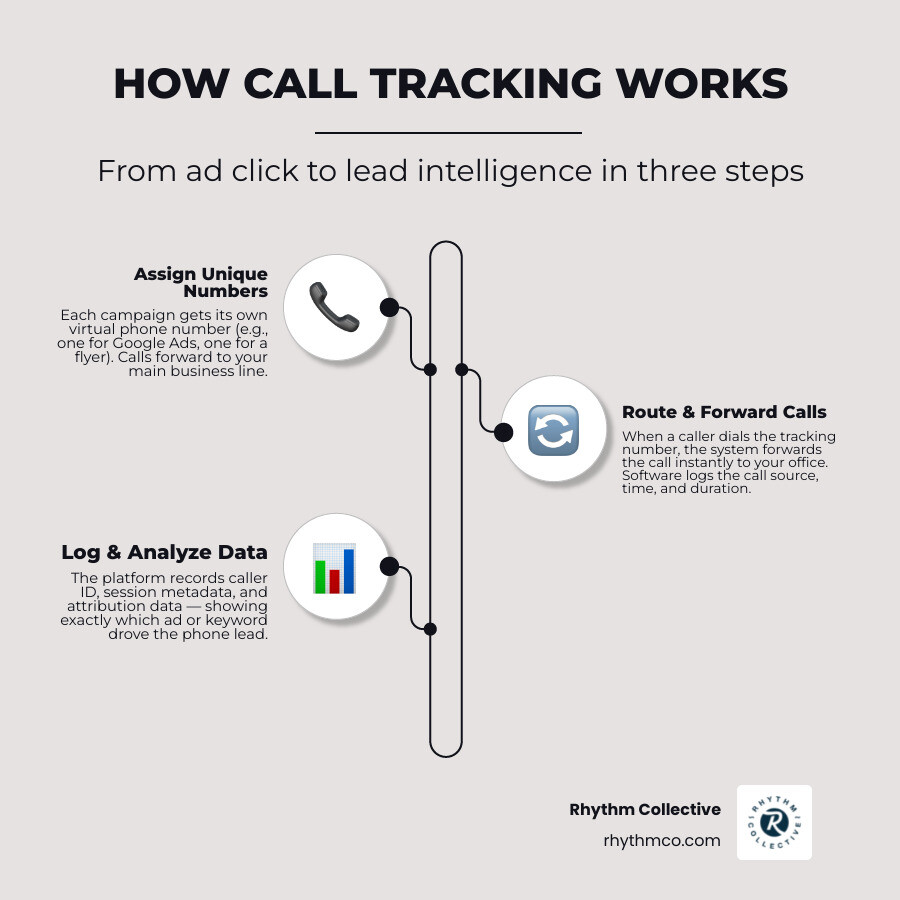
Call tracking uses dedicated virtual phone numbers to identify which specific marketing campaigns, advertisements, or website sessions produce inbound phone calls. Telephony software routes incoming calls to your existing primary business line while recording source data, timestamps, geographic area codes, and conversation duration in real time.
This technology gives business owners clear visibility into which promotional efforts produce inbound sales leads rather than basic website clicks. Inbound call measurement provides the exact operational data needed to assess marketing performance across both offline and online channels.
Prices and platform details current as of November 2026.
Call tracking operates by assigning unique virtual phone numbers to distinct advertising touchpoints. A business might allocate individual virtual numbers to direct mail letters, print flyers, local billboards, or targeted search campaigns.
When a prospective customer dials one of these numbers, the platform instantly logs the caller metadata. This operational record includes the date, exact time, caller identity, and telephone exchange code. Telephony servers immediately execute an automated webhook that forwards the audio stream directly to the company office line.
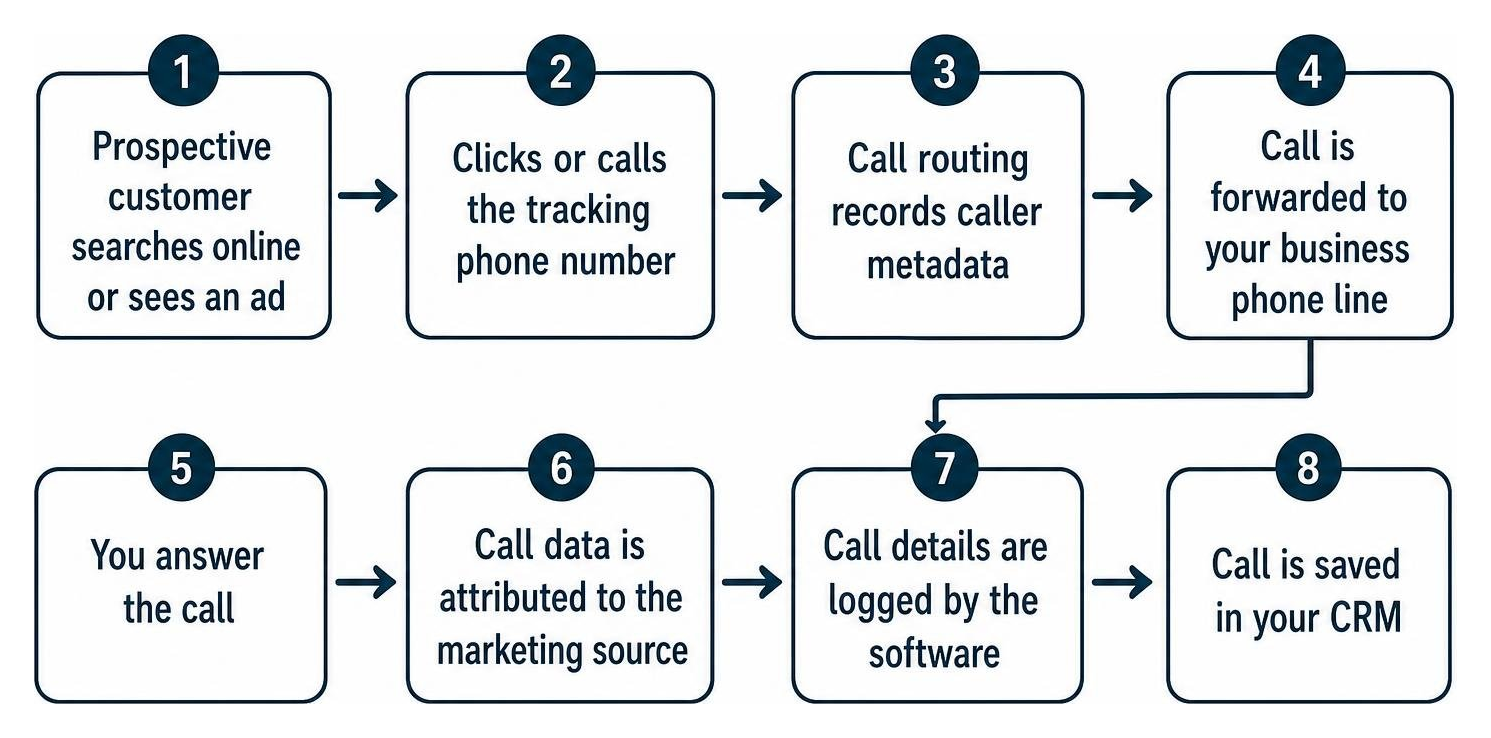
This call forwarding happens instantly across carrier networks without audio latency, echo, or disruption. Callers experience standard connection quality just like dialing a regular business landline. In the background, the tracking system pairs the inbound call event with source session records or offline identifiers. This process connects offline phone revenue directly to specific marketing investments.
Which Telephony Methods Route and Measure Inbound Calls?
Modern call-tracking software relies on carrier-level number provisioning, Session Initiation Protocol (SIP) trunking, and cloud-based call routing rules. Platforms use Automatic Call Distribution (ACD) and Interactive Voice Response (IVR) menus to distribute inbound volume across team members or regional offices based on agent availability, operating hours, or caller geography.
Marketing teams deploy tracking numbers using three primary architectures: static assignment, channel-based pools, and session-level dynamic insertion.
| Method | Primary Use Case | Attribution Granularity | Number Requirements |
|---|---|---|---|
| Static Number Tracking | Offline ads, billboards, direct mail, print, radio | Channel or placement level | 1 dedicated number per marketing asset as outlined in Twilio's call-tracking documentation |
| Channel-Based Dynamic Tracking | High-level digital channels (Organic, Social, Direct) | Medium (Traffic source level) | 1 dedicated number per digital channel as outlined in Twilio's call-tracking documentation |
| Session-Level Dynamic Tracking | Paid search, landing pages, digital ad campaigns | High (Keyword, ad creative, landing page, UTM parameters) | A dynamic pool of numbers scaled to concurrent web traffic per Twilio's call-tracking documentation |
Static Numbers for Offline and Channel Attribution
Static call tracking assigns a permanent virtual phone number to a specific marketing asset, allocating 1 dedicated number per asset per telephony standards. Service businesses print static numbers on highway billboards, direct mail postcards, local print directories, radio broadcasts, and vehicle fleet wraps across East Tennessee markets, including Knoxville, Chattanooga, and the Tri-Cities areas of Johnson City, Kingsport, and Bristol.
Because offline media cannot execute web code, static numbers serve as dedicated referral identifiers. Every call placed to that specific number is credited directly to that offline campaign, allowing businesses to calculate clear response rates and lead costs for traditional media.
Dynamic Number Insertion for Session Tracking
Dynamic Number Insertion (DNI) uses a lightweight JavaScript snippet placed on a website to swap displayed phone numbers based on how each visitor arrived. When a user clicks an ad or organic link, the script detects the visitor's referral source, UTM parameters, or active Google Ads session and selects an available number from a pre-allocated pool.
As the visitor browses, the assigned number stays tied to their individual browsing session using cookies. If the visitor calls, the software connects that phone call to their exact landing page, search query, and advertising campaign. Businesses use DNI for diagnosing drop-offs and improving lead conversion rates across digital touchpoints. This level of granularity shows which specific search terms generate paying inquiries.
What Data and Lead Intelligence Does the Software Measure?
Call tracking platforms capture quantitative operational metrics and qualitative conversational data. Standard logs capture the caller's telephone number, city, state, ring duration, talk time, and call outcome. Platforms also distinguish between first-time callers and repeat dialers, while automated spam filters screen out robocalls and telemarketers to keep marketing reports accurate.

Deploying Call Tracking for Marketing Attribution
Tracking phone calls enables closed-loop revenue reporting by connecting inbound inquiries with downstream sales pipeline stages. Rather than judging advertising performance solely on clicks or form submissions, businesses calculate an accurate cost per qualified lead across all digital channels.
For businesses managing paid search campaigns, call data can sync directly with advertising platforms. Feeding call conversions into Google Ads allows machine-learning bidding algorithms to optimize for actual phone inquiries. This data helps owners determine proper Google Ads budget allocation by identifying which ad groups and keywords generate paying customers.
Conversation Intelligence and Automated Scoring
Advanced tracking systems use automated speech recognition and Natural Language Processing (NLP) to transcribe call audio into searchable text. Machine learning models scan transcripts for custom keyword phrases, such as product names, pricing inquiries, or emergency requests.
Conversation intelligence evaluates caller sentiment and automatically scores lead quality without requiring managers to listen to hours of audio. These automated summaries identify common customer objections, surface staff coaching opportunities, and streamline quality assurance across service teams. Managers review actionable call summaries in minutes rather than spending entire afternoons monitoring raw audio recordings.
How Do Tracked Phone Numbers Impact Local SEO and Legal Compliance?
Setting up call tracking involves search engine guidelines, regulatory frameworks, and telephony costs. Standard telephony costs, such as those published by Twilio's voice platform, start at $1.15 per month for local phone numbers, $0.0085 per minute for inbound local voice calls, and $0.0025 per minute for call recording. Automated transcription services generally add an extra usage fee per minute.
For businesses deploying SMS marketing alongside phone numbers, telecommunications carriers enforce Application-to-Person 10-Digit Long Code (A2P 10DLC) brand and campaign registration requirements, as documented by Twilio, to verify business identity and manage message delivery.
Protecting Local SEO and NAP Consistency
Local search engine optimization relies on consistent Name, Address, and Phone (NAP) data across online directories and search engine indices. Maintaining a single, consistent primary business phone number across directory citations, Google Business Profile listings, and local directory entries prevents data fragmentation and protects local search authority.
When deploying call tracking on websites, Dynamic Number Insertion (DNI) swaps numbers dynamically via JavaScript for active visitors while preserving the hardcoded standard phone number in the underlying HTML for search engine crawlers. This approach keeps the primary business phone consistent across Knoxville, Chattanooga, and Tri-Cities search citations while still measuring inbound call conversions. This structure is referenced when reviewing local search optimization and evaluating Knoxville SEO services across Google Maps and local listings.
How Call Tracking Integrates with CRMs and Ad Networks
Call tracking platforms integrate bi-directionally with Customer Relationship Management (CRM) databases, such as HubSpot or Salesforce, to create or update contact records whenever a call occurs. When configuring call recording and transcription, businesses must adhere to federal and state call monitoring laws.
Under Tennessee law (Tenn. Code Ann. § 39-13-601), Tennessee is a one-party consent state for audio recording. This means phone conversations can be recorded as long as at least one party to the call consents. However, businesses handling multi-state calls or operating in healthcare environments must also maintain compliance with federal frameworks such as HIPAA. Healthcare-related call tracking requires signing a Business Associate Agreement (BAA) with the software provider and configuring automated redaction to obscure Personal Health Information (PHI) from call recordings and transcripts.
Frequently Asked Questions About Inbound Call Attribution
Does using a tracking number hurt local SEO rankings?
Using dynamic number insertion on a website does not harm local SEO rankings because the standard business phone number remains consistent in directory citations, structured data, and underlying website code. Keeping the primary local business phone consistent across citations protects NAP consistency while allowing tracking software to measure campaign conversions.
What is the difference between static and dynamic tracking numbers?
A static tracking number is a fixed line assigned to a single marketing asset per telephony guidelines, such as a direct mail postcard, billboard, or vehicle wrap. A dynamic number belongs to a pool of numbers that software swaps on a website to tie individual phone calls to specific digital sessions, keywords, and ad clicks.
How are call tracking costs structured for service businesses?
Call tracking costs typically include a base software subscription fee, a monthly rental fee per virtual number, and usage fees billed per voice minute as documented by providers like Twilio. Optional features like automated AI transcription and conversation analytics usually carry separate per-minute charges.
How many phone numbers are required for dynamic number insertion?
Dynamic number pools are sized based on peak concurrent visitor traffic to a website, as outlined in Twilio's call-tracking documentation. Sizing the pool to match concurrent browsing sessions ensures that each active visitor sees a unique number for session attribution.
Track Every Lead Source Across East Tennessee
See how Rhythm Collective's Lead Reporter tracks every call, form and text back to its source. Have a question about marketing your business? Talk with a growth specialist at Rhythm Collective in Knoxville.