
What Formats Do Adverts on YouTube Use for Local Businesses?
Prices and platform details current as of November 2026.
Adverts on YouTube can appear before or during videos, in search and home feeds, and between Shorts. If you run a service business in Knoxville or East Tennessee, you can target your service area and choose a budget. Depending on the ad format, you may pay for views or impressions (times an ad appears).
Conversion tracking can show which ads lead to calls and website inquiries. The sections below explain the formats, costs, and tracking options.
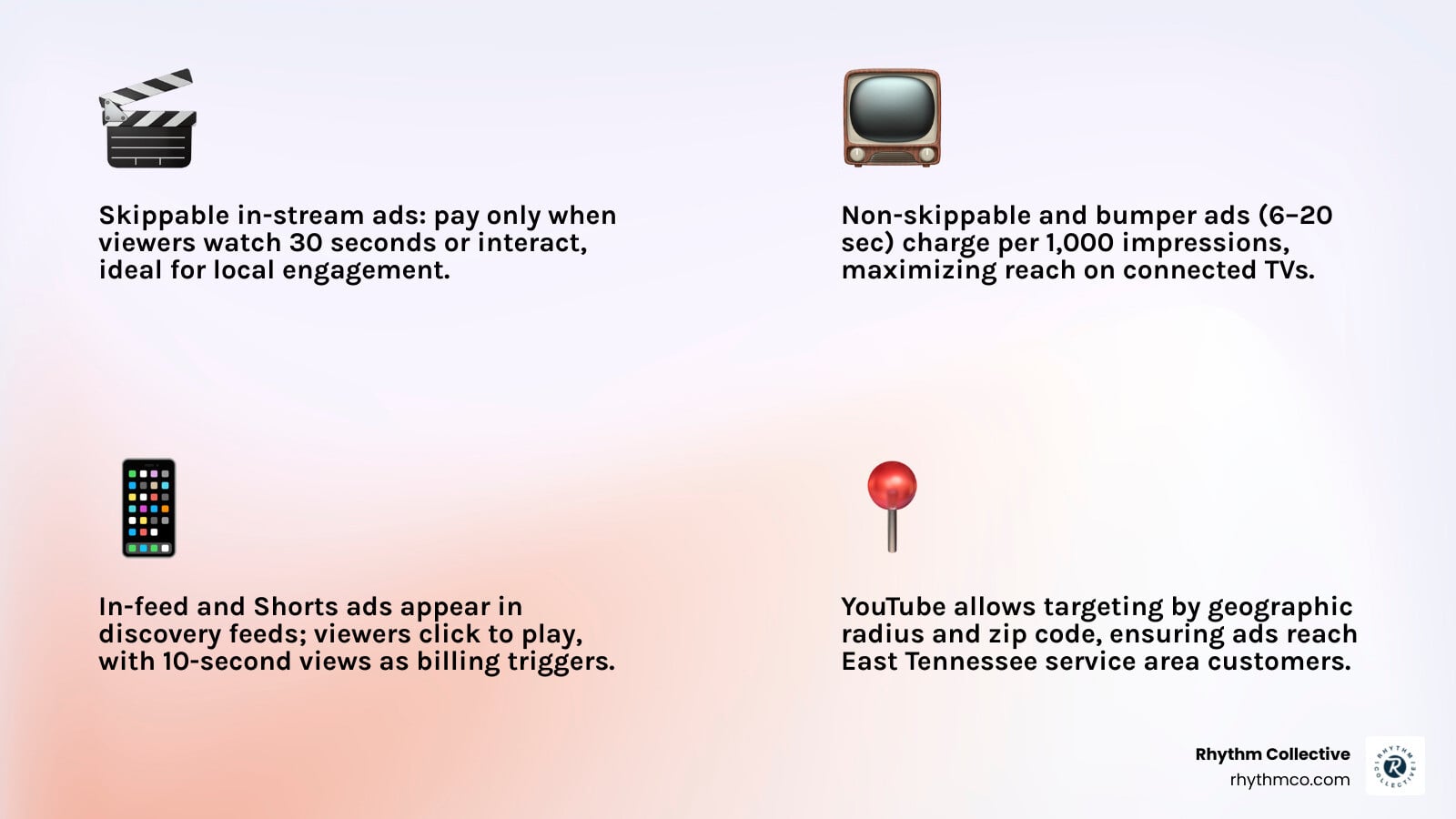
Google Ads provides several distinct formats for running video campaigns on YouTube. Each placement offers different timing rules, billing triggers, and viewing experiences across mobile devices, desktop computers, and connected televisions.
According to official YouTube advertising formats guidelines, ad units adapt based on where the viewer encounters the content. Each video format corresponds to specific campaign goals and viewer interaction types. Connected television viewers may encounter pause ads, which display static or interactive promotions on screen when video playback is paused. Connected television placements can run alongside broader streaming TV campaigns.
| Ad Format | Video Duration | Primary Billing Model | Typical Placement | Local Campaign Function |
|---|---|---|---|---|
| Skippable In-Stream | No maximum duration limit | Cost-Per-View (CPV) or Target CPA | Before, during, or after videos | Qualifying interested leads through detailed explanations |
| Non-Skippable In-Stream | 15 to 20 seconds (up to 30s on TV) | Target CPM (per 1,000 impressions) | Before, during, or after videos | Delivering complete brand messages across living room screens |
| Bumper Ads | Up to 6 seconds | Target CPM (per 1,000 impressions) | Before, during, or after videos | Brief local brand reminders and name recognition |
| In-Feed Video Ads | Variable | Cost-Per-View (click to play) | YouTube search results, watch next feed | Capturing high-intent users actively searching for services |
| YouTube Shorts Ads | 5 to 60 seconds | Target CPM or Cost-Per-View | Between vertical Shorts in mobile feeds | Reaching mobile-first audiences with fast service overviews |
Skippable In-Stream Adverts on YouTube
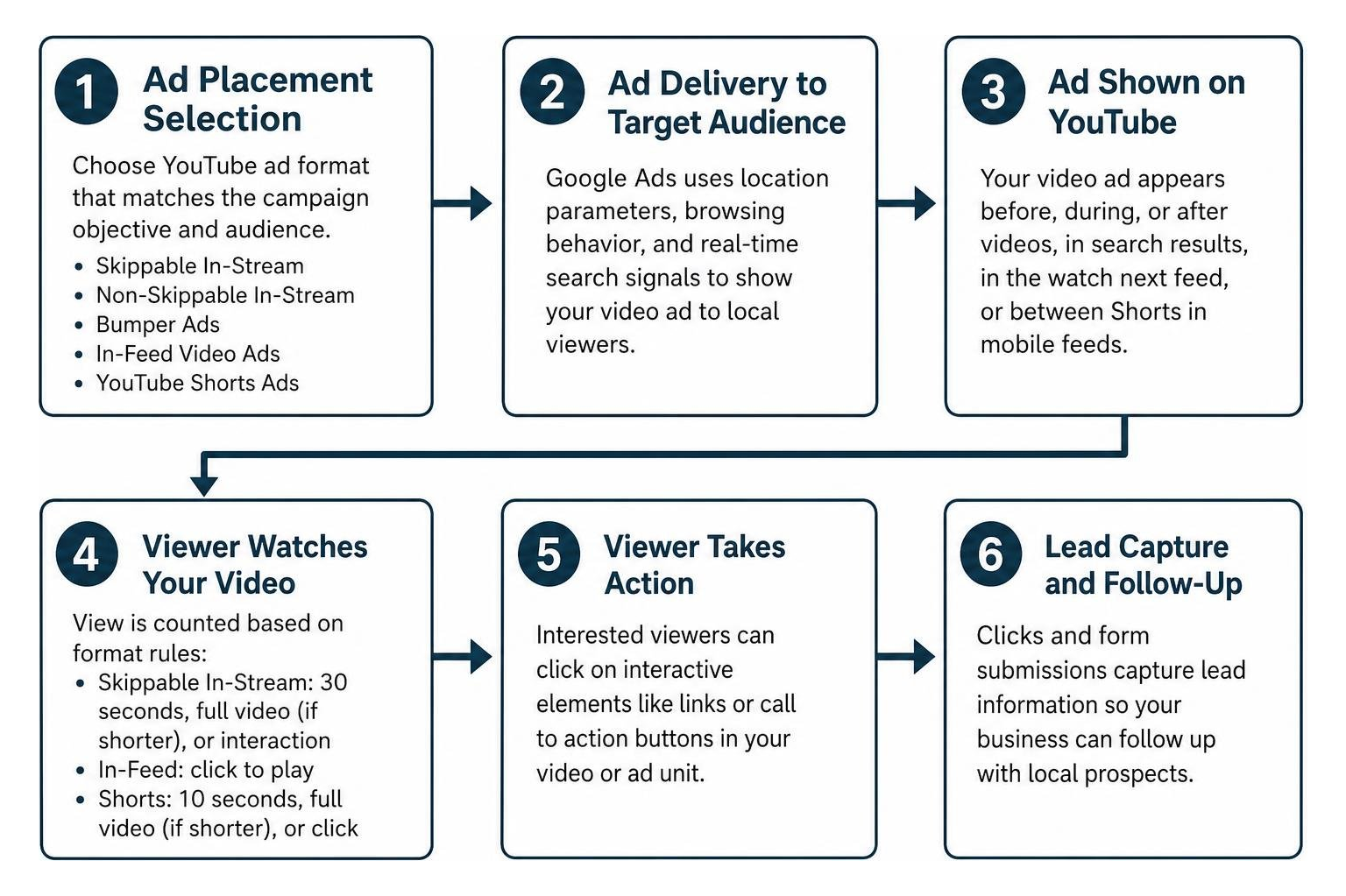
Skippable in-stream ads play before, during, or after other videos on YouTube and across partner sites. According to About video ad formats, viewers have the option to skip the advertisement after the first 5 seconds of playback.
When managing these ads through Cost-Per-View (CPV) bidding, an advertiser only pays when a viewer reaches the 30-second mark of the video, watches the entire clip if it is shorter than 30 seconds, or interacts directly with an on-screen element like a link button. Planning video production involves structuring offers and service details within the opening 5 seconds before skipping is enabled.
Non-Skippable and Bumper Adverts on YouTube
Non-skippable in-stream ads require viewers to watch the full message without the option to bypass the video. In the United States, these placements standardly run between 15 and 20 seconds, while reservation buys on connected TVs can extend up to 30 seconds according to About video ad formats documentation.
Bumper ads are non-skippable video ads that run for a maximum duration of 6 seconds according to Google Ads video ad formats. Both formats operate on a Target CPM (cost per thousand impressions) bidding model, which delivers impressions for company name recognition, seasonal promotions, and local emergency availability across East Tennessee markets.
In-Feed Video Ads and YouTube Shorts Placements
In-feed video ads consist of a thumbnail image and written headline, appearing in YouTube search results, next to related watch videos, or on the mobile homepage feed. As documented in Google Ads video ad formats, in-feed ads only incur a charge when a prospective customer chooses to click the thumbnail to watch the video.
YouTube Shorts ads appear as vertical, full-screen videos between organic content in the Shorts feed. According to official Google Ads Help for video formats, video assets in Shorts can range from 5 to 60 seconds, and a view is counted when a viewer watches for at least 10 seconds, watches the full video if shorter than 10 seconds, or clicks an interactive call to action.
How Can Businesses Target Local Customers in East Tennessee?
Google Ads uses location parameters, browsing behavior, and real-time search signals to determine which viewers see specific video campaigns. Local service businesses can set geographic parameters to direct their advertising to the communities they physically serve.

Geographic Filters and Location Radius Settings
Advertisers can target specific geographic boundaries such as entire counties, individual municipalities, or custom mileage radiuses around a business address. For example, campaigns can target Knox County, Blount County, Hamilton County, Sullivan County, or Washington County, as well as specific cities such as Knoxville, Chattanooga, Johnson City, Kingsport, and Bristol.
As detailed in Google Display Network and YouTube on computers, mobile devices, and tablets, geographic filters allow businesses to target or exclude specific zip codes and neighboring areas. Location settings can target people who are regularly in or who have shown interest in these areas, rather than guaranteeing exact physical presence on every impression, functioning similarly to location parameters described in this guide on geofence advertising cost how it works.
Intent Signals and Custom Search Segments
YouTube advertising integrates directly with Google Search data. Advertisers can create custom intent segments targeting people who recently searched for specific commercial services or local competitors on Google Search.
According to an Ipsos Global Consumer Journeys study, 67% of users who encounter brands on social media are subsequently influenced by Google Search before completing a purchase. Combining Google Search terms with YouTube video delivery allows service businesses to present solutions to homeowners who are actively researching repairs, renovations, or emergency services, an approach outlined in this analysis of how much to spend on Google Ads Knoxville.
What Do YouTube Ads Cost and How Does Bidding Work?
YouTube ad space is purchased primarily through an automated digital auction managed within Google Ads, though high-volume brands can purchase guaranteed reservation inventory directly. Setting realistic budgets involves selecting appropriate bidding strategies and pacing daily limits, as covered in Create a Video campaign.
Understanding these auction mechanics helps business owners plan campaign budgets and bid limits, a process explored further in your Knoxville media buying playbook maximize your ad spend.
Auction Bidding Mechanics
According to Google Ads Help on auction pricing, Google Ads operates on an auction model where an advertiser enters a maximum bid representing the highest amount they are willing to pay for a view or thousand impressions. If your bid wins the auction, you only pay the minimum amount required to maintain your ad position above the next highest competitor.
Bidding models available for video advertising campaigns include:
- Target CPV (Cost-Per-View): Advertisers set the average amount they are willing to pay for 30 seconds of watch time or a direct engagement.
- Target CPM (Cost-Per-Thousand Impressions): Advertisers set an average price target for every 1,000 times their video ad is displayed.
- Target CPA (Cost-Per-Acquisition): Automated bidding sets bids to generate the maximum number of customer inquiries at or below a set target cost.
Budget Structuring for Service Businesses
Campaigns can be structured with either daily budgets or campaign total budgets. According to Google Ads Help on daily budgets, daily budgets establish an average target spend per day, allowing Google Ads to spend up to 2 times the daily budget on high-traffic days while not exceeding the monthly charging limit calculated as 30.4 times the daily budget.
Campaign total budgets run across a fixed start and end date, evenly distributing spend without ever exceeding the defined dollar amount. Strategic schedule pacing and spend allocation relate to media buying management.
How Do Businesses Track Conversions and Measure Results?
Tracking digital actions translates video impressions into verifiable business metrics. By integrating Google Analytics and Google Tag Manager, businesses can connect video ad views directly to website behavior, telephone leads, and physical location visits.

Effective video measurement tracks several key data points:
- Website Inquiries and Form Submissions: Conversion tags record when a viewer clicks an ad and submits an estimate form on the company website.
- Tracked Inbound Phone Calls: Dynamic call tracking numbers on landing pages attribute phone inquiries directly to specific YouTube video campaigns.
- In-Video Lead Forms: Google Ads supports embedded lead generation forms that open inside the video player, pre-filling contact fields using the viewer's signed-in Google account information.
- Store Visits and In-Person Inquiries: For businesses with physical locations linked to a Google Business Profile, Google Ads uses aggregated, anonymized location data from opted-in users to report estimated in-person visits following ad views.
- View-Through Conversions: Reporting tracks customers who watched a video ad, did not click immediately, but visited the business website to convert within a set attribution window.
Connecting these data sources provides attribution metrics across channels when crafting a digital advertising plan from goals to glory.
Frequently Asked Questions About YouTube Advertising
How much does it cost to advertise on YouTube for a local business?
Local video campaigns operate with flexible budgets. According to Google Ads video campaign documentation, there is no mandatory minimum spend, allowing businesses to test local campaigns with modest daily budgets. Actual cost-per-view and cost-per-thousand-impressions rates vary based on geographic competition, audience specificity, and bidding strategy.
How do viewers avoid or manage adverts on YouTube?
Viewers manage commercial exposure through account settings or paid subscriptions. According to Manage what types of ads you see on YouTube videos, users can customize ad preferences or block specific promotions via Google's My Ads Center. According to YouTube Premium membership details, users can also purchase individual YouTube Premium subscriptions for $13.99 per month to eliminate programmatic ads across devices.
What video lengths do local service campaigns use?
Video duration options are defined by the ad format selected. According to About video ad formats, skippable in-stream ads have no maximum duration limit, non-skippable in-stream ads run between 15 and 20 seconds (up to 30 seconds on connected TVs), and bumper ads run up to 6 seconds. YouTube Shorts video ads run between 5 and 60 seconds as documented in Google Ads video ad formats.
Getting Started With Video Advertising in East Tennessee
Video advertising enables local service companies to reach homeowners and commercial clients across Knoxville, Chattanooga, and the Tri-Cities as they watch content on mobile phones and home television screens.
Already running Google Ads? Rhythm Collective offers a free Google Ads audit for East Tennessee businesses, while new advertisers can request a free keyword estimate to see local search demand and click costs through a PPC Agency Knoxville.